
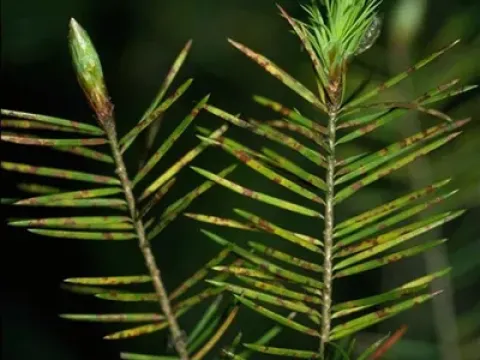
Phyllosticta needle blight
Phyllosticta pseudotsugae
The causative agent of the disease is the fungus Phyllosticta pseudotsugae. It is a specialized pathogen that primarily targets the needles of the Douglas fir (Pseudotsuga menziesii), creating distinct necrotic lesions within the needle tissues.
What the section contains
Phyllosticta needle blight
The fungus produces pycnidia, which are small, dark, fruiting bodies that develop beneath the epidermis of the host tissue. These structures serve as the primary reservoir for producing and releasing conidia, the asexual spores responsible for spreading the infection.
The life cycle is closely tied to moisture levels. When environmental conditions are humid, the pycnidia rupture, releasing conidia that are disseminated by splashing water and wind currents to healthy needles on the same or neighboring trees.
Phyllosticta pseudotsugae survives in fallen needles on the forest floor during the dormant season. This saprophytic stage allows the pathogen to remain in the area, creating a consistent source of inoculum for the upcoming growing season.
Scientific identification involves examining the needles under a microscope to detect the presence of pycnidia. The specific morphology of these structures is key to distinguishing Phyllosticta from other common needle blight pathogens found on conifers.
The primary symptom of the infection is the development of localized spots or blotches on the needles. These lesions typically start as yellow or light-green discolouration and progress to a dry, brown, or greyish-tan necrotic appearance.
Visible under a magnifying glass, the surface of the infected needle areas will show small, black, pin-point structures, which are the pycnidia. Their orderly arrangement is a hallmark of this specific fungal blight.
Infected needles tend to lose their structural integrity and drop prematurely. As the disease progresses, the lower parts of the tree canopy become sparse and chlorotic, giving the tree a sickly and thin overall appearance.
Severe infestations can affect a significant percentage of the current year's growth. In young trees or nurseries, this defoliation can lead to stunted growth and loss of the natural, lush aesthetic of the Douglas fir.
The symptoms are usually most prominent in the spring and early summer when new, susceptible growth emerges. The timing of symptom appearance often coincides with periods of extended rainfall, which trigger spore production.
High relative humidity and moderate temperatures are the most critical factors favoring the spread of the fungus. Extended periods of rain, heavy dew, or fog create the perfect environment for conidia to germinate and infect needles.
Dense plantings or poor site selection, where air circulation is restricted, significantly increase the risk of an outbreak. Stagnant air allows moisture to persist on needles, providing the necessary window for infection.
Trees that are under stress—whether from drought, nutrient deficiency, or overcrowding—are more susceptible to the pathogen. Proper site management is essential to minimize the physiological stress that invites fungal colonization.
Optimal temperatures for the growth and sporulation of the fungus typically range between 18°C and 25°C. Outside of this range, the pathogen's activity may slow down, but it remains a persistent threat whenever conditions improve.
The accumulation of debris in the understory serves as a primary source of reinfection. Because the pathogen can survive in dead tissue, the density of the inoculum builds up over time if proper hygiene is not maintained.
The damage caused by Phyllosticta needle blight primarily involves premature defoliation, which reduces the tree's photosynthetic capacity. Sustained loss of needles over several seasons weakens the tree and stunts its overall growth.
In nursery settings, this disease is economically damaging as it ruins the ornamental value of the stock. Affected plants are often non-marketable due to their unsightly appearance and reduced vigor.
Chronic infection makes the Douglas fir more vulnerable to secondary pests, such as bark beetles. Weakened trees often struggle to mount effective defenses, potentially leading to branch dieback or total mortality.
For forestry management, the blight results in lower timber yields and poor forest health. A decline in needle density impacts the entire ecosystem of the forest stand, reducing the tree's ability to thrive under competitive conditions.
The aesthetic harm to landscapes and urban greenery is significant. Property owners often face the need for repeated fungicide applications to maintain the health and appearance of affected Douglas fir specimens.
The most effective management strategy is sanitation. Collecting and destroying fallen needles effectively removes the main source of inoculum and breaks the infection cycle, especially in small, managed landscapes.
Preventative applications of copper-based fungicides or other authorized chemicals can protect new foliage during the spring. Timely spraying is crucial before the spores have a chance to colonize the emerging needles.
Good cultural practices, such as proper spacing and annual thinning of branches, improve air circulation and help foliage dry faster after rain. This practice significantly reduces the pathogen's ability to establish.
Maintaining tree vigor through appropriate fertilization and adequate watering during drought helps the tree's natural defenses. Healthy plants are better equipped to tolerate low-level infections without suffering significant damage.
Recommended management actions:
- Regularly monitor the foliage for early signs of blight.
- Prune and destroy severely infected branches to reduce spore density.
- Avoid overhead irrigation that keeps the foliage wet for extended periods.
- Sanitize tools with an alcohol solution after pruning infected wood.