
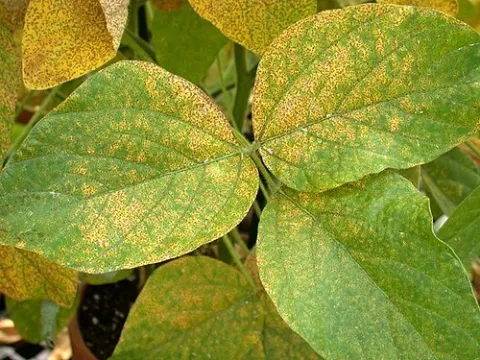
Bean rust
Phakopsora meibomiae
The causal agent of this disease is the obligate fungal pathogen Phakopsora meibomiae, which belongs to the class of rust fungi (Basidiomycetes). It is a specialized parasite that targets various species of beans.
What the section contains
Bean rust
The pathogen completes its life cycle by infecting living host tissue. It produces urediniospores, which are the primary means of dispersal, allowing the fungus to spread rapidly across fields during the growing season.
Spore dispersal occurs primarily via wind currents, which can carry the inoculum over vast distances, making control particularly challenging in humid agricultural regions.
Upon landing on a suitable leaf surface, the spore germinates and penetrates the host through the stomata, eventually establishing a network of mycelium that drains nutrients from the plant.
This fungus is characterized by its high reproductive potential and ability to adapt to varying host genotypes, making it a persistent threat to bean production.
The initial signs of infection appear as tiny, chlorotic spots on the upper surfaces of leaves, which gradually develop into distinct, raised lesions.
On the undersides of these leaves, pustules develop, filled with masses of rust-colored spores, which give the disease its common name and distinct appearance.
As the infection progresses, the foliage turns yellow and becomes necrotic, leading to early leaf drop and reducing the overall vigor of the bean plant.
While leaf tissue is the most common target, in severe cases, the pathogen may also affect stems and pods, further decreasing the potential for successful yield formation.
- Appearance of powdery red-brown pustules.
- Yellowing and premature abscission of bean foliage.
- Reduced photosynthetic capacity of the plant canopy.
The development of bean rust is strictly dependent on moisture availability; free water on the leaf surface is required for successful spore germination.
Optimal environmental conditions for the fungus include moderate temperatures ranging from +18 to +25 degrees Celsius, combined with high relative humidity.
Dense plant canopies that limit air circulation increase the duration of leaf wetness, creating an ideal microclimate for the rapid spread of the disease.
Frequent rainfall, heavy morning dews, and prolonged fog are critical meteorological factors that trigger massive outbreaks of Phakopsora meibomiae.
Improper nitrogen fertilization that promotes lush, succulent growth can increase the vulnerability of the bean crop to infection during the critical flowering stage.
The disease causes significant damage by destroying chlorophyll-rich tissues, which drastically limits the plant's ability to produce energy through photosynthesis.
The economic impact is primarily seen in the reduction of seed size and quality, as well as a decrease in total grain yield, sometimes exceeding 50 percent.
Plants affected by rust are more susceptible to secondary pathogens and environmental stress, leading to poor pod filling and reduced market value.
Farmers face substantial losses not only due to direct crop damage but also through increased expenditure on fungicidal control measures needed to mitigate the infection.
In cases of severe infestation, the overall harvest may be rendered unsellable, forcing producers to seek alternative crops or intensive treatment schedules.
Implementing a robust crop rotation strategy, where legumes are grown at least 3-4 years apart, is a fundamental step in breaking the infection cycle.
The use of resistant or tolerant cultivars remains the most efficient and sustainable approach for long-term management of bean rust in production fields.
Timely application of systemic fungicides during the early stages of symptom appearance can effectively curb the progression of the pathogen.
Sanitation practices, including the deep burial or burning of infected crop residues, are essential to reduce the initial inoculum level for the next season.
Maintaining proper row spacing to improve air flow and effective weed management are crucial cultural practices that help lower humidity within the canopy.