
Appendiculella calostroma
Appendiculella calostroma
Description
Symptoms
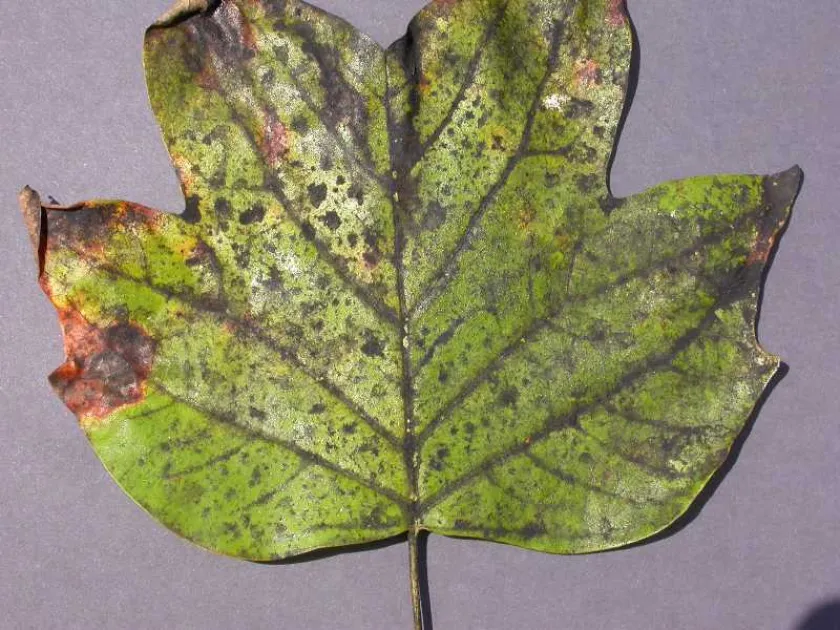
The primary symptom of the disease is the appearance of a black, velvety coating on the upper surface of leaf blades, which visually resembles common sooty mold.
As the infection progresses, the fungal mat thickens and covers larger portions of the leaf surface, effectively creating a physical barrier to sunlight and respiration.
Unlike many other pathogens, Appendiculella calostroma does not typically cause immediate tissue necrosis, acting primarily as a surface colonizer.
Microscopic examination reveals black fruiting bodies scattered within the mycelial web, which serves as a definitive diagnostic feature for the species.
The infection is often concentrated along the leaf veins, where environmental moisture and nutrient concentrations are most favorable for hyphal growth.
Pathogen
The causative agent of the disease is the microscopic ascomycete fungus Appendiculella calostroma, which belongs to the order Meliolales. These fungi are widely recognized as "sooty molds" that primarily affect tropical and subtropical plant species.
The pathogen is an obligate epiphyte, deriving its nutrition primarily from plant metabolites or from the honeydew secretions left by sap-sucking insects on leaf surfaces.
The fungus develops a dense black mycelial network on the surface of leaves and stems, anchoring itself to the host epidermis using specialized structures called hyphopodia.
Reproduction occurs both asexually through conidia and sexually via the formation of perithecia, which are fruiting bodies that help the fungus persist in challenging conditions.
Systematically, this species is closely associated with members of the Meliolaceae family, which require specific microclimatic conditions to complete their life cycle.
Conditions for development
Optimal conditions for the fungus include high relative humidity (above 80%) and consistently warm temperatures, typical of tropical and subtropical climates.
Poor air circulation within dense foliage or forest canopies promotes the accumulation of spores and facilitates rapid spread among neighboring plants.
The fungus thrives in shaded environments where leaf surfaces remain damp for extended periods after rain or dew, preventing the surface from drying out.
The presence of honeydew-secreting insects, such as aphids, mealybugs, or scale insects, provides the necessary substrate that triggers the rapid development of the fungal colonies.
Seasonal moisture fluctuations are the most critical factor, as sustained humidity is essential for the colonization and reproductive success of the pathogen.
Why it matters
The main damage is caused by the inhibition of photosynthesis, as the dense fungal mat prevents adequate sunlight from reaching the chlorophyll-containing cells.
Prolonged infection leads to premature yellowing and leaf drop, which reduces the overall photosynthetic capacity and vigor of the plant.
By blocking stomata, the fungus may interfere with the plant's transpiration process, leading to localized dehydration of leaf tissue.
For ornamental plants and nursery stock, the aesthetic damage caused by the black coating renders the products commercially unacceptable.
Weakened plants are significantly more susceptible to opportunistic secondary infections and environmental stress factors.
Protection
The primary management strategy involves maintaining proper planting density to ensure adequate air circulation and rapid drying of the canopy.
Effective control of honeydew-secreting pests is crucial, as their presence is a prerequisite for the development of the fungal colonies.
Regular sanitation, including the pruning and removal of heavily infected branches or leaves, is essential to reduce the local inoculum density.
If the infection levels are high, the application of contact fungicides can help clean the leaf surfaces and prevent further spread.
- Improvement of canopy aeration and sunlight exposure
- Integrated pest management for aphids and mealybugs
- Sanitary pruning and removal of infected plant parts
- Application of copper-based fungicides when necessary
Discussion
No discussions yet — be the first.