
Phyllosticta leaf spot of maple
Phyllosticta minima
The disease is caused by the fungus Phyllosticta minima, a coelomycete that primarily infects the leaf tissue of various maple species.
What the section contains
Phyllosticta leaf spot of maple
The life cycle of the pathogen involves the production of pycnidia, small flask-shaped fruiting bodies, which develop within the necrotic leaf tissue.
These pycnidia release conidia, which are asexual spores that spread the infection to adjacent leaves and neighboring trees via splashing rain or wind.
The fungus survives the winter dormant period in infected fallen leaves, serving as a primary inoculum source when the new leaves emerge in the spring.
Once the spores land on a susceptible leaf, they germinate and penetrate the epidermis, colonizing the parenchyma cells and causing visible symptoms.
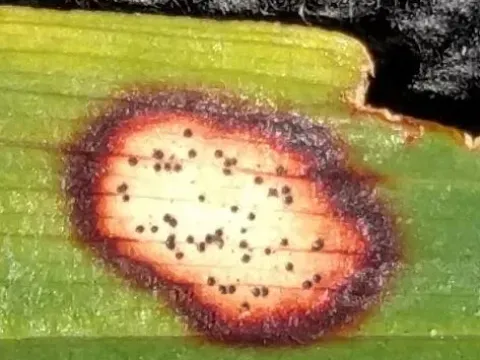
The most recognizable symptom is the appearance of small, circular or irregular spots on the leaf surface, often starting in mid-summer.
These spots initially appear pale or yellowish, later turning brown or reddish-brown, and are typically surrounded by a darker, defined margin.
Microscopic examination or close inspection reveals small black dots within the centers of the lesions; these are the pycnidia containing fungal spores.
In cases of severe infestation, individual spots may coalesce into larger patches, causing significant parts of the leaf to die and become brittle.
While the disease is largely cosmetic, heavy infections can result in premature leaf drop, causing the tree canopy to appear sparse and unhealthy.
Phyllosticta thrives under conditions of high humidity and frequent rainfall, which facilitate both spore germination and movement across the canopy.
Warm temperatures, generally ranging from 18°C to 25°C, are optimal for the rapid colonization of leaf tissue and the development of new pycnidia.
Poor air circulation, often caused by overly dense planting or lack of pruning, keeps foliage wet for longer periods, promoting fungal growth.
Trees that are under environmental stress, such as drought or nutrient deficiency, exhibit reduced vigor and are more susceptible to the fungal attack.
Frequent rain events help disperse the spores from the ground-level litter back onto the lower branches, continuing the disease cycle throughout summer.
The primary concern with maple leaf spot is the reduction of the tree's aesthetic appeal, which is particularly critical in urban landscaping and parks.
Premature loss of foliage reduces the tree's capacity for photosynthesis, limiting the production of carbohydrates needed for growth and energy storage.
Repeated yearly infections can lead to the decline of the tree's overall vigor, potentially resulting in dieback of branches and stunted yearly growth.
While the disease is rarely lethal for mature, healthy maples, it weakens the tree, making it more vulnerable to secondary pest infestations.
In nursery settings, the disease causes significant economic loss as affected saplings lose their commercial quality due to unsightly foliage damage.
Sanitation is the most effective management strategy; this involves raking and destroying all fallen leaves at the end of the season to remove the inoculum.
Pruning the canopy to improve airflow and increase sunlight penetration helps keep the foliage dry, which significantly inhibits fungal development.
Chemical control can be achieved through the application of copper-based fungicides or systemic products when the disease pressure is high.
Recommended management practices include:
- Applying fungicides during the spring as buds break and leaves expand.
- Regular monitoring and removal of symptomatic branches.
Maintaining tree health through proper irrigation and balanced fertilization helps the maple tree naturally defend against and recover from the infection.