
Phyllosticta leaf spot of onion
Phyllosticta alliacea
The causative agent of the disease is the fungus Phyllosticta alliacea, an imperfect fungus that reproduces via pycnidia, which are tiny fruiting bodies containing spores.
What the section contains
Phyllosticta leaf spot of onion
This pathogen survives primarily in crop residues left in the soil after harvest, serving as a primary inoculum source for the subsequent growing seasons.
Seeds and infected bulbs can also carry the fungus, facilitating its transmission to new fields and ensuring the persistence of the disease in agricultural landscapes.
The life cycle of the pathogen is closely tied to moisture levels, which enable the spores to germinate and infect plant tissues during humid conditions.
As a specialized parasite, Phyllosticta alliacea demonstrates high adaptability, potentially affecting various Allium species under favorable environmental pressures.
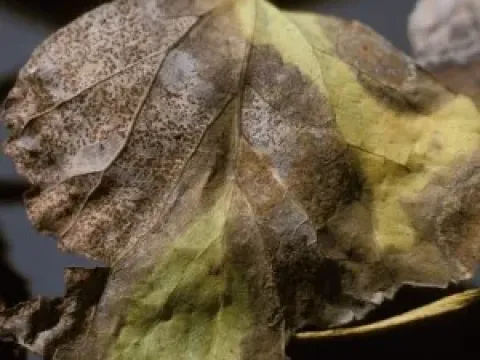
The primary symptoms appear on the leaves as spots that are usually round or elongated, often exhibiting a distinct boundary from healthy tissue.
The centers of these spots tend to bleach or become necrotic, taking on a grayish-tan appearance as the plant tissue dies due to fungal activity.
Small black dots, known as pycnidia, emerge on the necrotic spots, providing a diagnostic feature that helps differentiate this disease from other leaf blights.
As the infection spreads, individual spots often coalesce, causing the leaf tissue to wither, turn yellow, and eventually collapse, which hinders plant growth.
Under high humidity, a slight fungal growth or spore mass may become visible on the surface of the lesions, accelerating the deterioration of the plant foliage.
The development of Phyllosticta leaf spot is highly favored by moderate temperatures ranging from 18°C to 24°C and high relative humidity levels.
Frequent rainfall, heavy dews, or extended periods of fog provide the necessary moisture film on leaves required for successful spore germination and mycelial penetration.
Plantings with high density often suffer more severely because poor air circulation prevents the foliage from drying quickly, maintaining a favorable environment for the pathogen.
Inadequate field sanitation, such as leaving diseased debris on the ground, significantly increases the pressure of the disease for the following year.
Imbalanced fertilization, particularly high nitrogen levels without sufficient potassium, makes the plant tissue more succulent and prone to successful fungal attack.
The primary economic impact is the reduction of the leaf area available for photosynthesis, which directly limits the energy production required for bulb development.
Severely infected onions often produce smaller bulbs that fail to reach their full potential size and may have reduced longevity during storage periods.
Plant weakness caused by the disease often predisposes the crop to secondary infections by various rot-causing fungi, further reducing the overall harvest quality.
The marketability of the produce is compromised due to the unsightly appearance of the foliage and the potential for premature senescence of the outer leaves.
In cases of severe outbreaks, growers may experience significant yield losses, requiring costly intervention or resulting in reduced profitability for the season.
Successful management of the disease starts with long-term crop rotation, ensuring that Allium crops are not planted in the same field for at least three to four years.
Utilizing high-quality, disease-free planting material is essential, and treating bulbs with appropriate fungicides prior to planting can reduce initial infection levels.
Deep plowing or soil incorporation of crop residues immediately after harvest is a critical cultural practice to bury inoculum and accelerate its decomposition.
Regular monitoring of the fields for early symptoms allows for timely application of foliar fungicides, which are effective in preventing widespread outbreaks.
- Ensure optimal plant spacing to promote better airflow and leaf drying.
- Apply balanced phosphorus and potassium fertilizers to improve plant vigor.
- Practice thorough weeding to remove alternative hosts of the pathogen.
- Use precision irrigation to minimize water contact with the foliage.