
Phyllosticta leaf spot of sweet potato
Phyllosticta batatas
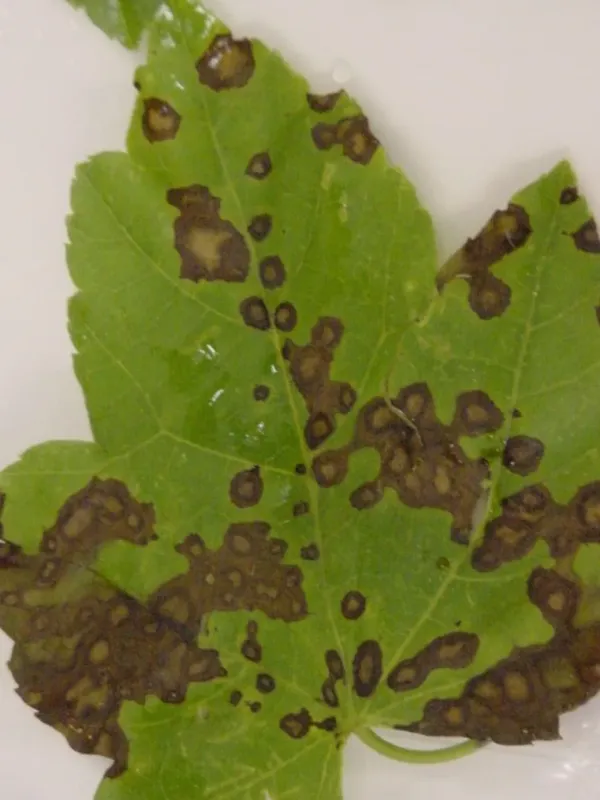
Description
Symptoms
The primary symptom of Phyllosticta leaf spot in sweet potatoes is the formation of distinct, localized lesions on the foliage.
These spots often appear as circular or angular patterns with dark, defined margins that clearly contrast with the healthy green leaf tissue.
As the disease progresses, the center of the spots becomes pale, light brown, or greyish, frequently leading to tissue necrosis and brittleness.
Tiny, dark-colored fruiting bodies known as pycnidia develop within these spots, which serve as the reproductive structures of the fungus.
Under high humidity conditions, individual spots may coalesce into larger irregular patches, causing significant premature leaf senescence and shed.
Pathogen
The causal agent of this disease is the fungus Phyllosticta batatas, which belongs to the Deuteromycetes group.
The fungus survives the off-season by harboring within infected plant debris or in the soil, ready to infect new growth in the following season.
Spores are typically disseminated through rain splash, wind currents, or mechanical movement of farming equipment across the field.
Infection is initiated when spores land on susceptible leaves, germinating and entering the tissue through stomata or mechanical wounds.
The pathogen utilizes plant nutrients for vegetative growth and produces multiple generations of spores throughout the vegetative stage of the crop.
Conditions for development
The development of Phyllosticta leaf spot is highly favored by warm temperatures and periods of excessive moisture or frequent precipitation.
Optimal fungal growth and spore germination occur at temperatures ranging between 20 to 25 degrees Celsius, typical for mid-season sweet potato growth.
Dense planting patterns that restrict air movement and maintain high relative humidity around the plant canopy create a high-risk environment for disease spread.
Heavy dew or extended foggy mornings provide the essential moisture layer required for fungal spores to colonize the leaf surface successfully.
Poor soil drainage and suboptimal management practices that stress the plant also significantly increase the likelihood of rapid fungal colonization.
Why it matters
The disease causes economic loss primarily by reducing the total active photosynthetic area of the plant's leaf canopy.
A decrease in photosynthetic efficiency hampers the tuber development, leading to lower yields and smaller, less marketable roots at harvest time.
Premature loss of leaves deprives the tubers of the necessary photosynthates required for starch accumulation and overall healthy root development.
Severe infestations weaken the plant's overall vigor, making it more prone to secondary infections and reducing its general resistance to stress.
The accumulation of inoculum on infested fields restricts the ability of farmers to save their own cuttings for propagation in subsequent seasons.
Protection
Effective disease management starts with rigorous crop rotation practices to minimize the buildup of the fungus in the field soil.
Sanitation is critical; all diseased plant matter should be promptly removed and destroyed or buried deeply after the harvesting process is complete.
Growers should source and plant only healthy, certified disease-free vine cuttings to prevent the introduction of the pathogen into new areas.
Application of preventative copper-based fungicides or appropriate systemic fungicides can be effective if environmental conditions favor disease outbreaks.
- Maintain adequate plant spacing to promote airflow and leaf drying.
- Implement balanced fertilization programs to enhance host plant resistance.
- Monitor the field regularly and remove heavily infected individual plants.
Discussion
No discussions yet — be the first.