
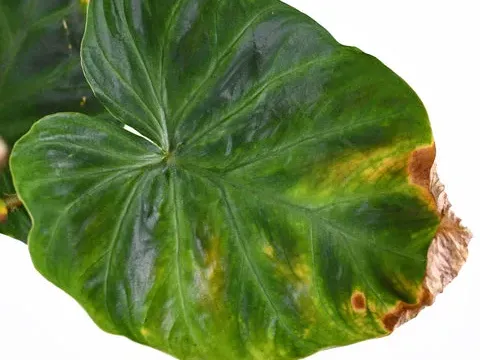
Phyllosticta leaf spot of philodendron
Phyllosticta imbe
The primary symptom of the disease is the appearance of distinct leaf spots. These spots initially begin as small, brown or tan lesions that gradually expand across the leaf surface.
What the section contains
Phyllosticta leaf spot of philodendron
A yellow or light-colored halo often surrounds the necrotic areas, indicating active tissue decline. Over time, the centers of these spots may turn brittle or thin as the tissue dies off completely.
Close observation reveals tiny, black pinhead-sized structures known as pycnidia scattered across the spots. These are the fruiting bodies of the fungus and serve as a reliable diagnostic sign.
Severe infestations often cause leaf deformation, wilting, and premature leaf drop. The plant loses its aesthetic appeal and ceases to grow, becoming visibly weakened.
The infection typically spreads from the lower leaves to the upper foliage. If ignored, the disease will rapidly manifest on surrounding healthy plants within your collection.
The disease is caused by the fungus Phyllosticta imbe, a specialized pathogen belonging to the class Coelomycetes. It is known to thrive on various tropical foliage plants.
The fungus reproduces via conidia, which are produced inside pycnidia. When humidity is high, these structures release spores that travel easily through water droplets during irrigation.
This pathogen can remain dormant in plant debris or the potting medium for extended periods, waiting for the right conditions to reactivate and infect new growth.
Infection typically occurs when spores land on moist leaf surfaces and penetrate the plant through stomata or mechanical wounds on the leaf tissue.
Understanding the biology of Phyllosticta is crucial, as its ability to survive in various environments makes it a persistent issue in indoor settings and greenhouses.
High humidity and poor air circulation are the primary drivers of this fungal development. Stagnant air allows moisture to linger on leaves, providing a perfect environment for spores.
Warm temperatures, generally between 20°C and 25°C, promote rapid fungal growth. These conditions are commonly found in indoor environments where heating and cooling are balanced.
Overwatering and poor soil drainage contribute significantly to plant stress. A weakened philodendron lacks the immune response required to fend off fungal pathogens effectively.
Low light levels and lack of proper ventilation exacerbate the issue. Plants grown in dim corners are more susceptible to infection due to physiological stress and slowed growth.
Crowding plants together in a collection facilitates the rapid spread of spores. Direct contact between the leaves of different plants is a major factor in the disease's transmission.
The most immediate harm is the destruction of the plant's decorative value. Since philodendrons are grown primarily for their foliage, spotted or dying leaves are detrimental.
The infection significantly reduces the plant's photosynthetic capacity. As leaf area is lost, the plant struggles to produce energy, eventually leading to stunted development and weak stems.
If left untreated, the necrosis can spread to leaf petioles and eventually the stem, potentially causing the collapse of entire leaves or stems.
The presence of dead tissue invites secondary infections, such as bacterial soft rot, which can cause even more rapid and severe damage to the plant.
In nursery settings, this disease can cause substantial economic losses, as infected stock often must be discarded to prevent a total outbreak across the entire inventory.
The first step in management is the immediate isolation of any affected philodendron. Place the sick plant away from healthy specimens to halt the spread of spores.
Prune away heavily infected leaves using sterile tools to reduce the inoculum load. Be sure to disinfect your tools with alcohol after every cut to prevent cross-contamination.
Apply a systemic fungicide labeled for ornamental leaf spots. Ensure thorough coverage of both the upper and lower leaf surfaces for the most effective results.
Improve environmental conditions by increasing air circulation and avoiding overhead watering. Keeping foliage dry is essential for preventing spore germination.
- Use well-draining potting soil.
- Avoid overwatering to maintain root health.
- Maintain a consistent cleaning schedule for plant leaves.
- Ensure adequate lighting for vigorous plant growth.