
Phyllosticta leaf spot of pachysandra
Phyllosticta pachysandricola
Description
Symptoms
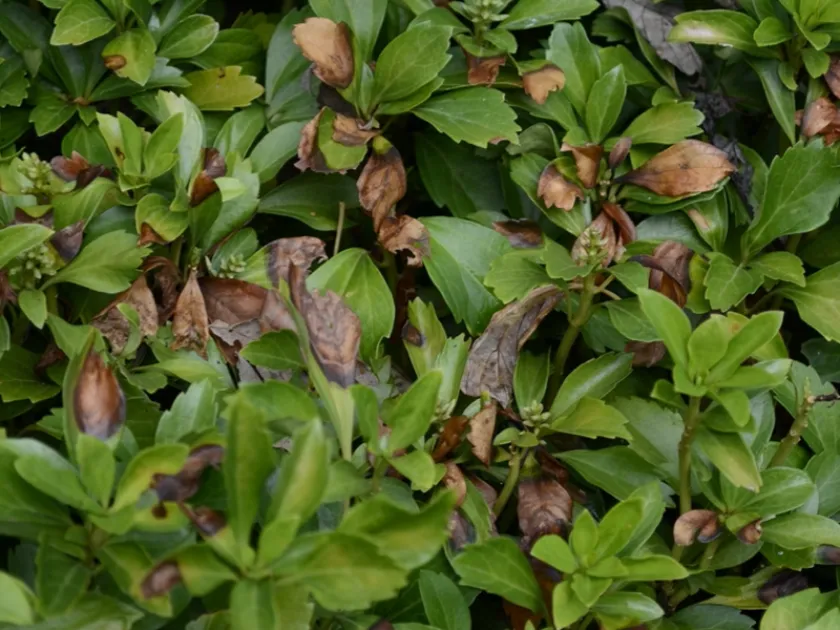
The primary symptom of this disease is the development of distinct leaf spots on Pachysandra terminalis. These lesions are typically circular to irregular in shape and exhibit a brown or reddish-tan color, often bordered by a dark, prominent margin.
As the infection progresses, tiny black fruiting bodies called pycnidia appear in the center of the spots. These small structures are characteristic of the fungus and can be identified with a hand lens during a field examination of the leaves.
Under conditions of high moisture, the lesions may coalesce, covering larger sections of the leaf blade. This heavy infection leads to premature necrosis, yellowing, and eventually the death of the entire leaf, which then drops off.
Infection often initiates at the leaf tips or margins, gradually moving inward toward the center of the leaf. The progression is steady and can severely damage the aesthetic appeal of the pachysandra planting, turning it from a lush green into a spotted, unhealthy mat.
Diagnosis must distinguish this disease from other fungal spots or environmental damage. The presence of dense pycnidia within the lesions confirms the activity of the pathogen Phyllosticta pachysandricola.
Pathogen
The disease is caused by the fungus Phyllosticta pachysandricola, which is classified as an ascomycete. This pathogen specifically targets the tissues of pachysandra, feeding on the nutrients of the host plant and disrupting its normal physiological functions.
The fungus overwinters primarily in infected plant debris, including fallen leaves and diseased stems left on the ground. When spring arrives with warmer, wetter weather, the pathogen releases spores that move to healthy foliage.
The fungal life cycle involves the formation of conidia within pycnidia. These spores are spread easily by splashing rain, irrigation water, and even through contact with gardening tools, allowing the fungus to colonize new, previously unaffected areas.
Because pachysandra is often used as a shade-loving groundcover, the environment where it grows naturally favors the fungus. The lack of direct sunlight often keeps foliage moist for extended periods, providing a perfect incubator for the pathogen.
The biology of the fungus makes it resilient, especially if sanitation practices are neglected. The persistence of the pathogen in the soil and leaf litter ensures that the disease can reappear annually if not systematically managed.
Conditions for development
Excessive humidity is the most critical factor for the development of Phyllosticta leaf spot. Thick, dense plantings that lack adequate airflow create a stagnant, moist microclimate that allows fungal spores to thrive and infect leaf surfaces.
Continuous rainfall, fog, and prolonged dew are the primary environmental triggers. When water remains on the leaves for several hours, it creates a bridge that allows the spores to germinate and penetrate the plant tissue efficiently.
Poor site drainage further contributes to the severity of the disease by increasing the overall humidity around the plant canopy. Plants struggling with poor light or low nutrient availability are often more susceptible to infection than those in optimal health.
Shaded locations, while ideal for the plant, often lack the evaporation rates necessary to dry out leaves quickly. This shade-driven moisture retention makes pachysandra especially vulnerable during damp summers and early autumn months.
Stressed plants are less able to fend off the fungal attack. Damage from cold weather, insects, or physical injury during maintenance can create entry points for the pathogen, accelerating the development of the infection.
Why it matters
The harm caused by Phyllosticta leaf spot is primarily aesthetic. As a major groundcover used for its uniform, dark green appearance, pachysandra loses its landscape value when it becomes covered in unsightly brown or black necrotic lesions.
Beyond the visual impact, the fungus weakens the plant host. Significant leaf loss reduces the surface area available for photosynthesis, which in turn stunts the development of the root system and prevents the plant from spreading or filling in gaps effectively.
Severe infections can lead to significant thinning of the patch. As leaves drop, the soil becomes exposed, which encourages the germination of opportunistic weeds that can compete with the weakened pachysandra for resources.
If left unchecked, the disease can spread throughout an entire bed. This transformation of a lush green mat into a patchy, dying landscape requires significant time, effort, and financial cost to rectify through replanting or intensive treatment.
Over time, chronic disease stress makes the plants more prone to other infections and secondary pests, leading to a long-term decline in the quality and lifespan of the entire pachysandra plantation.
Protection
Sanitation is the cornerstone of control. Removing and destroying fallen leaves and diseased plant parts is vital because these materials harbor the fungus throughout the winter and act as the primary inoculum source for the following season.
Cultural practices should focus on improving air circulation. Avoid planting pachysandra too densely and ensure the irrigation system is designed to provide water at the soil level, minimizing the duration that the foliage remains wet.
When chemical intervention is required, fungicides containing copper or other systemic anti-fungal agents should be applied according to the manufacturer's directions. These treatments can prevent new infections and protect healthy growth.
- Thinning out dense patches to improve ventilation and reduce leaf moisture.
- Thorough fall cleanup, including raking and disposing of all organic debris.
- Applying preventive fungicides during high-risk, wet weather periods.
- Watering in the early morning so leaves can dry out quickly in the sun.
Follow-up treatments are essential, as a single application may not suffice to eliminate the infection. By consistently applying these control measures, gardeners can manage the disease and maintain the health and beauty of their pachysandra plantings.
Discussion
No discussions yet — be the first.