
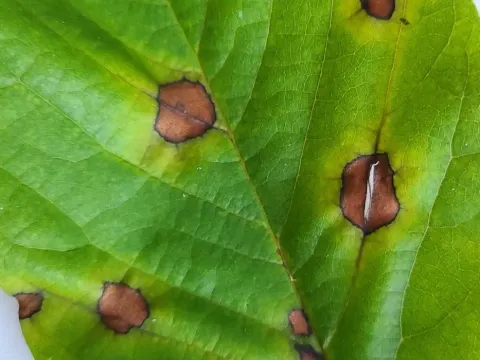
Phyllosticta leaf spot of witch hazel
Phyllosticta hamamelidis
Phyllosticta leaf spot is primarily characterized by the appearance of necrotic lesions on the foliage of witch hazel. These spots usually exhibit a distinct circular or irregular shape with a darkened margin.
What the section contains
Phyllosticta leaf spot of witch hazel
The centers of the affected areas often turn grayish-brown or tan as the tissue dies. As the disease progresses, these individual spots can coalesce, covering large portions of the leaf surface.
A diagnostic sign of this infection is the development of pycnidia, which appear as tiny black specks embedded within the necrotic lesions. These structures are crucial for the fungus to produce and release spores.
In humid conditions, the underside of the leaves or the surface of the spots may show a subtle whitish fungal growth, representing the mass of conidia being released to infect surrounding leaves.
Severe infestations frequently result in premature leaf drop, which leaves the branches looking bare and aesthetically compromised well before the natural autumnal senescence of the plant.
The disease is caused by the fungal pathogen Phyllosticta hamamelidis, an ascomycete fungus that specifically targets the foliage of Hamamelis species. It relies entirely on the host plant to complete its reproductive life cycle.
The pathogen reproduces via conidia formed inside pycnidia. These spores are highly efficient at dispersal, allowing the fungus to spread rapidly throughout the canopy during favorable environmental conditions.
Overwintering occurs primarily in fallen leaves and other plant debris beneath the shrub. This reservoir of inoculum serves as the source of primary infection when spring temperatures begin to rise.
Infection typically occurs through leaf stomata or existing wounds on the epidermis. Once inside, the fungal mycelium colonizes the inter-cellular spaces, eventually killing the leaf tissue through the secretion of phytotoxins.
The pathogen maintains high virulence as long as the host remains available, making repeated annual infections common in landscapes where sanitation measures are neglected.
High humidity and moisture are the primary drivers of Phyllosticta leaf spot development. Frequent rain events, persistent fog, and heavy dew provide the necessary surface wetness for spore germination.
Temperatures ranging from 18°C to 25°C (approx. 65°F–77°F) are considered optimal for mycelial growth. During these periods, the incubation time of the disease is significantly reduced, accelerating symptom appearance.
Poor air circulation within the shrub canopy due to high planting density creates a microclimate that retains moisture longer. This elevated humidity is highly conducive to fungal establishment.
Plants growing in shaded or stagnant air environments are more prone to infection. Stress factors such as inadequate sunlight or improper water management can further weaken the plant, increasing its susceptibility.
The mechanical splash of water from rainfall or overhead irrigation acts as a primary vector, moving spores from the soil surface or lower infected leaves to higher, healthy foliage.
The primary impact of Phyllosticta leaf spot is the degradation of the witch hazel's ornamental value. Affected foliage turns mottled and necrotic, significantly detracting from the shrub's intended visual appeal.
Widespread leaf spots lead to premature defoliation, which severely hampers the plant’s ability to conduct photosynthesis. This disrupts the tree’s energy storage for the upcoming dormant season.
Long-term infestation reduces the overall vigor and winter hardiness of the shrub. Weakened plants are more susceptible to winter dieback and secondary stress from pests or environmental extremes.
The cumulative effect of yearly infections can lead to a thinning canopy and reduced flowering, as the shrub lacks the metabolic reserves required for consistent bud formation and vigorous spring growth.
If left unmanaged, the pathogen population in the landscape builds up, potentially threatening other susceptible woody plants and complicating overall garden maintenance efforts.
The most important control measure is strict sanitation. Raking up and destroying fallen leaves in the autumn is essential to eliminate the primary source of the fungus for the following season.
Selective pruning to thin the canopy is highly recommended to improve airflow and reduce humidity levels within the shrub, making the environment less favorable for fungal development.
Avoid overhead irrigation to keep the foliage dry, as moisture on the leaves is necessary for fungal infection. Using drip irrigation or soaking hoses is a much safer alternative for plant health.
Protective fungicides, including copper-based products or systemic options, may be applied if the disease is identified early. Applications should be timed to coincide with periods of high risk or at the first sign of symptoms.
- Monitor plants regularly for early detection.
- Ensure proper nutrient levels to support plant immune health.
- Space plants adequately to encourage good air movement.
- Mulch around the base to prevent soil-borne spores from splashing onto leaves.