
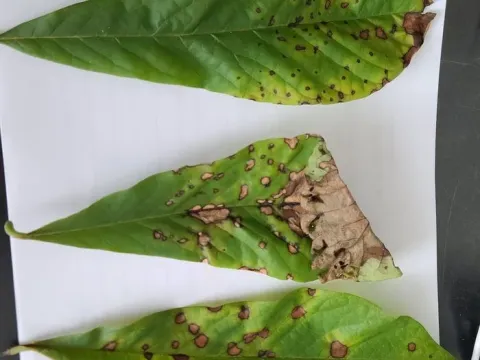
Phyllosticta leaf spot of yam
Phyllosticta dioscoreae
The causal agent of the disease is the fungus Phyllosticta dioscoreae, which belongs to the class of deuteromycetes (imperfect fungi). This microorganism parasitizes vegetative plant parts, causing specific tissue necrosis.
What the section contains
Phyllosticta leaf spot of yam
The fungus develops pycnidia — minute, spore-producing structures embedded within the infected leaf tissue. Inside these, asexual reproduction occurs, generating a vast number of conidia spores.
Spore dissemination occurs primarily via rain splashes, wind currents, or mechanical contact through contaminated farming tools. The fungal mycelium is capable of persisting in crop debris for extended periods.
The pathogen's lifecycle is closely tied to ambient humidity, allowing it to rapidly colonize weakened or damaged yam tissues under favorable environmental conditions.
From a phytopathological standpoint, this organism acts as a classic leaf spot pathogen, capable of inflicting significant damage on yam plantations globally.
Initial symptoms include the appearance of small spots on leaf blades, which gradually shift to a brownish or grayish hue. The center of the lesion often turns lighter, serving as a key diagnostic feature.
A dark margin often forms around the perimeter of the necrosis, visually distinguishing the diseased tissue from the healthy one. Under high humidity, tiny black dots — the fungal pycnidia — become visible within the lesions.
As the disease progresses, these spots coalesce, covering large areas of the leaf surface. This leads to premature yellowing and eventual drying of the foliage.
The infection can extend beyond the leaves to the stems, disrupting photosynthesis and the translocation of nutrients to the tubers, which results in noticeable plant stunting.
Field diagnosis should be performed in the early stages, as once the disease enters a mass infection phase, the efficacy of chemical control measures is substantially diminished.
The primary factor triggering infection development is high humidity combined with frequent precipitation. During prolonged rainy spells, fungal spores spread actively throughout the entire plantation.
The optimal temperature range for the growth and spread of Phyllosticta dioscoreae is +20...+25°C. In such conditions, the incubation period shortens, leading to epiphytotic disease outbreaks.
Poor agricultural practices, particularly high planting density, contribute to a microclimate favorable to the pathogen. Inadequate air circulation within the canopy prevents the foliage from drying out quickly.
Weakened plants, whether due to nutrient deficiencies or pest damage, become easy targets for the fungus. Any micro-abrasions on the leaf surface facilitate the entry of the mycelium into plant tissues.
Large quantities of undecomposed crop residues left in the field after harvest serve as the primary source of inoculum, ensuring the survival of the pathogen between seasons.
The economic harm caused by the disease lies in the significant reduction of the plant's photosynthetic leaf area. This leads to substantial yield losses and degradation of tuber quality.
Leaf infection triggers premature senescence, preventing the tubers from accumulating sufficient starch and other essential carbohydrates throughout the growing season.
Under intense pressure from Phyllosticta, massive foliage dieback occurs, which in critical cases leads to the death of the above-ground portion of the plant and a sharp decline in marketable value.
The disease negatively impacts the viability of planting material. Infected tubers can act as carriers for the pathogen into the following season if proper storage and treatment protocols are ignored.
Financial losses are driven not only by direct yield reductions but also by the costs associated with implementing additional control measures and protective chemical applications.
Prevention forms the cornerstone of effective management. Utilizing healthy, disease-free planting material and adhering to strict crop rotation practices help minimize the risk of initial infection.
An essential practice is the timely removal and destruction of crop residues, as these serve as the primary overwintering site for the pathogen. Deep plowing facilitates the rapid mineralization of plant debris.
To limit the spread of the disease, prophylactic spraying with fungicides is recommended at the first sign of spotting. Copper-based products and systemic fungicides have proven highly effective.
- Maintaining optimal planting density to promote air circulation.
- Balanced fertilization, avoiding excessive nitrogen applications.
- Regular crop monitoring during periods of high humidity.
- Sanitizing farm tools after working in infested areas.
Biological control methods, involving the application of antagonistic microbial preparations, are showing promise as part of integrated pest and disease management systems.