
Phyllosticta leaf spot of Virginia creeper
Phyllosticta parthenocissi
Description
Symptoms
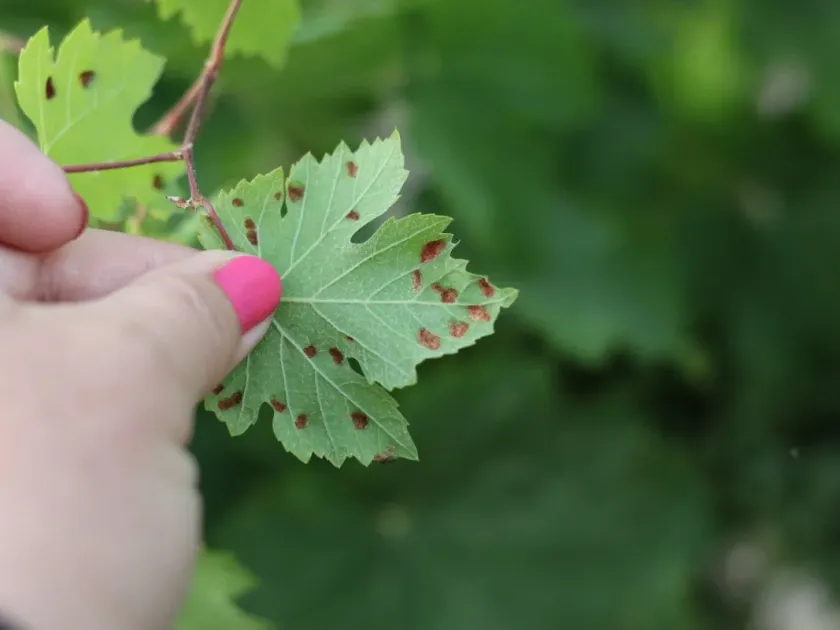
The primary symptom is the appearance of distinct spots on the foliage. These spots are usually round or irregular in shape with a reddish-brown or dark brown border.
As the infection advances, the center of the spot tends to bleach, turning greyish or tan. Tiny black dots appear in the center of these light patches, representing the fungal pycnidia.
Infected leaves often turn yellow prematurely and drop. Heavy infestations can lead to significant defoliation, which severely impacts the visual appeal of the Virginia creeper.
The spots may coalesce in severe cases, covering large sections of the leaf surface and causing the entire leaf to wither and curl.
Unlike other foliar pathogens, the presence of these clearly visible black pycnidia is a definitive diagnostic indicator for Phyllosticta infection.
Pathogen
The disease is caused by the fungus Phyllosticta parthenocissi. It belongs to the group of deuteromycetes, characterized by the formation of pycnidia, which are microscopic fruiting bodies embedded within the infected plant tissues.
The fungus survives the winter primarily in fallen leaves and other plant debris remaining under the vine. This makes sanitation a critical practice for effective disease management.
When environmental conditions become favorable in the spring, the fungus releases pycnospores. These spores are spread through rain splashes and wind currents, settling on new, emerging leaves.
Once settled, the fungus enters the leaf through natural openings or directly penetrates the epidermal layer. It then colonizes the tissue, causing localized cell death and the characteristic spotting symptoms.
Throughout the growing season, the pathogen produces multiple cycles of spores, allowing the disease to spread rapidly across the plant canopy under conditions of high humidity.
Conditions for development
High humidity and prolonged periods of leaf wetness are the most critical factors for the development of Phyllosticta leaf spot. Frequent rain and fog provide the moisture needed for spore germination.
The optimal temperature range for the pathogen's growth is between 18°C and 25°C. In these conditions, the incubation period is significantly shortened, and the spread is rapid.
Plants grown in dense clusters or areas with poor air circulation are much more likely to be affected. Stagnant moisture on the foliage creates the perfect breeding ground for fungal spores.
Improper irrigation techniques, such as overhead watering during late afternoon or evening, can keep the foliage wet overnight, encouraging the spread of the disease.
Neglected landscapes with heavy layers of leaf litter provide a constant reservoir for the fungus, allowing it to persist year after year.
Why it matters
The disease primarily destroys the aesthetic value of the Virginia creeper, which is usually grown for its lush, healthy green foliage. The unsightly spots and premature defoliation ruin the plant's ornamental function.
Significant loss of photosynthetic area prevents the plant from storing enough energy for the winter. This cumulative stress leads to a gradual decline in the vigor of the vines.
Weakened plants are more susceptible to winter injury and may experience dieback of shoots, leading to stunted growth in the following season.
In urban environments, where Virginia creeper is used for wall coverage, the disease can quickly ruin entire green screens, leading to bare patches on building facades.
If left unmanaged, the cumulative impact of yearly infections can cause the vines to become thin, sparse, and prone to secondary infections or pest attacks.
Protection
The most important control strategy is good sanitation. Raking up and destroying all fallen leaves in the autumn removes the primary inoculum for the next growing season.
Fungicides based on copper, such as Bordeaux mixture or copper oxychloride, are effective in controlling the disease. Application should start as soon as the first leaves unfold in the spring.
- Thin out dense growth to ensure proper airflow and light penetration.
- Prune and remove heavily infected shoots or foliage as soon as they are noticed.
- Maintain plant health with balanced fertilization to boost resistance.
- Apply systemic fungicides according to local recommendations if the infection is widespread.
Repeat treatments every 10–14 days during periods of high humidity. Always ensure thorough coverage of both sides of the leaves for the best protective results.
Promote dry foliage conditions by watering at the base of the plant rather than spraying the leaves directly.
Discussion
No discussions yet — be the first.