
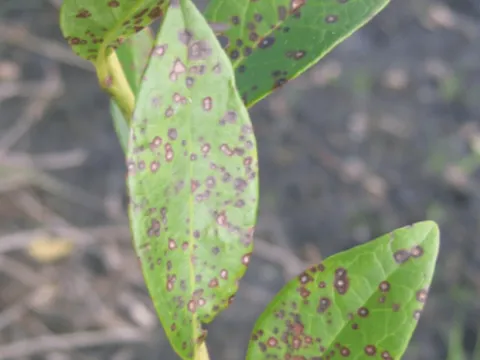
Cranberry phyllosticta leaf spot
Phyllosticta elongata
The causative agent of this disease is the fungus Phyllosticta elongata, which targets the foliage of cranberry plants in various growing regions.
What the section contains
Cranberry phyllosticta leaf spot
This pathogen belongs to the class of deuteromycetes and primarily spreads via asexual spores produced within pycnidia on the surfaces of infected leaves.
The fungus overwinters in crop debris left in the field, making sanitation a vital practice to break the disease cycle each season.
Infection occurs when spores are dispersed by splashing water from rain or overhead irrigation, landing on new leaf tissue and successfully penetrating the cuticle.
Research indicates that the pathogen is most active during the peak vegetative stage, utilizing warm and moist conditions to colonize the host plant.
Symptoms typically manifest as small, circular to oval necrotic spots on the leaves, which often display a distinct reddish-brown to dark border.
As the infection advances, the centers of these spots may become bleached or light gray, creating a stark contrast with the surrounding dark margin.
The characteristic sign of the disease is the presence of tiny, black, pimple-like structures called pycnidia scattered throughout the necrotic tissue.
Severe infestations cause leaves to turn yellow prematurely and drop from the stems, resulting in significant defoliation of the cranberry vines.
While the disease primarily affects leaves, extreme cases may show small, lesions on succulent stems, which can impede nutrient flow and weaken the plant.
Phyllosticta leaf spot thrives in conditions of high humidity and prolonged leaf wetness, which are common in dense cranberry bog environments.
Temperatures ranging from 15 to 25 degrees Celsius create the optimal thermal window for fungal spores to germinate and colonize healthy tissues.
Poor airflow through the canopy, often due to excessive plant density, keeps the foliage wet for longer periods, thereby increasing the risk of infection.
Weather patterns characterized by frequent summer rains are known to correlate with increased disease prevalence and severity across commercial fields.
Plants under physiological stress or those with nitrogen imbalances are often more susceptible to colonization by the pathogen compared to vigorous vines.
The primary impact of this disease is the reduction in photosynthetic leaf area, which limits the plant's ability to produce energy for growth and fruit set.
Chronic leaf loss weakens the vine's root system and vitality, making it more vulnerable to winter injury and environmental extremes.
Direct economic losses occur due to reduced fruit yield and poorer berry quality, as the plant directs resources to survive rather than produce.
If left unmanaged, the pathogen can quickly spread throughout an entire field, necessitating costly chemical intervention and restorative measures.
Continued defoliation over consecutive seasons can lead to the decline and eventual death of the cranberry bed, requiring full replanting of the affected area.
Effective management begins with strict sanitation, including the removal and destruction of infected leaf litter to reduce the primary inoculum load.
Promoting a well-managed canopy structure through appropriate spacing ensures better light penetration and airflow, reducing the time leaves remain wet.
Strategic application of copper-based fungicides or other authorized chemicals can protect vulnerable foliage during high-risk rainy periods.
- Monitor fields regularly, especially during the spring and early summer.
- Maintain balanced soil fertility to ensure robust and healthy plant growth.
- Avoid overhead irrigation during early morning hours to limit leaf wetness duration.
Using only certified disease-free cuttings when establishing new plantings is the most important preventive measure to avoid introducing the fungus.