
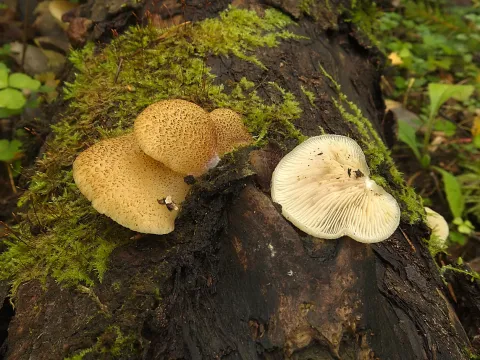
Crepidotus
Crepidotus
The genus Crepidotus (family Crepidotaceae) consists of saprotrophic fungi that play an essential role in forest ecosystems by decomposing dead woody material.
What the section contains
Crepidotus
These fungi are not considered primary pathogens of healthy living plants. They function as decomposers, breaking down lignin and cellulose in weakened or dead wood.
Unlike parasitic fungi that actively kill host tissues, Crepidotus species colonize substrates that are already compromised by environmental stress, mechanical injury, or other pathogens.
Their fruiting bodies are typically sessile, fan-shaped, and lack a prominent stalk, making them easily distinguishable from many other tree-inhabiting species.
The gills of these mushrooms often turn a characteristic brownish or ochre color due to the accumulation of spores, which is a key diagnostic feature for mycologists.
The most visible sign of Crepidotus presence is the emergence of small, delicate caps on the bark of trunks, stumps, or decaying branches.
Fruiting bodies often grow in clusters or overlapping tiers. Their texture can range from smooth to finely hairy, depending on the specific species.
When the fungi appear on live trees, it is a definitive indicator of internal wood rot or necrotic tissue located beneath the bark where the moisture level is elevated.
The bark surrounding the colony might appear discolored or softened, frequently exhibiting cracks that allow the fungus to emerge from the internal wood structure.
Underneath the cap, the gill structure is quite dense, and as the fungus matures, the release of spores can create a colored dusting on the surface below.
Crepidotus development is heavily dependent on high moisture levels. They thrive in damp, shaded environments where water evaporation is limited.
These fungi prefer substrates such as fallen logs, stumps, and the deadwood of trees suffering from long-term stress. They require a pre-damaged or weakened host to establish a colony.
The growth phase is most active during periods of high precipitation, particularly in temperate regions during spring and autumn when humidity remains consistently high.
Poor ventilation and thick, unpruned canopies create microclimates that are ideal for the colonization and spread of these fungal spores.
Spores are dispersed by wind or splashing water, allowing the fungus to find and colonize new, suitable woody substrates across the orchard or forest area.
While Crepidotus is not an aggressive pathogen, it contributes to the accelerated structural degradation of infected wood, reducing its mechanical strength.
On fruit or ornamental trees, the presence of these fungi indicates that the tree's health is already declining due to internal decay, which increases the risk of limb failure.
The fungal activity compromises the transport system of the tree, potentially leading to reduced vigor and stunted development of the affected branches.
In forest management, high populations of wood-decaying fungi like Crepidotus serve as a sign that the stand density may be too high or that the trees are under chronic stress.
In the long run, the colonization of wood by these fungi facilitates the complete breakdown of timber, turning solid wood into soft, friable material.
Direct chemical control of Crepidotus is generally unnecessary as it is not a primary threat. Management focuses on improving tree hygiene and environmental conditions.
Pruning is the most effective management tool. Removing dead, damaged, or diseased branches prevents the accumulation of woody debris that these fungi prefer.
Proper wound care is essential. All mechanical injuries on the trunk should be cleaned and protected with appropriate wound dressings to prevent pathogen entry.
Improving air circulation within the canopy through proper thinning can reduce the humidity levels that these fungi require to produce fruiting bodies.
- Regular removal of deadwood and stumps.
- Maintaining optimal tree vigor through balanced fertilization.
- Prompt treatment of bark wounds and cracks.