
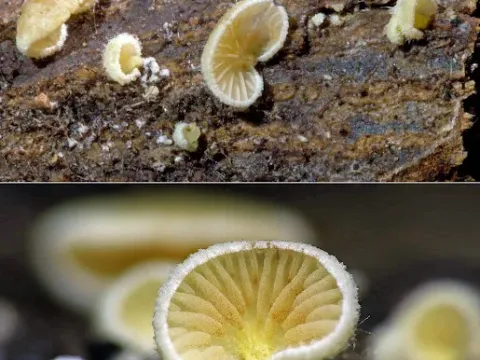
Crepidotus carpaticus
Crepidotus carpaticus
Crepidotus carpaticus is a species of agaric fungus within the Crepidotaceae family. In agronomic terms, it is classified as a xylotrophic fungus, meaning it thrives on woody substrates.
What the section contains
Crepidotus carpaticus
This fungus is not a primary pathogen of healthy agricultural crops; rather, it functions as a decomposer that targets dead, dying, or structurally weakened woody tissues.
Biologically, it plays a vital role as a reducer, breaking down complex organic compounds like lignin and cellulose, which are the fundamental building blocks of wood.
Its presence in an orchard is often considered an indicator of poor tree health, previous mechanical damage, or neglect, as the fungus typically requires an entry point to colonize living tissue.
While it is not the initial cause of most plant ailments, its activity accelerates the degradation of tree trunks and branches, effectively ending the life cycle of the wood.
The most visible sign of infection is the emergence of small, fan-shaped or kidney-shaped fruiting bodies directly on the bark or exposed wood of the tree.
These fruiting bodies are sessile, meaning they lack a distinct stalk, and they attach firmly to the host tree's surface by their side.
The cap of the fungus is often whitish to ochre in color and may feature a fine, scaly texture depending on the environmental moisture levels.
Underneath the cap, there are gills that initially appear light but turn rusty-brown or cinnamon-colored as the spores mature and are released into the environment.
The underlying wood usually exhibits signs of decay, appearing softer, lighter in color, or spongy, which indicates a loss of structural integrity.
Crepidotus carpaticus requires high levels of ambient and wood moisture to flourish. It is most commonly observed during wet, humid weather patterns.
Poor orchard management, such as a lack of thinning or improper pruning, contributes to stagnant air and high moisture levels on the tree trunks, creating a perfect habitat for the fungus.
External damage, such as sunscald, frost cracks, or improper pruning cuts, serves as the gateway for the fungal mycelium to penetrate the deeper layers of the wood.
Mild temperatures ranging from 15 to 22 degrees Celsius significantly stimulate the growth of the fungal network and the subsequent development of fruiting bodies.
Overcrowded orchards with poor light penetration often experience higher incidence rates of xylotrophic fungi compared to well-managed, ventilated spaces.
The primary harm caused by this fungus is the structural weakening of the tree. As it degrades the wood, the tree becomes highly susceptible to breakage during heavy winds or under the weight of a heavy fruit crop.
The fungal activity interferes with the tree's vascular system, hindering the transport of water and nutrients, which results in canopy thinning, leaf yellowing, and decreased yield.
Trees affected by wood decay become increasingly stressed, making them more vulnerable to secondary attacks by insect pests that thrive in dying timber.
The decline of the tree is often progressive; once the fungus has established itself in the heartwood, the vitality of the tree diminishes significantly over several seasons.
Ultimately, the infection leads to the premature loss of productive trees, necessitating their removal to prevent the potential spread of spores to healthy neighbors.
The management of wood-decaying fungi relies heavily on proactive cultural practices and maintaining tree vigor.
- Perform annual sanitation pruning to remove all dead or diseased branches.
- Apply antifungal wound dressings or high-quality tree sealers to all significant pruning cuts to prevent colonization.
- Maintain a balanced fertilization and irrigation schedule to support strong tree immune systems.
- Remove stumps and decaying debris from the orchard floor, as these act as primary spore reservoirs.
- Promote good air circulation and light penetration throughout the canopy through regular pruning.
If fruiting bodies are detected, they should be mechanically removed and the area treated with a copper-based fungicide to minimize surface spore viability.