
Crayfish plague
Aphanomyces astaci
Crayfish plague is an infectious disease caused by the oomycete Aphanomyces astaci, a highly aggressive water mold that targets various species of freshwater crayfish.
What the section contains
Crayfish plague
The pathogen reproduces by releasing motile zoospores that can navigate through the water column to locate and infect a suitable host organism.
Upon reaching the crayfish, the zoospores encyst on the cuticle and germinate, sending fungal hyphae directly into the soft tissues and nervous system.
This process of invasion results in rapid tissue destruction, causing severe systemic illness that inevitably leads to the death of the host.
Aphanomyces astaci is an obligate parasite that requires a host for reproduction, yet its spores can persist in the environment for significant periods.
Initial clinical signs include altered behavior, such as daytime activity in species that are typically nocturnal, as they lose their natural avoidance reflexes.
Infected crayfish often exhibit uncoordinated movements, frequently falling onto their backs and displaying an inability to right themselves properly.
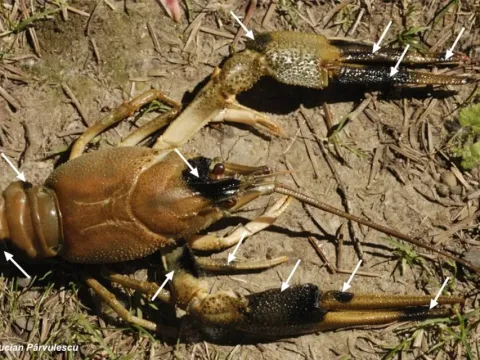
Visible dark brown or black spots or ulcers may appear on the shell and limbs, which are sites where the fungus is actively breaking through the exoskeleton.
The tail and claw musculature often becomes cloudy and white in appearance, which is a clear indicator of advanced necrotic tissue damage caused by the mold.
Mass mortality events are the most common sign of an outbreak, with high numbers of dead crayfish appearing in the water within a very short timeframe.
Environmental temperature is a critical factor for the pathogen, with warmer waters during summer months accelerating the spread and activity of the zoospores.
High population densities in aquaculture ponds significantly increase the transmission rate, allowing the infection to jump between hosts with ease.
Human activities, such as moving fishing gear or boats between different water bodies without proper disinfection, are primary causes of disease outbreaks.
Migratory birds and other animals can inadvertently transport spores on their feathers or feet, facilitating the spread across disconnected habitats.
A lack of effective biosecurity measures in crayfish farming facilities allows the pathogen to enter and proliferate unchecked, leading to total stock loss.
The economic impact of crayfish plague is devastating, as it can eliminate entire commercial populations in a matter of weeks, leading to massive financial loss.
Ecologically, the plague disrupts aquatic ecosystems by removing a vital scavenger species, which affects nutrient cycling and the broader food web.
Native crayfish populations often lack innate resistance to this invasive pathogen, making them highly susceptible to extinction in affected watersheds.
Once established in a body of water, the plague fungus can remain a long-term threat, rendering the site unsuitable for crayfish stocking for years.
The loss of crayfish also impacts other wildlife, including fish species that rely on young crayfish or eggs as a critical source of food.
Implementing strict quarantine protocols is essential to prevent the introduction of Aphanomyces astaci into disease-free environments.
All equipment, including traps, boots, and nets, must be thoroughly cleaned and disinfected before being moved between different water locations.
In the event of an outbreak, the affected water source must be isolated immediately to prevent further human-assisted spread to nearby habitats.
Research into breeding for disease resistance is a key strategy for the future of sustainable aquaculture in regions prone to crayfish plague.
Regular monitoring and rapid diagnostic testing of water samples can help identify the presence of the pathogen before a full-scale epidemic occurs.