
Cranberry anthracnose
Colletotrichum acidae
Description
Symptoms
The first symptoms typically appear on leaves as small, circular or irregular brown spots. These lesions often grow and develop a dark, necrotic margin, which is a classic sign of anthracnose infection.
On stems or runners, the disease manifests as elongated, sunken lesions. As the infection progresses, these lesions can girdle the stem, causing wilting, dieback, and eventually the death of the distal part of the plant.
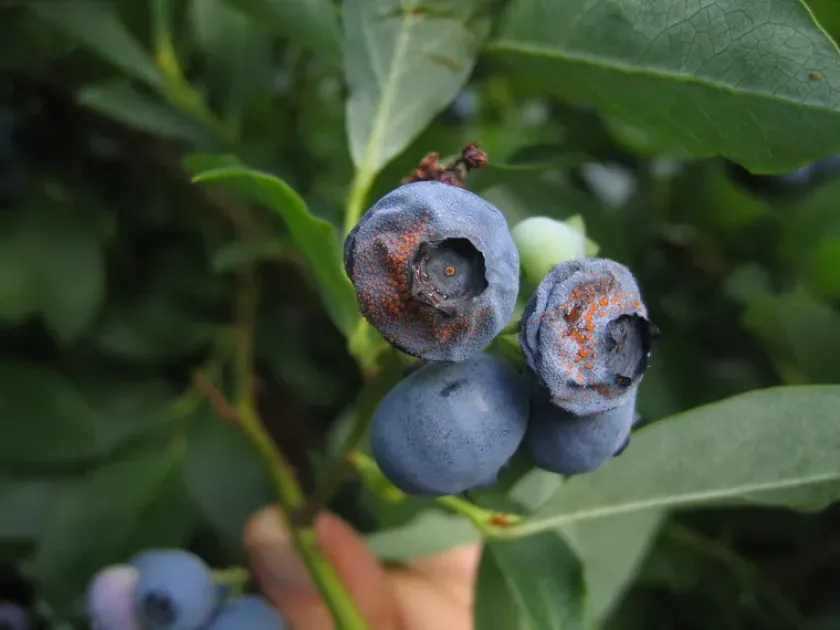
The most devastating symptoms appear on the berries. Initially, small, soft, discolored spots emerge, which expand rapidly as the fruit ripens. Under moist conditions, these spots may develop characteristic pink or orange spore masses.
Heavily infected berries lose their firmness and shrivel, eventually becoming mummified. These fruits are unmarketable and carry a high concentration of spores, which can further spread the infection across the field.
Visual inspection of the canopy often reveals initial infections in the lower, more shaded parts of the bushes, where humidity levels are higher and airflow is restricted.
Pathogen
The causative agent of cranberry anthracnose is the fungus Colletotrichum acidae (formerly associated with the Colletotrichum gloeosporioides complex). This pathogen is a serious threat to cranberry production worldwide.
The fungus survives primarily in infected plant debris, soil, and dormant canes throughout the winter months. It produces spores, or conidia, which serve as the primary inoculum for the next growing season.
Dissemination occurs via water splash, rain, or irrigation systems, which carry the spores to susceptible tissues. Once on the host, the pathogen utilizes specialized structures to penetrate the surface and colonize internal plant cells.
The colonization process is often rapid under favorable climatic conditions. As the fungus consumes plant tissues, it releases enzymes that break down cellular integrity, leading to the characteristic visual symptoms.
Understanding the life cycle of Colletotrichum acidae is essential for timing fungicide applications, as the pathogen's activity peak often coincides with the fruit development stages.
Conditions for development
High humidity and prolonged periods of leaf wetness are the primary drivers of cranberry anthracnose. Rain, heavy fog, and frequent overhead irrigation provide the moisture required for spore germination.
The optimal temperature range for the rapid development of the fungus is between 20°C and 28°C. In this range, the pathogen exhibits high virulence and accelerates the colonization of healthy tissues.
Inadequate field drainage and poor air circulation within the canopy create microclimates that significantly favor disease spread. Overcrowded plantings are particularly vulnerable to sudden outbreaks.
Inconsistent watering patterns or lack of light penetration to the base of the bushes allows the pathogen to establish itself more effectively. Stress factors on the plant also lower the resistance threshold.
The persistence of the fungus in soil and dead plant material ensures that if conditions remain wet, the disease will propagate consistently throughout the growing season.
Why it matters
Cranberry anthracnose is highly damaging, capable of reducing crop yields by 50% or more in severe cases. It significantly impacts the profitability of commercial cranberry farming operations.
The disease weakens the plants, affecting their overall health, vigor, and future reproductive capacity. Chronic infections lead to reduced plant longevity and may eventually necessitate plot renovation.
Harvest quality is severely degraded by the presence of the pathogen. Infected fruits exhibit poor texture and flavor, making them unsuitable for fresh market sales or quality processing.
Economic losses are compounded by the high costs associated with repeated fungicide applications, scouting labor, and the potential loss of entire harvests during harvest season storage.
Moreover, infected fruits are susceptible to secondary rot organisms, which can exacerbate storage losses once the crop has been moved to warehouses or processing facilities.
Protection
Effective management begins with cultural practices, such as choosing well-drained planting sites and ensuring proper row spacing to maximize airflow and sunlight exposure.
Sanitation is vital: removing diseased canes and cleaning up fallen plant material after the harvest helps to reduce the primary inoculum load for the next year.
Chemical control involving fungicides is necessary in high-pressure years. Applications should be timed strategically, focusing on the pre-bloom, bloom, and fruit set stages to protect the most sensitive tissues.
To delay the development of fungicide resistance, it is crucial to rotate chemical products with different modes of action, as Colletotrichum species are prone to developing resistance.
- Use copper-based products during dormant periods.
- Employ systemic fungicides during the active growth and berry development phases.
- Maintain optimal field moisture levels to prevent prolonged leaf wetness.
- Conduct regular scouting to identify the first signs of the disease for early intervention.
Discussion
No discussions yet — be the first.