
Dolichos leaf spot
Phyllachora dolichogena
The disease is caused by the ascomycetous fungus Phyllachora dolichogena. This pathogen is a specialized parasite that primarily infects species of the genus Dolichos, a member of the Fabaceae family.
What the section contains
Dolichos leaf spot
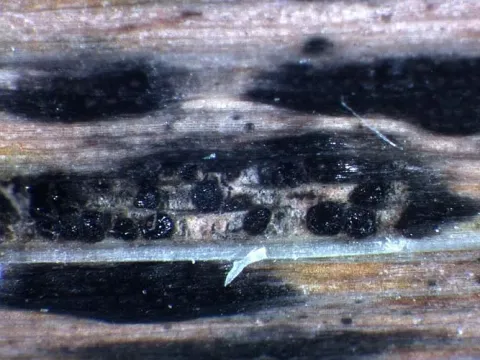
The fungus develops in plant tissues, forming dark, stromatic structures. Within these structures, the sexual stage of the fungus produces perithecia, which contain asci and ascospores.
Phyllachora dolichogena survives in crop debris. During the dormant season, the fungus remains inactive within these tissues, waiting for favorable environmental conditions to release its spores.
Dissemination is largely wind-borne, as moisture triggers the ejection of ascospores from the stromata. These spores land on susceptible host leaves to initiate new infections.
As an obligate parasite, the fungus depends entirely on the living tissues of the host plant to complete its life cycle and maintain its population in the field environment.
The primary sign of infection is the development of distinct black, shiny, and often crust-like spots on the upper surfaces of the leaves, reflecting the presence of fungal stromata.
These spots can be circular or irregularly shaped and often protrude slightly from the leaf surface. As the infection progresses, the surrounding leaf tissue may turn yellow, indicating chlorosis.
In cases of severe infestation, individual spots may coalesce to cover large areas of the leaf surface, significantly reducing the green area available for photosynthesis.
Symptoms also include the appearance of matching dark spots on the underside of the leaves, which correspond to the locations of the fungal structures on the upper side.
Affected leaves tend to wilt, become brittle, and eventually drop prematurely, resulting in early defoliation which is characteristic of advanced stages of this fungal disease.
Development of the disease is favored by high humidity and moderate temperatures. Rain, dew, and persistent fog are critical factors that facilitate spore germination and infection.
Dense plant canopies that lack sufficient airflow create a microclimate with stagnant, humid air, which significantly enhances the spread of the fungus among healthy plants.
The presence of infected plant residue from previous harvests serves as the primary inoculum source. If not managed properly, this residue allows the disease to persist year after year.
Optimal infection temperatures for Phyllachora dolichogena typically range between 20°C and 25°C, matching the growth phase of many leguminous crops.
Dry weather conditions act as a natural check on the disease, slowing down the development of the fungus, although the pathogen can remain dormant until moisture returns.
The damage caused by this pathogen includes a substantial reduction in the photosynthetic efficiency of the crop, which leads to stunted plant growth and poor vigor.
Premature leaf drop drastically reduces the plant's ability to produce pods, leading to significant yield losses in both quantity and quality of the seeds.
Plants affected by Dolichos leaf spot are often more susceptible to secondary infections or environmental stress, further compromising the overall health of the field.
Economic losses arise not only from reduced grain production but also from the increased costs associated with implementing emergency disease management strategies.
In highly favorable conditions for the fungus, uncontrolled outbreaks can lead to major yield deficits, making the crop economically unviable for the season.
The most effective strategy is the implementation of crop rotation, where non-host crops are grown for several years to deplete the fungal inoculum in the soil.
Deep plowing after the harvest is essential to bury infected plant residues, ensuring they decompose rapidly and reducing the likelihood of survival for the pathogen.
Utilizing certified, pathogen-free seeds and selecting resistant or tolerant varieties are crucial steps in preventing the introduction and spread of the disease.
If chemical intervention is required, applying appropriate fungicides at the first sign of symptoms can effectively limit the severity of the infection.
- Ensure adequate plant spacing to promote airflow.
- Remove and destroy volunteers or weeds that may host the fungus.
- Maintain optimal soil nutrition to support plant immunity.