
Dolichodorus
Dolichodorus
Dolichodorus is a genus of plant-parasitic nematodes characterized by their ectoparasitic lifestyle. They reside in the soil and feed on the root systems of various agricultural crops, including winter rapeseed and radish.
What the section contains
Dolichodorus
These organisms are equipped with a long, needle-like stylet used to pierce the cell walls of plant roots. They feed externally, injecting enzymes into the root cells and consuming the resulting liquid nutrients.
The life cycle of these nematodes is highly dependent on the presence of host plants. They can exist in various soil depths, moving towards the root zone attracted by root exudates, which act as chemical signals.
Being highly mobile in soil moisture, these nematodes can spread across fields during irrigation or heavy rainfall. Their ability to survive in the absence of primary hosts by feeding on weed roots makes them difficult to eradicate.
Infestation typically begins in the rhizosphere. Once established, the population density can increase rapidly if the crop rotation does not include non-host species, leading to severe field-wide stress.
Field-level symptoms often appear as patches of stunted, uneven growth. Affected crops are noticeably smaller than surrounding plants and may exhibit a thinning in stand density over time.
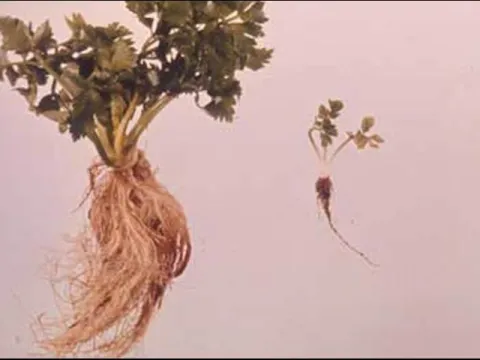
Below the surface, the roots show characteristic damage. They often appear stubby, distorted, or abnormally branched as the plant attempts to compensate for the tissue damage caused by the nematodes.
Above-ground, plants display chlorosis and a general lack of vigor. Because nutrient uptake is severely hampered by root damage, the plants may show symptoms of nitrogen or phosphorus deficiency even in well-fertilized soil.
During periods of heat or water scarcity, infested plants reach the wilting point much faster than healthy ones. The damaged root system lacks the capacity to transport sufficient water to the canopy.
For radish, the damage is particularly evident in the root quality. Harvested radishes may be undersized, malformed, or have dark surface lesions that make them unsuitable for the fresh market.
High soil moisture is essential for the activity and movement of Dolichodorus. They require a thin film of water around soil particles to migrate towards new root sites efficiently.
Optimal development occurs in moderate soil temperatures. Spring months, when seedlings are establishing their root systems, represent the period of highest risk for crop establishment failure.
Soil texture is a major factor in distribution. Sandy and light-textured soils provide the best environment for nematode movement and oxygen exchange, leading to higher infestation rates compared to heavy clay soils.
The presence of weeds throughout the year acts as a reservoir for the nematode population. If fields are left unmanaged, the nematodes can persist on alternative hosts, ensuring a high initial population for the next crop.
Intensive monocropping cycles eliminate the break in the host cycle, allowing the nematode population to reach levels that cause economic threshold breaches in rapeseed and radish productions.
The primary impact of Dolichodorus is the significant reduction in total yield. By damaging the root cortex, the nematode restricts the plant's ability to maximize its growth potential.
The feeding sites act as entry points for secondary soil-borne pathogens. Bacterial and fungal infections often follow the nematode damage, causing rapid root rot that kills the plants entirely.
In winter rapeseed, the nematode-induced damage severely reduces winter hardiness. Plants are unable to accumulate necessary metabolic reserves, leading to high mortality rates during winter months.
In radish cultivation, the cosmetic damage to the roots ruins the economic value of the produce. Even if the plants survive, the malformed roots fail to meet commercial grading standards.
Farmers face substantial economic losses due to the need for crop replanting, reduced quality of harvested produce, and the long-term management costs associated with reducing nematode populations in the soil.
Crop rotation remains the most effective long-term strategy. Rotating infested fields with non-host crops, such as specific cereals or grasses, can starve the nematode population over several seasons.
Sanitation practices are critical to prevent the spread. Cleaning machinery and equipment before moving from infested fields to clean ones prevents the accidental transfer of contaminated soil.
Soil management through deep tillage can expose nematodes to harsher surface conditions, although this method has variable effectiveness depending on the soil depth and local climate.
Biological control, such as the use of soil amendments or fungal-based biopesticides that naturally suppress nematode populations, is becoming an increasingly viable option for sustainable farming.
Chemical control with nematicides is available but is generally reserved for high-value crops due to high costs and environmental regulations. Proper timing and application methods are required for success.