
Domestic Inkcap
Coprinellus domesticus
Description
Symptoms
The initial sign of infestation is the development of a yellowish to orange-brown, velvety or fuzzy mat known as an ozonium on the timber surface.
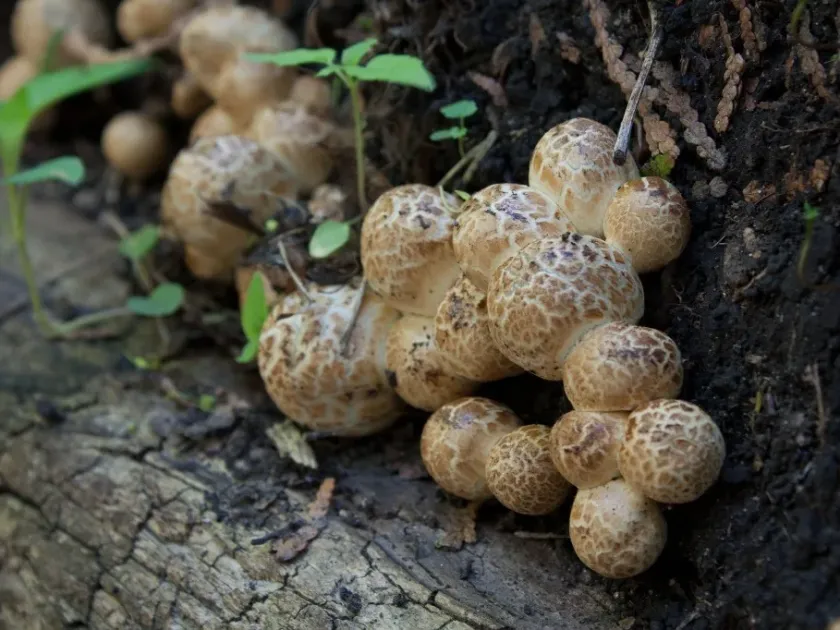
Subsequently, fruit bodies emerge, characterized by a bell-shaped cap with a scaly surface, often displaying white or brownish tones.
Affected wood displays significant structural degradation, becoming soft, brittle, and losing its mechanical strength as the fungus digests the fibers.
During the spore-bearing phase, the gills of the cap turn black and liquefy, a process typical of the Coprinellus genus, leaving dark stains.
A persistent musty or damp odor often accompanies the growth, signaling an active infestation deep within the wooden components of the structure.
Pathogen
The domestic inkcap, known scientifically as Coprinellus domesticus, is a basidiomycete fungus primarily categorized as a saprotrophic wood-decay agent.
It is not a traditional crop pathogen, yet it functions as a highly destructive organism capable of breaking down cellulose and lignin in wooden structures.
The fungus develops a distinctive mycelial network called ozonium, which allows it to colonize and spread across substrates with high efficiency.
Biologically, it is closely associated with rotting timber, making it a common inhabitant of damp indoor and outdoor wooden constructions.
The organism reproduces through spores that circulate via air currents, landing on favorable damp surfaces to initiate a new cycle of colonization.
Conditions for development
Excessive moisture within the wood, typically exceeding 20 percent, is the primary requirement for the successful germination and growth of the fungus.
Stable indoor temperatures ranging from 15 to 25 degrees Celsius create the ideal environment for the mycelium to thrive throughout the year.
Poor ventilation in basements, crawl spaces, and attics allows humidity levels to remain high, facilitating rapid fungal development.
Proximity of timber to moist soil, foundations, or leaking pipes provides a continuous moisture source that fuels the growth of the colony.
Inadequate building maintenance and lack of proper damp-proofing are the main drivers of spread for this specific wood-decay fungus.
Why it matters
The primary harm is the rapid loss of structural integrity in beams, flooring, and support structures, which can lead to significant safety risks.
By consuming wood components, the fungus causes the material to crumble, rendering it unable to bear loads and necessitating costly replacements.
If left unmanaged, the infestation can spread from a localized patch to the entire wooden framework of a building within a short period.
Biological activity of the fungus produces metabolites that may lower the indoor air quality and create unfavorable living conditions.
Extensive damage often results in the need for structural reinforcement or partial demolition of the building to remove all contaminated materials.
Protection
The most effective strategy is moisture control: ensure proper drainage, fix all leaks, and maintain adequate ventilation in all enclosed spaces.
Mechanical removal of the infested wood is mandatory, ensuring that all mycelium-affected areas are completely cut away to stop further spread.
Post-removal, surfaces should be treated with deep-penetrating fungicide-based wood preservatives to kill any remaining microscopic threads.
Regular inspections of all timber elements are recommended to identify early stages of growth, specifically targeting the detection of ozonium mats.
Proactive application of protective coatings and sealants on wood surfaces prevents moisture absorption and makes the timber resistant to colonization.
Discussion
No discussions yet — be the first.