
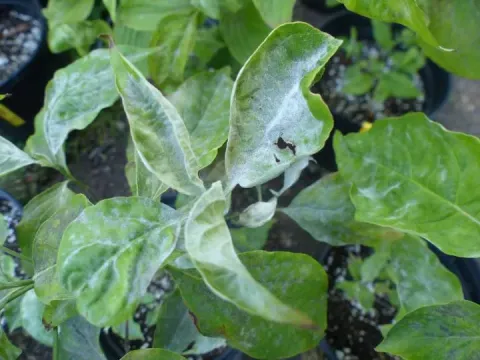
Dogwood powdery mildew
Erysiphe pulchra
The disease is caused by the fungus Erysiphe pulchra, a specialized pathogen belonging to the Erysiphaceae family.
What the section contains
Dogwood powdery mildew
This fungus is an obligate parasite, meaning it requires living host tissue to complete its life cycle and survive.
It colonizes the epidermis of the leaves and stems by sending specialized structures called haustoria into the plant cells to extract nutrients.
Infection spreads mainly through airborne conidia, which are produced in massive quantities during the warm spring and summer months.
The pathogen overwinters as mycelium in dormant buds or as small, black, spherical fruiting bodies called chasmothecia on leaf debris.
Initial infection manifests as small, white, flour-like spots appearing on the adaxial surface of the foliage.
As the infection progresses, these spots expand into a dense, white, felt-like mycelial mat that covers entire leaves.
Infected leaves may become chlorotic, curled, or distorted, and in severe cases, they may drop prematurely from the branches.
Young, growing shoots are often stunted and may show signs of deformation or necrosis due to the heavy nutrient drain by the fungus.
The white powdery growth may eventually cover the petioles and even the fruit if conditions remain favorable for the pathogen.
The fungus thrives in warm, dry to humid conditions, with optimal development occurring between 18°C and 25°C.
Unlike many other fungi, Erysiphe pulchra does not require free water on the leaf surface, but high relative humidity promotes faster infection.
Plants located in shaded areas with limited airflow are significantly more susceptible to outbreaks compared to those in open, sunny locations.
High nitrogen levels in the soil encourage the growth of tender, succulent leaves that are much easier for the fungal hyphae to penetrate.
Poor garden sanitation, where infected leaf litter is left under the tree, ensures a continuous cycle of reinfection year after year.
Powdery mildew reduces the photosynthetic capability of the dogwood, leading to weakened overall vigor and growth rates.
Severe infestations can lead to early senescence, putting the plant under significant stress before the dormancy period begins.
Fruit production is compromised, often resulting in lower yields and poor fruit quality that renders them unsuitable for harvest.
The aesthetic value of the dogwood, particularly when used as an ornamental tree, is severely degraded by the unsightly white coating.
Repeated yearly infections can permanently damage the tree's health, making it more prone to secondary pests and environmental stressors.
Cultural control begins with maintaining good sanitation practices, such as removing and destroying all infected plant materials annually.
Proper pruning is essential to improve airflow through the canopy, which reduces the local humidity levels favorable to the fungus.
Chemical control involving fungicides containing sulfur or systemic triazoles should be applied preventatively or at the very first sign of mildew.
Balanced fertilization that avoids excess nitrogen will help produce stronger, more resilient leaves that are less prone to infection.
- Select powdery mildew resistant cultivars.
- Ensure proper plant spacing for better ventilation.
- Apply biological control agents like Bacillus subtilis.
- Monitor trees regularly during the active growing season.