
Phlyctis
Phlyctis
Phlyctis is a genus of crustose lichens that frequently colonize the bark of fruit and ornamental trees. While often mistaken for a pathogenic disease, it is biologically a symbiotic relationship between a fungus and an alga.
What the section contains
Phlyctis
Unlike parasitic fungi that infect plant tissues and cause decay, Phlyctis acts as an epiphyte. It utilizes the tree bark primarily as a physical support for growth rather than consuming the tree's internal nutrients.
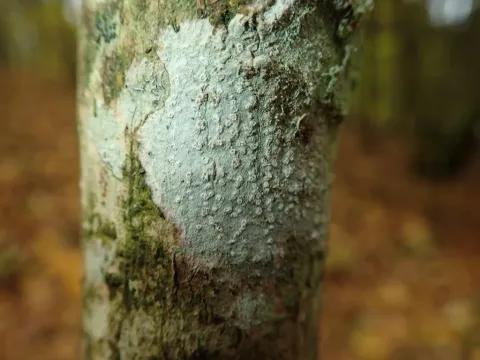
The most common species encountered in temperate orchards is Phlyctis argena. It forms a thin, crust-like thallus that adheres tightly to the surface of the bark, creating a distinctive white or greyish appearance.
The organism obtains its water and minerals from atmospheric sources, such as rainfall and dust particles. It does not penetrate deep into the woody layers of the plant.
While Phlyctis is not a parasite, its presence serves as an ecological indicator. It typically thrives on trees where the bark is stable and has not undergone rapid renewal, suggesting a slowing in the tree's growth rate.
The primary symptom of Phlyctis colonization is the appearance of light-grey, ash-colored, or whitish patches on the trunk and main branches. The surface of these patches is often fine-grained or granular.
As a crustose lichen, it lacks leafy appendages and appears as a persistent coating. It contours perfectly to the texture of the bark, often making the tree look "frosted" or dusted with powder.
In humid conditions, the color may deepen to a subtle greenish or bluish-grey hue. During dry periods, the lichen appears brittle and might flake off slightly if brushed against.
Phlyctis patches expand over time, creating extensive coverage on older branches. This alters the visual appearance of the bark, making it seem smoother or abnormally uniform in texture.
Unlike fungal infections, Phlyctis does not leave necrotic wounds or lesions underneath. When scraped away, the bark underneath usually remains intact, although it may appear lighter in color.
High humidity is the most critical environmental factor for the development of Phlyctis. Orchards with poor air circulation, particularly those in low-lying or shaded areas, are highly susceptible.
Neglected trees with dense, unpruned canopies create a microclimate that prevents bark from drying quickly after rain, favoring the establishment of lichen spores.
Trees that are in a state of stress or slow growth are more prone to colonization. When bark does not shed or grow actively, it provides a permanent, stable surface for the lichen to thrive.
Phlyctis is highly sensitive to air quality. While this means its presence indicates a relatively pollution-free environment, it also suggests that the tree is growing in a stable, humid micro-ecosystem.
Insufficient solar exposure to the trunk is a key catalyst. Sunlight acts as a natural disinfectant and growth inhibitor for lichens, preventing them from covering sunny sides of the tree.
The main harm associated with Phlyctis is its role as a habitat for pests. The textured crust of the lichen provides excellent shelter for mites, scale insects, and aphids to overwinter.
While the lichen does not directly kill the tree, its dense coverage can impede gas exchange through the lenticels of the bark, potentially affecting the tree's physiological processes.
The lichen's ability to retain surface moisture can indirectly create favorable conditions for genuine bark-rotting fungi or bacterial pathogens to gain a foothold on the wood.
For fruit growers, heavy lichen coverage reduces the aesthetic value of the trees and may complicate visual inspections for other serious diseases or pests.
Ultimately, a heavy presence of Phlyctis is a warning signal to the orchardist that the tree's vigor is declining and that management interventions are likely required.
Mechanical removal is the most direct control measure. Using a plastic or wooden scraper to carefully remove the lichen from the bark helps clean the trunk without damaging the underlying tissue.
Following manual cleaning, a dormant spray of iron or copper sulfate can be applied to disinfect the bark surface and eliminate any remaining lichen spores or dormant pests.
Regular pruning to improve the airflow and light penetration through the canopy is the best long-term prevention. A well-ventilated tree is rarely a host to significant lichen growth.
Applying a lime wash to the trunks in early spring or autumn is a traditional and effective method to alter the bark surface chemistry, making it unfavorable for lichen colonization.
Maintaining tree vigor through proper fertilization and irrigation promotes healthy bark renewal. A rapidly growing, healthy tree is much less likely to be overgrown with Phlyctis or other epiphytes.