
Pholiota highlandensis
Pholiota highlandensis
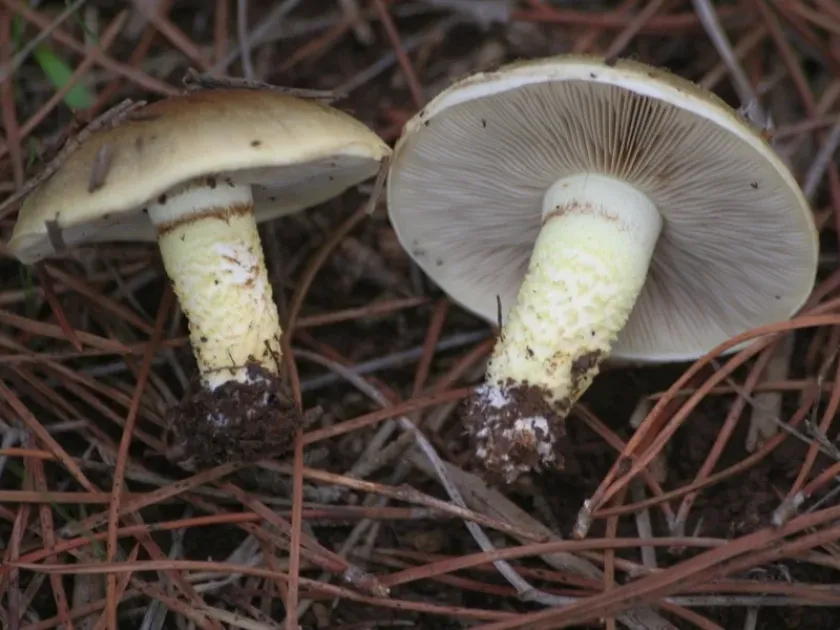
Description
Pathogen
Pholiota highlandensis is a species of mushroom in the Strophariaceae family. Unlike common plant pathogens, it is primarily a saprotrophic fungus that thrives on dead organic matter rather than living plant tissues.
The fungus functions by spreading mycelium throughout the substrate, which produces specialized enzymes. These enzymes facilitate the breakdown of complex structural compounds such as lignin and cellulose within dead wood.
The fruiting body is characterized by a convex, often sticky, rust-brown cap. The gills are typically attached to the stem, providing a key diagnostic feature for mycologists studying this species.
Biologically, Pholiota highlandensis serves as an essential decomposer within the forest floor, playing a vital role in nutrient cycling by returning trapped minerals back into the soil.
While often found in habitats undergoing ecological succession, the fungus does not possess the mechanisms required to infect or harm healthy, living vegetation or agricultural crops.
Conditions for development
The development of Pholiota highlandensis is heavily dependent on the presence of suitable decaying wood substrates. It is particularly well-known for its affinity for fire-disturbed soils and burnt wood.
High moisture levels are critical for the activation of spores and the subsequent colonization of the substrate. The fungus typically exhibits high activity following rainy periods when humidity is optimal.
Optimal temperatures for fruiting and vegetative growth usually fall within moderate ranges. Extreme heat or prolonged frost can inhibit the visible development of fruiting bodies, though the mycelium remains persistent.
Spore dispersal occurs via air currents. Once spores land on a nutrient-rich, moist wood surface, they germinate and initiate a new fungal colony, often expanding rapidly if no competition is present.
Burnt areas, or forest gaps where debris has accumulated, provide a unique environment where reduced microbial competition allows Pholiota highlandensis to dominate the decay process.
Why it matters
From an agricultural standpoint, Pholiota highlandensis is not classified as a disease of crops. It poses no threat to field vegetables, grains, or orchard trees that are in good health.
In timber management, the fungus can be considered a nuisance when it colonizes stored lumber. Its enzymatic activity accelerates wood decay, potentially compromising the structural integrity of timber.
In urban forestry or landscaping, the presence of this fungus on older trees is usually a secondary indicator of existing decay. It colonizes dead limbs, which may indicate that the tree requires sanitary intervention.
Economic impact is generally limited to situations where timber is stored under improper conditions. If wood is kept in contact with soil or high-humidity environments, fungal growth can lead to significant material degradation.
Overall, the fungus is rarely viewed as a pest that requires aggressive chemical control, as its ecological niche is primarily restricted to dead organic materials that are part of the natural decay cycle.
Protection
Control measures for Pholiota highlandensis are focused on environmental management rather than the use of fungicides. The most effective approach is the removal of deadwood and forest debris.
To protect lumber, it is essential to ensure proper storage practices. Keeping wood off the ground and in well-ventilated, dry areas prevents the colonization of fungal spores and subsequent decay.
In park and forest management, regular monitoring and the removal of hazardous dead branches prevent the buildup of fungal populations. This practice also enhances the aesthetic value of the area.
Post-fire forest management should include the clearing of severely damaged materials if the land is intended for specific agricultural or timber use, as burnt areas are prime habitats for this species.
If wood preservation is required for architectural or decorative purposes, treating the timber with standard industrial wood preservatives or fungicides will effectively neutralize the threat of fungal colonization.
Discussion
No discussions yet — be the first.