
Pholiota spumosa
Pholiota spumosa
Description
Symptoms
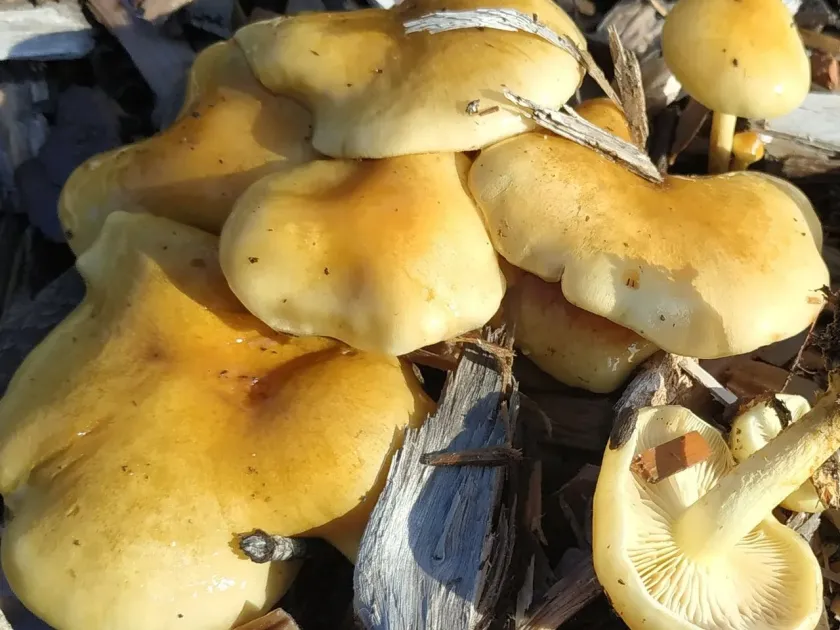
The primary external sign of Pholiota spumosa presence is the emergence of clusters of yellow-brown mushrooms on the bark or near pruning sites.
These fruiting bodies often display a viscid or slimy surface, particularly in damp weather, which serves as a key identifying characteristic of the species.
Internal symptoms involve the softening and discoloration of the wood, which progressively turns into a spongy rot that compromises the tree's stability.
Infected trees may exhibit signs of general decline, such as yellowing foliage, branch dieback, and reduced canopy vigor over several seasons.
The presence of deep cracks or exfoliating bark near the base or in branch crotches often indicates an underlying area of fungal colonization.
Pathogen
Pholiota spumosa, commonly known as the slimy scalycap, is a basidiomycete fungus that primarily acts as a saprotroph or a weak parasite on wood.
The pathogen initiates infection when spores land on damaged bark or exposed woody tissues of stressed or weakened orchard trees.
Once established, the fungal mycelium penetrates the xylem, utilizing enzymes to break down cellulose and lignin, effectively decomposing the wood structure.
Although it often colonizes decaying wood, it can opportunistically invade living but vulnerable trees, leading to chronic internal damage.
The life cycle of this fungus involves the production of clustered fruiting bodies, which appear in moist, favorable conditions to release mass amounts of spores.
Conditions for development
High humidity and consistent moisture levels are the most critical factors favoring the rapid spread and establishment of Pholiota spumosa mycelium.
Poor orchard ventilation and densely planted trees create an ideal microclimate, reducing evaporation and allowing moisture to linger on tree surfaces.
Mechanical injuries resulting from frost cracks, improper pruning techniques, or pest damage provide the entry points necessary for the fungus to invade.
Trees suffering from nutrient deficiencies or environmental stress are significantly more susceptible to infection compared to healthy, well-maintained specimens.
Late summer and autumn, characterized by frequent rainfall and mild temperatures, often see the most prolific growth of reproductive structures.
Why it matters
The main danger posed by Pholiota spumosa is the development of internal heart rot, which gradually weakens the tree's structural integrity.
As the rot progresses, the tree becomes increasingly susceptible to wind damage, potentially leading to catastrophic branch failure or trunk collapse.
The destruction of wood tissues interferes with the tree's vascular system, leading to decreased vigor, stunted fruit growth, and poor harvest quality.
The infection is often difficult to detect in its early stages, meaning that by the time fruiting bodies appear, substantial internal damage may have already occurred.
Furthermore, an infected tree serves as a continuous reservoir for spores, increasing the risk of disease transmission to adjacent healthy orchard trees.
Protection
Effective management begins with maintaining high tree vigor through proper irrigation, fertilization, and general orchard hygiene practices.
All pruning should be performed using sharp tools, and any resulting cuts larger than 2-3 cm must be sealed with a protective wound dressing.
Regular inspections are essential; any visible fruiting bodies should be manually removed and destroyed to minimize the spread of fungal spores.
If a tree shows severe decay and structural instability, it should be removed and destroyed to prevent the fungus from spreading to the rest of the orchard.
Improving air circulation through thinning and light management helps keep the canopy dry, which discourages the growth of many wood-decay pathogens.
Discussion
No discussions yet — be the first.