
Pholiota populnea
Pholiota populnea
Description
Symptoms
The most visible symptom is the presence of clusters of mushrooms growing from cracks or wounds on the trunks of affected trees.
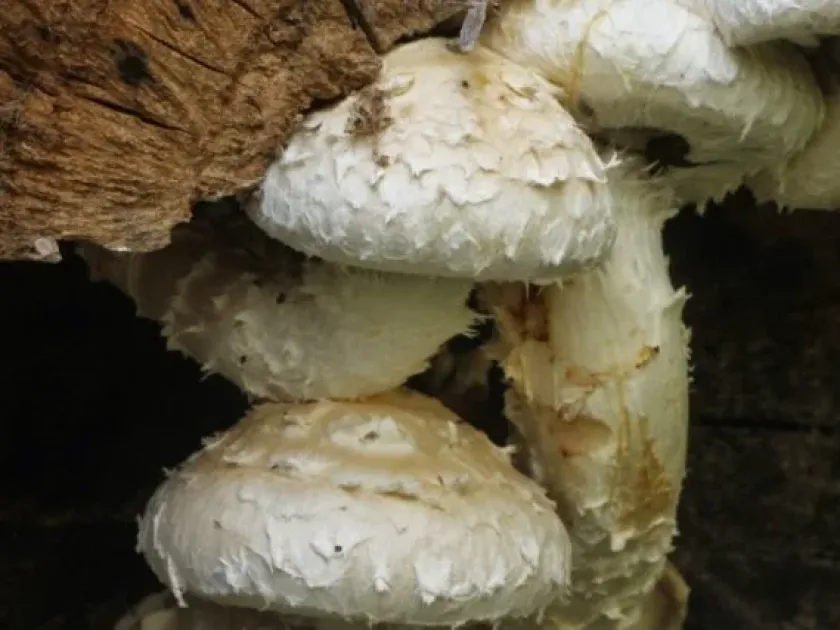
Fruiting bodies typically appear as scaly, yellow-brown caps that may have remnants of the veil attached to the edges.
Internal examination of the wood reveals extensive decay, causing the wood to become soft, discolored, and fibrous.
Externally, the bark may show signs of peeling, cracking, or localized sunken areas as the internal support structure collapses.
Advanced stages of the infection are often accompanied by canopy thinning and premature defoliation as the tree’s water transport is disrupted.
Pathogen
The disease is caused by Pholiota populnea, a wood-decay fungus classified within the Basidiomycota phylum.
This fungus primarily acts as a saprotroph, but it can aggressively colonize the heartwood and sapwood of living deciduous trees.
The mycelium secretes specific enzymes that degrade complex organic compounds such as lignin and cellulose, leading to white rot.
Fruiting bodies are produced on the exterior of the host, facilitating the dispersal of spores via wind currents.
Once settled on vulnerable tissue, the spores germinate and initiate the invasive growth process throughout the tree structure.
Conditions for development
The spread of Pholiota populnea is favored by high moisture conditions, which are essential for spore germination.
Trees that have sustained mechanical wounds, frost cracks, or pruning damage are significantly more susceptible to infection.
Overcrowded forest stands with poor airflow provide an ideal microclimate for fungal proliferation and spore accumulation.
Trees under abiotic stress or those growing in suboptimal soil conditions exhibit lower defenses against fungal invasion.
The presence of decaying stumps or woody debris in the vicinity acts as a continuous source of inoculum for healthy trees.
Why it matters
The fungus causes severe internal decay, compromising the structural integrity and stability of the host tree.
The economic value of timber from infected stands is drastically reduced due to the degradation of the wood fibers.
Trees affected by this pathogen pose a significant risk of failure, endangering nearby infrastructure and public safety.
The disease contributes to the premature decline of riparian ecosystems and urban poplar plantations.
If left unmanaged, the fungus can decimate large areas of timber production, causing substantial long-term losses.
Protection
Effective management begins with the systematic removal and destruction of heavily infected trees and hazardous wood debris.
Stump removal is highly recommended to prevent the fungus from spreading to the root systems of healthy neighboring trees.
Preventative care includes the protection of the bark from mechanical injuries and the proper sealing of any necessary pruning wounds.
Regular forest health assessments are necessary to identify and treat initial infections before they spread through the stand.
Silvicultural practices that promote tree vigor, such as appropriate thinning, help maintain the natural resistance of the forest.
Discussion
No discussions yet — be the first.