
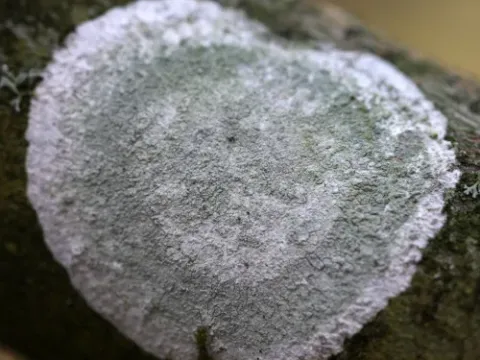
Phlyctid fungi
Phlyctidaceae
Phlyctid fungi (family Phlyctidaceae) are a group of lichenized fungi that are commonly found on tree bark throughout various climatic zones.
What the section contains
Phlyctid fungi
In terms of plant health, they act primarily as epiphytes, though they can colonize the bark of trees that have already become stressed or weakened due to environmental factors.
The fungus propagates through spores that are dispersed by wind and rain, allowing it to colonize suitable surfaces with high humidity levels.
While not primary pathogens of living wood, their presence often indicates a decline in the host tree's overall vitality and a need for better orchard management.
Biological studies categorize these fungi as specialized organisms that thrive in stable microclimates found on older tree surfaces.
The most visible sign of Phlyctidaceae is the presence of flat, crust-like patches on the bark, often ranging in color from whitish-grey to pale yellow.
These fungal colonies are typically tightly adhered to the substrate and may appear as thin, irregularly shaped blemishes on the trunk.
Small fruiting structures, known as apothecia, may be observed upon close inspection, appearing as tiny dots or slight elevations embedded within the thallus.
In cases of heavy colonization, the bark may show signs of roughness and accelerated peeling, which is a reaction to the presence of the fungal growth.
Symptoms are most commonly detected on the shaded sides of trunks or in the lower, more humid portions of the tree canopy.
Phlyctid fungi development is strictly dependent on high ambient humidity and the presence of prolonged moisture on the bark surface.
Overcrowded orchards with restricted airflow create a static, moist microclimate that facilitates the germination and spread of fungal spores.
Low light levels, caused by excessive foliage density, contribute to the persistence of moisture and the growth of lichenized fungal crusts.
Trees that are poorly nourished or suffer from pest damage are more prone to heavy colonization, as their natural bark defense mechanisms are compromised.
Periods of mild, wet weather are optimal for the maturation of fungal reproductive structures and their subsequent dispersal.
The primary harm caused by phlyctid fungi is the creation of a micro-habitat that protects various bark-dwelling pests from predators and insecticides.
Extensive crusts may physically obstruct the natural bark surface, leading to reduced efficiency in bark respiration and gas exchange.
Although they rarely penetrate deep into the phloem, their long-term presence can contribute to premature bark degradation and necrosis.
Heavy fungal coverage masks the appearance of more aggressive trunk diseases, significantly delaying the diagnosis of potentially lethal infections.
In a commercial orchard setting, the presence of these crusts reduces the overall health index and aesthetic value of the trees.
Regular maintenance of orchard hygiene, specifically the manual removal of dead bark and cleaning of trunks, is the most effective preventative measure.
Proper pruning practices that ensure adequate light penetration and ventilation significantly decrease the humidity required for fungal growth.
Application of copper-based fungicides during the dormant season helps to eliminate fungal spores and prevents new colonization.
Promoting tree vigor through balanced fertilization and appropriate irrigation helps the tree maintain a more resistant bark surface.
- Regular bark inspection and cleaning
- Pruning for better air circulation
- Dormant season copper treatments
- Optimizing tree nutrition for vigor