
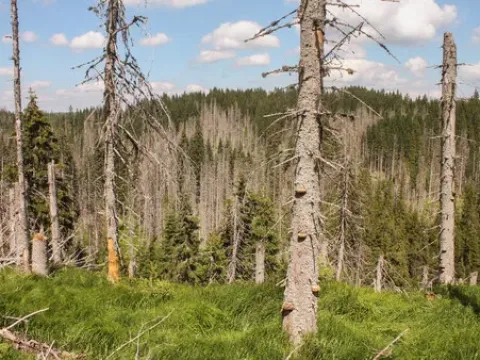
Phellinidium pouzarii
Phellinidium pouzarii
The primary symptom of infection is the emergence of perennial fungal fruiting bodies on tree trunks. These structures are typically hoof-shaped or shelf-like, characterized by a firm, cork-like consistency.
What the section contains
Phellinidium pouzarii
The surface of the fruiting body is usually dark brown to black, often showing a cracked, rough texture. The interior tissue of the conk typically displays a distinctive rusty-brown coloration.
When inspecting the wood, internal heart rot becomes evident as the fungus breaks down the internal structure. This leaves the wood brittle and structurally unsound, often rendering it commercially useless.
In areas where the mycelium emerges, the bark may peel or become severely deformed, indicating advanced stages of colonization within the tree's cambium and sapwood layers.
Affected trees gradually lose their resistance to wind shear and mechanical stress. Visually, this is manifested by crown dieback and a thinning canopy as the tree's ability to transport water declines.
The pathogen is Phellinidium pouzarii, a wood-rotting fungus within the Hymenochaetaceae family. It functions as a saprotrophic and parasitic organism, decomposing complex organic matter.
The fungus propagates through a mycelial network that penetrates deep into the wood. It utilizes specialized enzymes to break down lignin and cellulose, which are the main components of the cell walls.
The life cycle begins when spores land on fresh bark wounds or exposed wood. High moisture and specific environmental conditions facilitate the germination process and subsequent establishment of the mycelium.
As a specialized pathogen, it effectively outcompetes other microorganisms within the host wood, ensuring its survival and continued growth over many years.
The fungus develops slowly within the tree, often remaining asymptomatic for long periods until the internal structural integrity of the host has been significantly compromised.
High humidity and consistent moisture levels are essential for the proliferation of Phellinidium pouzarii. The fungus thrives in shaded, dense forest environments where evaporation rates are low.
Old or stressed trees are the most susceptible to infection. Environmental factors such as drought or mechanical injury weaken the tree's defenses, allowing the fungus to gain a foothold.
Moderate temperatures during the growing season promote spore germination and fungal metabolism, leading to faster colonization rates within the host tree.
Physical trauma, such as deep bark scrapes caused by storms or logging operations, serves as the primary entrance for the fungus to bypass the tree's natural barriers.
In forest stands with high density and poor air circulation, the prolonged period of bark wetness creates an ideal microclimate for the fungus to reproduce and spread.
The fungus causes severe heart rot, leading to the destruction of the wood's structural properties. This creates significant financial losses in timber value and quality.
By compromising the tree's vascular system, the fungus induces physiological stress, leading to a reduced growth rate and eventual tree death if the infection is widespread.
The presence of this fungus disrupts the ecological balance of the forest, as it contributes to the sudden loss of individual trees and changes in local canopy dynamics.
Safety risks are a major concern, as trees infected with internal heart rot are prone to windthrow and trunk failure, posing hazards in public parks and managed forests.
The degradation of wood by Phellinidium pouzarii reduces the tree's ability to act as a carbon sink, negatively impacting the environmental services provided by the forest.
Management relies heavily on sanitary harvesting practices. Removing infected trees before the fungus can produce new spores is the most effective method for containment.
Regular forest health monitoring and inspections are crucial to identify infected trees early. Prompt removal of sporulating conks can help slow the spread within a forest stand.
Preventative care, such as minimizing mechanical damage to bark during maintenance or harvesting, is essential to deny the pathogen entry points into the wood.
Maintaining a healthy, resilient stand through proper silvicultural management helps trees better resist fungal infections and reduces overall susceptibility.
- Conduct systematic sanitary thinning and log removal.
- Avoid bark injuries during forestry operations.
- Monitor for fruiting bodies to map disease progression.
- Remove dead wood and debris to minimize infection reservoirs.