
Phellinus punctatus
Phellinus punctatus
Description
Symptoms
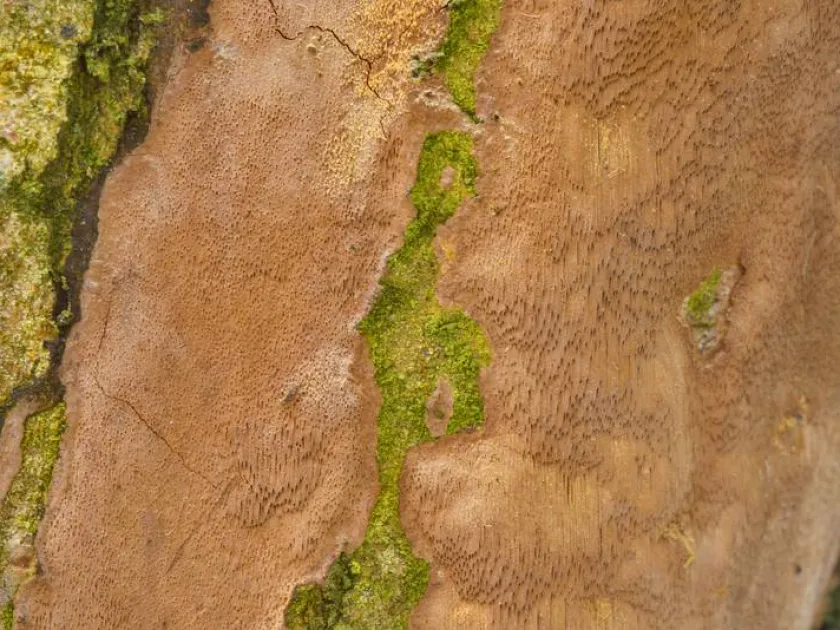
The most visible sign of infection is the presence of the fungus's hard, crust-like fruiting bodies on the trunk or branches. These are often mistaken for simple bark irregularities, but they are distinctively rigid and attached.
Bark cracking and localized dieback are common symptoms. As the interior wood rots, the affected bark may dry out, split, and eventually flake away, revealing the soft, decayed texture of the inner wood layers.
Trees affected by Phellinus punctatus often display symptoms of decline, including thinning canopies and reduced annual growth. Foliage may appear chlorotic or wither prematurely due to the restricted flow of water and nutrients.
Structural instability is a critical indicator. Heavily infected branches or trunks often become brittle, showing an increased risk of breaking during high winds, even when the tree appears outwardly healthy.
- Rigid, crusty fruiting bodies on bark.
- Deep cracks or splits in the trunk.
- Wilting or premature yellowing of leaves.
- Internal white rot visible on cross-sections.
- Reduced crown density and twig dieback.
Pathogen
Phellinus punctatus is a wood-decaying basidiomycete fungus that acts as a serious pathogen for various deciduous trees. It functions as a white rot agent, progressively breaking down the structural components of wood.
The fungus colonizes the tree through wounds, pruning cuts, or frost-damaged bark. Once inside, the mycelium secretes enzymes that decompose cellulose and lignin, leading to internal decay that weakens the tree's architecture.
Fruiting bodies are typically perennial, appearing as flat, crust-like formations that adhere tightly to the bark. They are often brown or grayish in color and can expand over several years of growth.
The biological cycle involves the production of spores, which are disseminated by wind and splashing rainwater. These spores require specific moisture conditions to germinate and establish new infections on vulnerable host surfaces.
As a pathogen, it is highly persistent and can survive within the heartwood of a tree for many years, slowly expanding its influence throughout the woody tissues of the trunk and primary branches.
Conditions for development
High humidity and poor air circulation in densely planted orchards favor the development of Phellinus punctatus. Moisture trapped in the bark provides an ideal environment for spore germination.
Environmental stress factors, such as drought or frost injuries, significantly increase a tree's susceptibility to fungal attack. Wounded trees have compromised defense systems, allowing the fungus to enter easily.
The presence of woody debris, such as fallen branches or old stumps, serves as a breeding ground for the pathogen. In these sites, the fungus accumulates and produces spores that threaten healthy nearby trees.
Temperature plays a role in the fungal metabolic rate, with warmer, humid conditions speeding up the colonization process. However, the fungus is highly adaptive and can persist across varied climatic regions.
Improper pruning practices, specifically leaving large, untreated wounds, remain the primary cause of transmission in managed settings. The lack of tool hygiene further facilitates the spread from infected to healthy trees.
Why it matters
The primary threat posed by this fungus is the irreversible degradation of the tree's structural integrity. This leads to internal rot that can cause spontaneous breakage of the main trunk, posing a safety risk.
Productivity is severely impaired as the fungus disrupts the vascular system, preventing the tree from distributing water and minerals effectively. This leads to diminished yields and poor fruit quality.
For orchard owners, Phellinus punctatus causes significant economic damage through the loss of mature trees. Replacing affected trees involves high costs and long periods of reduced output for the orchard.
The pathogen significantly weakens the tree, making it susceptible to secondary infections by other pests and diseases. This synergistic effect accelerates the decline and eventual death of the affected specimen.
Because deep-seated rot is nearly impossible to cure, the disease often leads to the complete removal of infected plants, resulting in gaps in the orchard landscape and loss of historical growth.
Protection
Effective management focuses on prevention and early detection. Regular pruning should be conducted using disinfected tools, and all cuts must be sealed with appropriate wound paint or fungicides.
Maintaining tree vigor through proper fertilization, irrigation, and soil management helps bolster natural defenses against fungal invasion. A healthy tree is significantly more resilient than a stressed one.
If the fungus is detected, immediate removal of fruiting bodies and localized cleaning of the infected area to expose healthy wood is recommended, followed by a disinfectant application.
Sanitation is paramount; all infected woody material must be removed and destroyed by burning to stop the cycle of spore dissemination. Leaving such debris in the field is a major biosecurity risk.
Strategic monitoring of the orchard at least twice a year allows for the identification of initial symptoms. Early intervention is the only way to mitigate the long-term impact of this wood-decaying fungus.
Discussion
No discussions yet — be the first.