
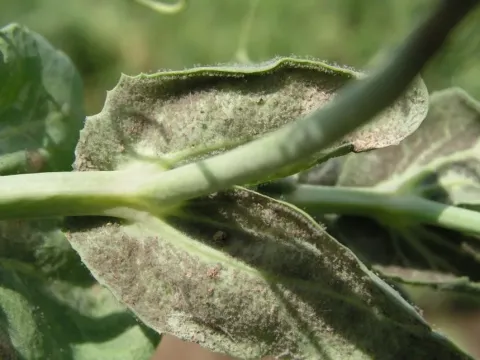
Downy mildew of chickpea
Peronospora ciceris
The causative agent of the disease is Peronospora ciceris, an oomycete pathogen that specifically targets chickpea (Cicer arietinum) crops.
What the section contains
Downy mildew of chickpea
This disease is categorized as a type of downy mildew. The pathogen produces oospores which are highly resilient and can survive in the soil and on crop residues for extended periods.
The life cycle involves the asexual reproduction of sporangia, which are disseminated by wind or splashing rain. Upon reaching the host plant, the pathogen penetrates the tissues through stomata.
The pathogen functions as an obligate parasite, utilizing haustoria to withdraw nutrients directly from the host cells, leading to metabolic decline in the plant.
Its biological cycle is strictly dependent on the presence of the host, making crop rotation a key factor in managing the inoculum density in the field.
Initial symptoms are characterized by chlorotic, yellowing spots appearing on the upper surface of the leaves.
A distinctive feature is the emergence of a greyish or violet-tinted mold growth on the underside of the affected leaf areas, representing the pathogen's sporulation.
As the disease progresses, these spots coalesce, causing leaves to yellow, wither, and drop prematurely, resulting in significant defoliation.
Severe infections can extend to petioles and stems, leading to stunted plant growth and overall crop failure in highly infested fields.
The reproductive organs can also be affected, leading to malformed pods and reduced grain filling, which compromises the overall yield quality.
High relative humidity and cool-to-moderate temperatures provide the optimal environment for the development and spread of Peronospora ciceris.
Wet weather conditions, including heavy dew, fog, or frequent rain, are essential for the germination of spores and their mobility on the plant surface.
Dense planting patterns reduce air movement within the crop canopy, maintaining a humid microclimate that facilitates the rapid spread of the disease.
Field areas with poor drainage are particularly susceptible to early and more intense outbreaks of downy mildew.
High levels of soil-borne inoculum from previous seasons significantly increase the likelihood of early infection if favorable environmental conditions persist.
The primary damage is caused by the loss of photosynthetic leaf area, which severely restricts the plant's ability to produce the energy required for grain filling.
Yield losses can be substantial, with serious infestations leading to a 20-40% reduction in seed weight and overall quantity.
Seed quality is often downgraded, resulting in smaller, shriveled grains that possess lower market value and poor germination potential.
Weakened plants are more susceptible to secondary fungal and bacterial infections, which can further complicate the health status of the crop.
Economic losses arise not only from reduced yields but also from the increased costs associated with repeated fungicide applications required to contain the spread.
- Implement a strict crop rotation cycle to reduce the population of soil-borne oospores.
- Use certified, disease-free seed lots to prevent the introduction of the pathogen into new areas.
- Ensure proper management of crop debris through deep tillage to accelerate decomposition.
- Select and plant chickpea varieties that exhibit resistance to downy mildew.
- Apply protective or systemic fungicides at the onset of symptoms, following integrated pest management guidelines.