
Downy mildew of camelina
Hyaloperonospora camelinae
Description
Symptoms
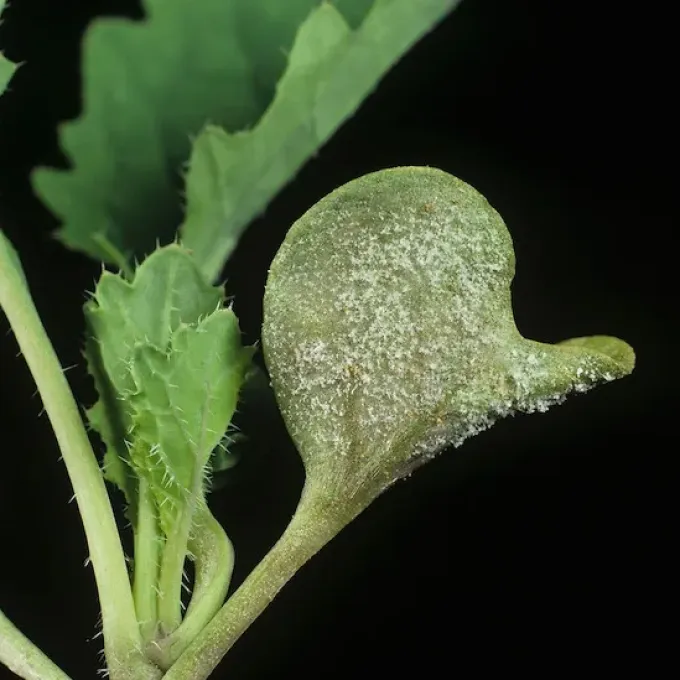
Initial symptoms are characterized by chlorotic, pale yellow patches on the upper surface of the leaves, often constrained by leaf veins, giving them an angular appearance.
Under conditions of high humidity, a distinctive grayish to violet downy growth appears on the underside of these patches. This consists of masses of sporangiophores and sporangia.
As the infection progresses, the chlorotic spots become necrotic, turning brown or gray. Infected leaves often curl, wither, and drop prematurely, causing stunted plant growth.
In severe infections, the pathogen can spread to the stems and floral structures, leading to deformation and flower abortion, which directly affects pod formation.
The disease usually appears in focal patches in the field, which expand as the pathogen spreads from infected individuals to healthy ones.
Pathogen
The causative agent of the disease is the oomycete Hyaloperonospora camelinae. It is a highly specialized, obligate biotrophic pathogen that exclusively affects species within the Camelina genus.
The pathogen completes its life cycle by producing sporangia that are dispersed by wind and splashing rain. The mycelium grows intercellularly, extracting nutrients through haustoria that penetrate the plant cells.
Oospores are the primary survival structures. These thick-walled spores can persist in the soil for several seasons, ensuring the pathogen remains present in the field even in the absence of a host crop.
The fungus is genetically adapted to the specific metabolic pathways of camelina, allowing it to rapidly colonize susceptible plant tissues under optimal conditions.
As an obligate parasite, it relies entirely on the vitality of its host to complete its reproduction, which is why it often leads to premature senescence of infected tissues.
Conditions for development
The disease thrives in cool, humid environments. High relative humidity and the presence of leaf moisture are essential for the germination of sporangia and subsequent infection.
Temperatures ranging between 12°C and 18°C are considered optimal for the development of the pathogen. Warmer, drier conditions significantly inhibit the spread of the disease.
Dense plant stands promote poor air circulation, which keeps the foliage wet for longer periods, significantly increasing the risk of rapid epidemic development.
Field history is critical, as oospores in crop debris or the soil serve as the inoculum source. Continuous cropping of camelina on the same land facilitates the buildup of the pathogen.
Excessive morning dew and frequent rainfall events during the vegetative stage are major triggers that drive the infection cycles across the field.
Why it matters
Downy mildew causes significant physiological stress to the plant by reducing the active photosynthetic area. This reduction limits the energy available for seed development.
Yield losses are primarily due to reduced seed weight and lower oil content. In cases of severe early-season infection, the crop stand can be significantly thinned.
Infected plants exhibit reduced vigor, making them more susceptible to environmental stresses such as drought or secondary opportunistic infections by other pathogens.
The quality of harvested seed can be compromised, potentially affecting its germination rate and suitability for use as sowing material in the next season.
The economic impact involves both a direct decrease in harvestable volume and an increase in costs associated with the necessity of chemical intervention.
Protection
Crop rotation is the most effective cultural practice. A break of at least 3 years between camelina crops helps significantly reduce the population of soil-borne oospores.
Choosing resistant or tolerant varieties is the primary strategy for integrated disease management. Breeding programs focus on these traits to provide long-term protection.
Effective management of crop residues through tillage or rotation practices helps to minimize the initial inoculum load in the field.
- Optimization of seeding rates to ensure canopy aeration.
- Seed treatment with systemic fungicides to protect seedlings.
- Application of foliar fungicides at the first sign of symptoms during the early vegetative phase.
Proper nutrient management, ensuring adequate potassium and phosphorus, helps maintain plant health and bolsters natural resistance to infection.
Discussion
No discussions yet — be the first.