
Downy mildew of chrysanthemum
Paraperonospora chrysanthemi-coronarii
Description
Symptoms
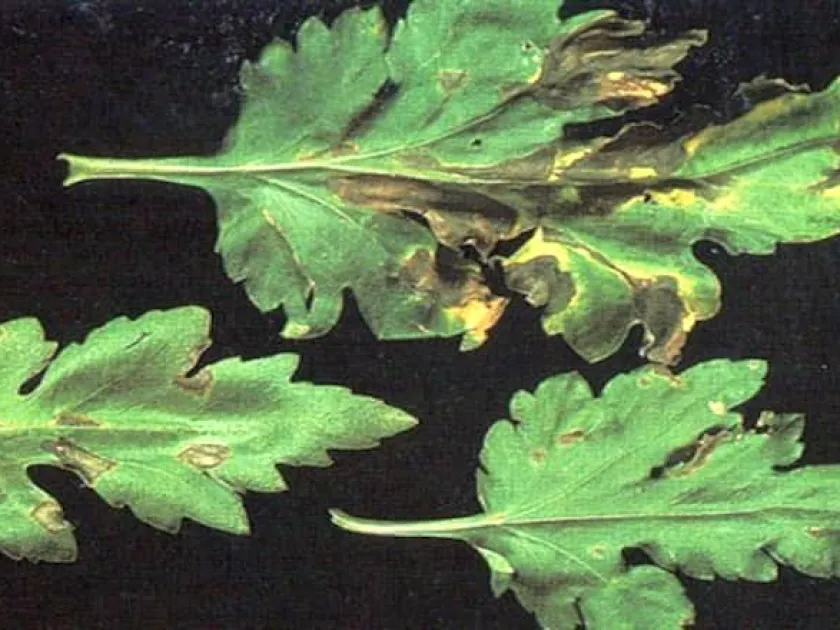
The primary symptom of the disease is the appearance of pale green or yellow chlorotic spots on the upper leaf surface, often delineated by veins.
On the underside of the leaf, a grayish or white powdery growth forms, consisting of the sporangia and sporangiophores of the pathogen.
As the infection progresses, these spots turn necrotic, becoming brown or dark in color, which leads to leaf drying and premature abscission.
Severe infestations can cause stunting, distortion of terminal shoots, and a significant decrease in the overall vigor of the chrysanthemum plant.
In high humidity conditions, the pathogen spreads rapidly, covering the entire plant and causing substantial damage to the foliage within days.
Pathogen
The disease is caused by the oomycete Paraperonospora chrysanthemi-coronarii, which is an obligate parasite of the Asteraceae family.
The pathogen completes its life cycle by forming zoospores that require free moisture to migrate and infect new healthy leaf tissue.
It can overwinter as oospores in plant debris or the soil, serving as a primary source of inoculum for the next growing season.
The mycelium grows intercellularly, absorbing nutrients directly from the host cells and disrupting the plant's photosynthetic functions.
Dissemination occurs primarily through wind-borne sporangia or splashing water during irrigation or rainfall events.
Conditions for development
Downy mildew development is heavily dependent on high relative humidity, typically above 80%, and cool to moderate temperatures.
The temperature range between +15°C and +20°C is considered optimal for the pathogen's sporulation and subsequent infection of chrysanthemum leaves.
Lack of proper air circulation in greenhouses and high-density planting create microclimates that favor the establishment and spread of the disease.
Extended periods of leaf wetness, such as those caused by night-time irrigation or fog, are critical for the germination of zoospores.
Poor drainage and excessive soil moisture can also stress the plants, making them more susceptible to rapid fungal colonization.
Why it matters
The disease causes major economic losses in the floriculture industry by ruining the marketability of the cut flower harvest.
Premature leaf loss exhausts the plants, preventing them from developing strong roots or stems required for high-quality blooming.
In landscape plantings, the aesthetic value of the chrysanthemums is severely diminished due to the yellowing and necrosis of the leaves.
Propagation beds are particularly vulnerable, where the pathogen can kill young cuttings, leading to high nursery mortality rates.
Unchecked outbreaks can serve as a constant source of infection for subsequent batches, requiring strict quarantine measures.
Protection
Effective management begins with strict environmental control, including lowering humidity and ensuring adequate ventilation in greenhouse settings.
Sanitation is critical; all infected plant debris must be collected and disposed of immediately to remove the source of inoculum.
Chemical control involves the application of appropriate fungicides, such as those containing metalaxyl, fosetyl-aluminum, or copper-based compounds.
- Utilizing disease-free starting material or resistant varieties.
- Implementing drip irrigation to keep the foliage as dry as possible.
- Spacing plants to ensure air movement and lower humidity levels.
Regular monitoring of crops for early signs of infection allows for targeted spray applications before the disease reaches an epidemic level.
Discussion
No discussions yet — be the first.