
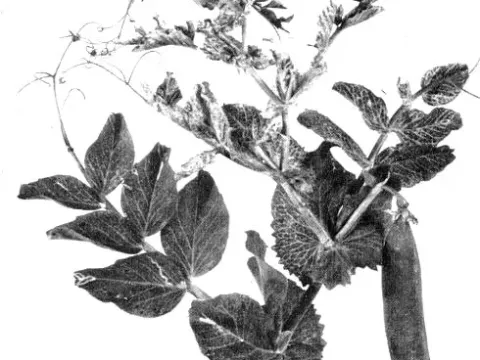
Red clover vein mosaic virus
Red clover
The causative agent of this disease is the Red clover vein mosaic virus (RCVMV), a member of the Carlavirus genus.
What the section contains
Red clover vein mosaic virus
This virus is a systemic pathogen, meaning it travels through the vascular tissues of the host plant, disrupting internal physiological processes.
The primary reservoir for this virus in agricultural landscapes is perennial legumes, especially red clover, which serves as a long-term host.
Transmission occurs predominantly through insect vectors, specifically various species of aphids that feed on infected plants and then transfer the virus to healthy ones.
Mechanical transmission is also possible; the virus can spread during crop maintenance, handling, or contact between diseased and healthy vegetation.
The most prominent initial symptom is vein clearing on the leaves, which eventually progresses into a classic mosaic pattern of light and dark green patches.
Infected pea plants exhibit significant stunting or dwarfism, characterized by shortened internodes and a general reduction in overall plant height.
Leaves often appear deformed, puckered, or curled, and the overall plant vitality is severely diminished, hindering normal development.
Flowering is usually inhibited or delayed, and the production of pods is drastically reduced, often leading to total yield loss in severely infected individual plants.
- Vein clearing on leaf tissue
- Severe stunting and dwarfism
- Deformed and puckered leaves
- Reduced flower and pod formation
The spread of the virus is highly dependent on the population dynamics of aphids, with warmer and drier periods facilitating rapid migration to pea fields.
Early-season infections are the most critical, as young plants are particularly susceptible to the virus during their initial growth stages.
Proximity to perennial legume fields creates a continuous source of inoculum, increasing the likelihood of widespread infection throughout the crop cycle.
Agricultural practices that promote high aphid density, such as inadequate weed control, significantly heighten the risk of virus transmission.
While the virus itself is stable, environmental conditions that favor the health and activity of the insect vectors are the primary drivers of disease spread.
This virus causes substantial economic losses by reducing both the quality and quantity of the pea crop harvested from infested fields.
The reduction in photosynthetic capacity leads to stunted plant growth, making the crop less resilient to environmental stressors like drought or nutrient deficiency.
Widespread infection leads to patchy stands and inconsistent maturity, which complicates mechanized harvesting and reduces overall field efficiency.
In cases of severe infestation, the biological development of the pea plants is so compromised that they fail to produce any viable pods at all.
Beyond crop loss, the virus affects the overall nutritional quality of the plant biomass, which can be problematic if the crop is intended for forage.
Establishing proper spatial isolation between pea fields and perennial legume crops is the most effective preventative strategy against the virus.
Implementing a strict monitoring program for aphid populations and applying insecticides when thresholds are exceeded helps reduce primary transmission events.
Aggressive weed management in and around the fields is crucial, as many weeds act as alternative hosts that maintain the virus in the field environment.
Utilizing resistant or tolerant pea cultivars is considered the gold standard for long-term management of viral diseases in leguminous crops.
Maintaining strict hygiene in agricultural machinery and tools prevents the mechanical transmission of the virus from infected areas to healthy ones.