
Red rot of sugarcane
Colletotrichum falcatum
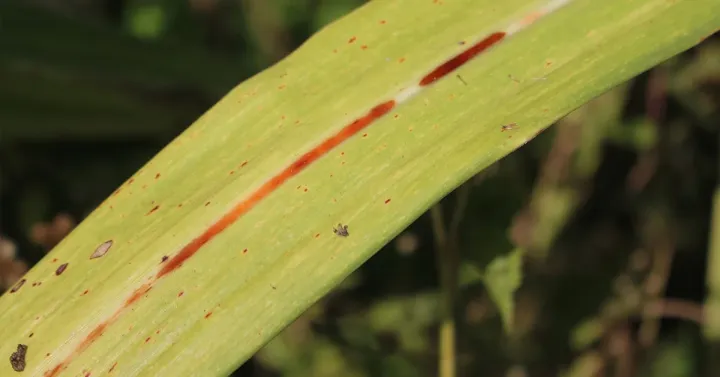
Description
Symptoms
Initial symptoms are characterized by the yellowing and drooping of the leaves, starting from the tip and proceeding downwards. This leaf necrosis is a clear sign of systemic distress.
When the stalks are split longitudinally, the internal tissues exhibit a striking deep red coloration. A signature symptom is the appearance of white, transverse patches intermingled with the red ones, creating a mottled look.
Advanced infection leads to the formation of central cavities in the internodes, which may contain a gray mycelial growth. Infected stalks often emit an acidic or fermented, sour odor.
Buds and nodes are frequently affected, turning black and becoming non-viable. This prevents successful propagation when such stalks are used for planting.
Under humid conditions, small black dots representing the acervuli of the fungus become visible on the surface of the stalks, serving as active reservoirs for further infection.
Pathogen
The causal agent of red rot is the fungus Colletotrichum falcatum (teleomorph: Glomerella tucumanensis). This pathogen is known for its ability to invade the vascular system of the sugarcane plant.
The fungus survives in soil and crop debris through mycelium, chlamydospores, and sclerotia. Infected setts are the primary vehicle for long-distance dissemination and the start of a new epidemic.
Inside the plant, the pathogen colonizes the internodes, moving through the vascular bundles. Sporulation occurs in acervuli on the surface of infected tissues, facilitating rapid spread.
The infection cycle relies on conidia spreading via wind, water splashes, and insect vectors. Colletotrichum falcatum is characterized by high pathogenic variability, leading to the development of various races.
Biological success of the fungus is linked to its rapid colonizing ability, especially once the internal structure of the stalk has been compromised by biotic or abiotic factors.
Conditions for development
Disease development is favored by warm, humid weather conditions, with temperatures between 25°C and 30°C being optimal for conidial germination and host tissue invasion.
Plants stressed by drought, waterlogging, or imbalanced soil fertility show increased susceptibility to the pathogen, as their natural defense mechanisms are weakened.
Borer insects play a critical role in the dissemination process. By causing mechanical damage to the stalk, they provide easy access for the fungal spores to enter the inner tissues.
Poor agricultural practices, such as excessive planting density, create a humid microclimate in the lower parts of the canopy, significantly promoting the progression of the disease.
Prolonged rainfall periods facilitate the movement of spores down the stalk into the leaf sheaths, creating an environment where the fungus can easily penetrate the nodal regions.
Why it matters
Red rot is globally recognized as one of the most destructive diseases of sugarcane, capable of causing devastating losses in both biomass and sugar quality.
The primary economic impact stems from the dramatic reduction in sucrose content. The fungus converts sucrose into glucose and fructose, and eventually into organic acids, rendering the juice unsuitable for refining.
The disease severely impacts the viability of planting material, leading to poor germination rates, thin stands, and the frequent need for total crop replacement.
Furthermore, the presence of fungal metabolites complicates the crystallization process in sugar factories, leading to increased processing costs and loss of final product quality.
In severe epidemics, entire fields can be lost, posing a major threat to the livelihoods of farmers and the sustainability of the regional sugar industry.
Protection
The cornerstone of red rot management is the use of disease-resistant varieties, which provide the most effective and sustainable long-term defense against the fungus.
Maintaining a clean seed nursery and planting only disease-free setts is essential to prevent the introduction of the pathogen into new, healthy fields.
Integrated Pest Management (IPM) to control stem-boring insects is vital, as it reduces the mechanical entry points that the fungus requires for initial infection.
Strict sanitation measures, including the immediate rogueing and burning of infected stalks, are necessary to minimize the inoculum pressure within the field.
Adopting proper crop rotation and providing balanced fertilization helps maintain plant vigor, making it harder for the disease to establish and spread.
Discussion
No discussions yet — be the first.