
Red Thread
Laetisaria
Red thread is a fungal disease caused by the pathogen Laetisaria fuciformis (formerly Corticium fuciforme). It is one of the most common diseases affecting turfgrass, particularly in cool-season grasses.
What the section contains
Red Thread
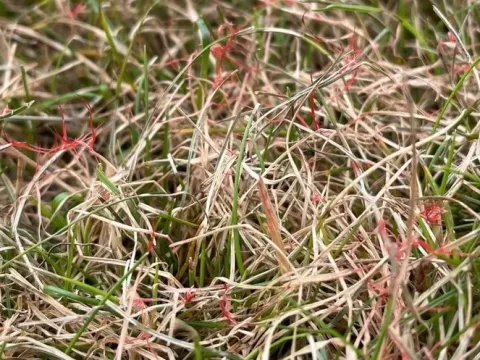
The pathogen is a basidiomycete that produces a distinct pink to reddish gelatinous mycelium on the infected leaf blades. This characteristic appearance is the primary diagnostic feature used by agronomists to identify the infection.
The fungus survives the winter and unfavorable periods in the form of sclerotia or as dormant mycelium within the thatch layer and soil, waiting for the return of favorable environmental conditions to resume its growth.
Reproduction occurs via small fragments of mycelium that can easily be dispersed by wind, water splashes, or even by mowing equipment, making it a highly contagious disease if not properly managed.
Nutrient deficiency, especially low nitrogen availability, is closely linked to the severity of Laetisaria fuciformis outbreaks, as nitrogen-starved plants have weaker defense mechanisms against fungal penetration.
The initial symptoms of red thread are irregular, tan or light-colored patches appearing on the turf. These patches can range from a few centimeters to large areas depending on the infection level.
The most distinctive sign is the development of pink or reddish, thread-like fungal mycelium that grows from the tips of the leaves. In wet conditions, these threads can form a visible web-like structure over the grass surface.
As the disease progresses, the infected leaf blades turn brown, become brittle, and eventually die. The tips of the leaves may look withered or shriveled, giving the affected areas a pale, straw-like appearance.
In humid morning conditions, the infected areas may look somewhat water-soaked and slimy, making it easy to distinguish from simple drought-induced browning of the turfgrass.
- Appearance of irregular tan or brown patches.
- Presence of pink or reddish thread-like fungal growth.
- Withering and death of leaf tips.
- Clear distinction between healthy and diseased turf zones.
Red thread is most active during periods of cool, humid weather, with temperatures typically ranging between 15 and 25 degrees Celsius. Prolonged periods of overcast weather and light rain are ideal for the spread of the disease.
Poor drainage and high relative humidity play a crucial role in the development of the fungus. Moisture retained on the leaf blades for extended hours during the night provides the perfect environment for the mycelium to colonize the foliage.
Turf areas with restricted airflow, such as those sheltered by dense shrubs or walls, are more susceptible to outbreaks due to the slower evaporation of morning dew and rainfall.
Soil nutrient levels are a major factor in the disease cycle. Lawns that have not been fertilized properly often show significantly more damage compared to well-managed, adequately fed turfgrass.
Excessive moisture combined with soil compaction limits the oxygen supply to the roots, further weakening the plant and allowing Laetisaria fuciformis to gain a competitive advantage over the healthy grass blades.
The primary harm caused by red thread is the destruction of the aesthetic value of the lawn. The disease creates unsightly patches that drastically reduce the visual appeal of residential, commercial, and sports turf.
While the disease rarely kills the entire plant, severe or chronic infections can thin the turf canopy, leading to a loss of grass density and creating opportunities for weeds to colonize the bare soil.
Infected turf becomes much more vulnerable to secondary stresses, including heat damage and physical wear, which can exacerbate the degradation of the grass surface in high-traffic areas.
The financial impact of this disease includes the costs of fungicide applications, labor for monitoring and treatment, and the potential need for overseeding or sodding if the damage becomes too severe.
On high-performance sports fields, red thread can affect the quality of play, potentially leading to restricted usage of the facility until the turf recovers its density and color uniformity.
Effective management begins with sound cultural practices. Regular core aeration and dethatching improve the soil structure, enhance drainage, and remove old plant debris that harbors the fungal spores.
Maintaining an optimal nitrogen fertility program is one of the most effective ways to prevent red thread, as it encourages strong growth and helps the grass recover faster from potential infection.
Watering should be performed early in the morning. This allows the sun and wind to dry the leaf surfaces before the onset of the night, reducing the duration of leaf wetness required by the fungus.
If the infection is widespread, the use of systemic fungicides is recommended to curb the fungal development. Always ensure proper application rates and rotation of chemical classes to prevent the development of resistance.
Choosing resistant cultivars when establishing or renovating a lawn is a proactive measure that significantly reduces the long-term risk of red thread outbreaks in the landscape.