
Red-banded webcap
Cortinarius armillatus
Description
Symptoms
The most visible sign of the fungus is the presence of its fruiting bodies, which appear in forest litter near the base of suitable host trees.
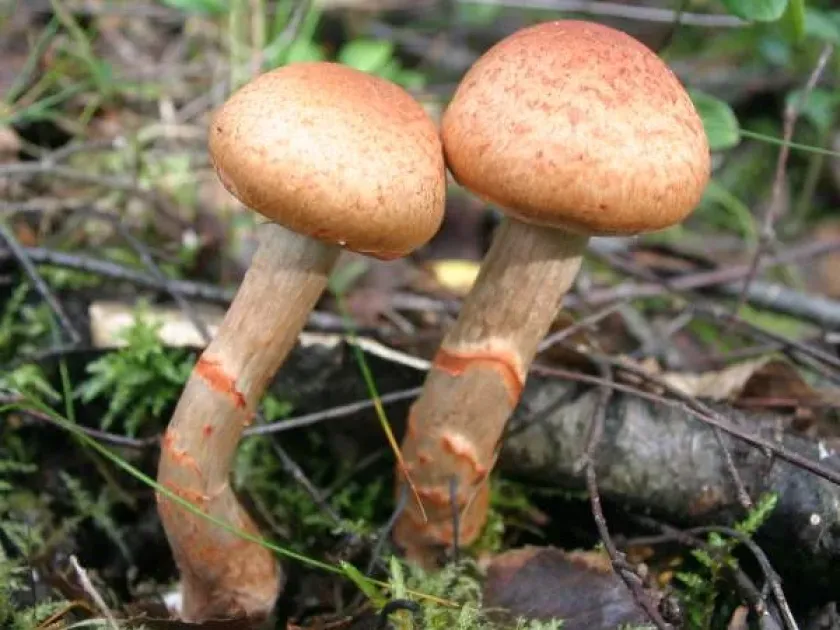
The cap of the mushroom is typically reddish-brown to tawny, featuring fine scales. It generally measures between 5 and 12 centimeters in diameter.
The most distinct diagnostic feature is the presence of vivid orange-red bands (or "bracelets") on the stem, which give the species its common name.
Gills change color from an initial brownish-ochre to a rusty brown as the spores mature and deposit onto the surface below the cap.
There are no symptoms of infection on tree trunks, foliage, or branches associated with this fungus, as it remains localized in the soil and root interface.
Pathogen
The red-banded webcap (Cortinarius armillatus) is not a plant pathogen. In the context of agronomy and forest management, it is recognized as a beneficial mycorrhizal fungus.
It does not cause plant diseases, as its life cycle relies on a symbiotic relationship with host trees, primarily birch and conifers. It does not possess the enzymes required to break down living plant tissue.
The fungus belongs to the Cortinariaceae family and functions by creating a network of hyphae around tree roots, known as ectomycorrhiza, which aids in nutrient absorption.
Misidentifying this fungus as a plant pathogen is a common error in field observations. It should not be treated as a threat to the health of trees or agricultural crops.
Understanding the role of mycorrhizal fungi is essential for maintaining a healthy soil microbiome. These organisms are vital partners for plant growth rather than causes of illness.
Conditions for development
The growth of Cortinarius armillatus is strictly confined to damp forest environments that support its host trees. It thrives in soils rich in organic matter.
Optimal conditions include mild temperatures between +15 and +22 degrees Celsius, coupled with high soil humidity and acidic substrate conditions.
Fruiting bodies typically appear during the autumn months when moisture levels are sufficient to support the emergence of the mushrooms from the soil.
The species does not colonize open agricultural lands or crops, as it requires a stable, established forest ecosystem to sustain its symbiotic connection.
Spore dispersal is handled by wind currents, but the successful establishment of new colonies depends entirely on the availability of suitable tree root systems.
Why it matters
This fungus causes no harm to agricultural, horticultural, or forest crops. It is widely considered an ecologically valuable component of the woodland habitat.
The symbiotic relationship it forms with trees improves the host's access to minerals such as phosphorus and nitrogen, acting as a natural growth promoter.
There are no documented cases of this species contributing to root rot, vascular wilt, or any other plant pathology. It lives in harmony with its host.
The only potential "harm" is the risk of misidentification by individuals attempting to forage for edible mushrooms, as some Cortinarius species are dangerously toxic.
No economic damage is associated with this organism, and any attempt to eradicate it would be ecologically counterproductive and unnecessary.
Protection
No protection measures are needed, as the red-banded webcap is not a pest or a disease agent. Fungicide applications are strongly discouraged as they disturb soil health.
If the appearance of fruiting bodies is aesthetically undesirable in a managed landscape, manual removal of the mushrooms is sufficient to prevent spore spread.
Good soil management practices, including maintaining optimal moisture levels and avoiding chemical contamination, will keep the natural microbial ecosystem balanced.
Gardeners should prioritize monitoring for actual threats, such as root-rotting pathogens or invasive insects, while leaving beneficial mycorrhizal fungi undisturbed.
Fostering a healthy forest or woodland environment naturally encourages beneficial species like Cortinarius armillatus, which support long-term ecosystem stability.
Discussion
No discussions yet — be the first.