
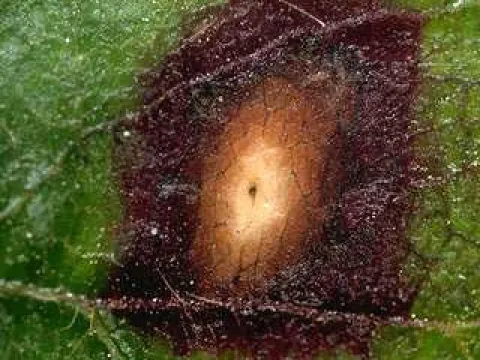
Strawberry leaf blight
Paraphomopsis obscurans
Strawberry leaf blight is caused by the fungus Paraphomopsis obscurans. This pathogen is a serious threat to strawberry production, as it infects leaves, petioles, and stolons throughout the growing season.
What the section contains
Strawberry leaf blight
The fungus overwinters primarily as mycelium and pycnidia on dead or living strawberry leaves left in the field. As temperatures rise in spring, the pycnidia release spores that initiate new infection cycles.
The life cycle of the pathogen is driven by moisture. Conidia are produced within the pycnidia, which appear as minute black specks on necrotic tissue, and are subsequently spread to healthy tissue.
Water splash from rain or overhead irrigation is the primary mechanism for spore dissemination. Insects and agricultural tools may also contribute to the spread of the fungus across the plantation.
The biology of Paraphomopsis obscurans allows it to thrive in various climates, making it a persistent problem for both commercial growers and home gardeners if not managed properly.
Initial symptoms appear as circular to irregular spots on the leaves, which are initially reddish-purple. Over time, the center of the spot may become light brown or tan, while the margin remains dark.
The hallmark of this disease is the appearance of small, black fruiting bodies called pycnidia scattered within the necrotic area of the leaf. These are visible upon close inspection with a magnifying glass.
As the infection progresses, individual spots can merge, leading to the necrosis of large sections of the leaf. Eventually, the entire leaf may wither and die, severely impacting the plant's health.
In addition to leaves, the disease can affect petioles and stolons. Dark lesions on these parts may lead to the collapse of the foliage, weakening the crown and reducing the plant's overall vigor.
- Reddish-purple circular leaf spots.
- Tan center with a dark, distinct margin.
- Presence of tiny black pycnidia in lesions.
- Premature drying and shedding of leaves.
- Lesions on petioles and stolons.
The development of strawberry leaf blight is highly favored by warm temperatures and high humidity. Optimal infection occurs when there is prolonged leaf wetness, which allows the spores to germinate.
Poor ventilation within the plant canopy significantly increases the risk of infection. Densely packed rows prevent the foliage from drying quickly after rain, creating a perfect microclimate for the fungus.
Overhead irrigation is a significant factor in promoting the disease. Constant wetting of the leaf surface mimics rainy conditions and actively spreads spores from infected leaves to healthy ones.
Shaded locations or fields with poor air circulation often experience higher disease pressure. Paraphomopsis obscurans exploits these conditions to establish and spread rapidly.
Stressed or nutrient-deficient plants are generally more susceptible to infection. Maintaining optimal growing conditions is crucial for the plant's ability to withstand initial fungal colonization.
The primary damage caused by leaf blight is the loss of photosynthetic area. Since leaves are essential for energy production, their destruction directly reduces fruit yield and size.
Severe infections can weaken the strawberry crown, causing the plant to struggle in subsequent seasons. This often leads to poor flower bud formation and reduced harvest volume.
The disease impairs the plant's ability to store carbohydrates for winter. As a result, affected plants may suffer from increased winter kill and poor vigor during the following spring.
If the infection reaches the petioles and stolons, it interferes with water and nutrient transport, leading to the overall decline of the strawberry plant.
Left unmanaged, leaf blight can lead to significant economic losses in commercial fields, sometimes requiring the removal and replacement of entire strawberry beds due to high inoculum pressure.
Starting with disease-free nursery stock is the most important preventative measure. It is essential to ensure that planting material is certified and free from Paraphomopsis obscurans.
Sanitation is key to control. Carefully removing and destroying infected leaves, especially after harvest, helps reduce the overwintering inoculum in the field.
Proper spacing and row orientation improve air circulation and help foliage dry quickly. This reduces the duration of leaf wetness, limiting the window for infection.
Fungicide applications are recommended in areas with high disease pressure. Treatments should be timed according to crop development stages, focusing on the period before flowering and after harvest.
Balanced fertilization, particularly avoiding excess nitrogen which creates lush, soft tissue, helps maintain plant resilience. A healthy, robust plant is better equipped to resist fungal pathogens.