
Strawberry leaf scorch
Diplocarpon fragariae
Description
Symptoms
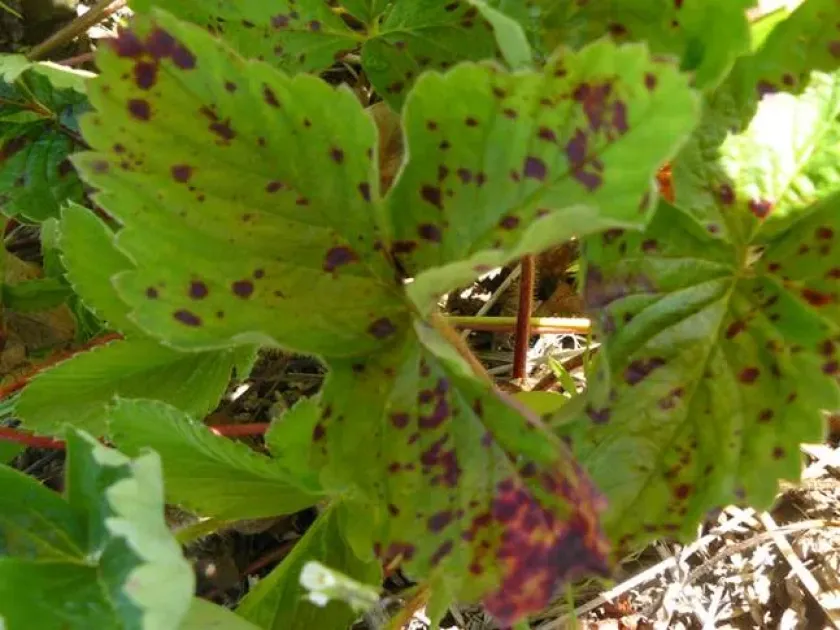
Early symptoms of leaf scorch appear as small, dark purple to reddish-brown spots scattered across the leaf surface. Unlike other fungal diseases, these spots often lack distinct borders at the beginning.
As the spots enlarge, they often become angular or irregular, eventually turning dark brown or black. The tissue surrounding the spots may develop a yellowish halo as the disease advances.
A distinctive feature of this disease is the appearance of tiny, shiny black specks within the centers of the older spots. These specks are the fungal fruiting bodies (acervuli) visible to the naked eye.
If the infection is severe, the spots coalesce, covering large portions of the leaf. This leads to the leaves becoming withered and dry, giving them a scorched or burnt appearance, which is why the disease is named leaf scorch.
- Dark purple or reddish-brown spotting on leaves.
- Small, black fruiting bodies within the spots.
- Leaves curling and drying up at the edges.
Pathogen
The causal agent of strawberry leaf scorch is the fungus Diplocarpon fragariae (asexual state: Marssonina fragariae). This pathogen specifically targets the Fragaria genus and thrives in temperate climates.
The fungus overwinters in infected leaves that remain on the soil surface or in old plant debris. In the spring, when temperatures rise and moisture is present, the fungus produces spores that initiate the infection cycle.
Primary infections are caused by ascospores, while secondary infections throughout the growing season are spread by conidia. These spores are dispersed primarily by rain splashes and wind, making wet weather a critical factor for the disease.
Upon landing on a strawberry leaf, the spores germinate and enter the tissue through stomata or directly through the epidermis. Once inside, the fungal mycelium colonizes the inter-cellular spaces.
As the infection progresses, the fungus develops dark, disc-shaped fruiting bodies called acervuli within the necrotic spots. These structures release thousands of conidia, ensuring the continuation of the disease cycle.
Conditions for development
Leaf scorch is highly dependent on environmental moisture. Periods of frequent rainfall, high humidity, and prolonged leaf wetness provide the ideal environment for spore germination and infection.
Dense plant canopies that lack sufficient airflow are particularly susceptible. When leaves stay wet for extended periods after rain or irrigation, the fungus can rapidly colonize the plants.
Warm temperatures, generally ranging from 15°C to 25°C, promote the fastest development of Diplocarpon fragariae. Under these conditions, the disease can spread across an entire field in a matter of weeks.
High nitrogen levels in the soil can result in lush, succulent growth that is more prone to fungal attacks. This soft tissue provides less resistance to the penetrating fungal hyphae.
Poor field sanitation, such as failing to remove weeds or debris from previous seasons, allows the pathogen to persist in the field. Continuous cultivation of strawberries on the same site also leads to high inoculum levels.
Why it matters
The primary damage caused by leaf scorch is the reduction of the photosynthetic surface area. When large portions of the foliage are affected, the plant's ability to produce energy is significantly compromised.
Infected plants show reduced vigor, leading to poor fruit development. The berries may become smaller, fewer in number, and less appealing, directly impacting the marketable yield.
Defoliation caused by the fungus weakens the plant's root system and prevents the accumulation of carbohydrate reserves necessary for winter survival. This increases the likelihood of plant death during cold weather.
The infection can also affect petioles and stolons, further weakening the plant structure. A severely scorched plant is less capable of producing strong daughter plants, hindering propagation efforts.
Financial losses occur not only from reduced production but also from the increased costs of chemical control and the potential need for premature replacement of infected strawberry beds.
Protection
Preventive measures are the most effective strategy. Choose planting sites with excellent drainage, full sun exposure, and good air circulation to minimize leaf wetness duration.
Practice diligent field hygiene by removing and disposing of infected plant debris after the harvest and during early spring. This drastically reduces the number of spores that survive the winter.
Utilize disease-resistant cultivars when establishing new plantings. If infection occurs, apply appropriate fungicides labeled for strawberries, ensuring coverage of the undersides of the leaves.
Maintain balanced soil fertility by avoiding excessive nitrogen applications. Focus on phosphorus and potassium to strengthen the plant’s natural defenses and promote overall health.
Always source certified disease-free strawberry crowns for new fields. Implementing a proper crop rotation cycle, moving strawberries to a different location every 3–4 years, is essential for long-term management.
Discussion
No discussions yet — be the first.