
Strawberry Ramularia leaf spot
Ramularia grevilleana
Description
Symptoms
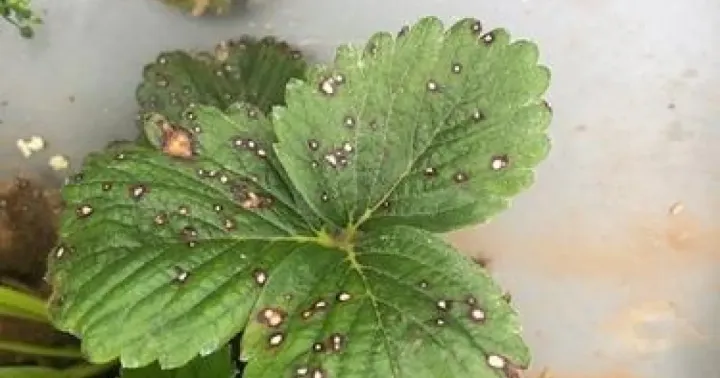
The characteristic symptoms begin as small, round, reddish-brown spots that appear on the leaves in early spring as temperatures rise.
As the spots mature, the centers become whitish or grey, surrounded by a distinct deep purple or dark red border, which is a classic diagnostic marker.
In cases of severe infection, these spots expand and coalesce, leading to large necrotic areas that eventually cause the entire leaf to wither and die.
A fine white powder, representing the sporulation of the fungus, can often be observed on the underside of the affected leaf spots during humid weather.
- Symptoms may also appear on stems and flower stalks, causing stunted growth and potential damage to the reproductive organs of the plant.
Pathogen
The disease is caused by the fungus Ramularia grevilleana, an imperfect fungus that primarily affects the foliage of garden strawberries.
The pathogen survives the winter season as mycelium or sclerotia within infected strawberry leaves that remain on the field surface.
During the growing season, the fungus produces masses of conidia, which serve as the primary source of infection for new leaves under favorable conditions.
Infection is facilitated by wind and splashing water, which transport spores from old debris to healthy plant tissues, initiating the disease cycle.
The fungus penetrates the plant tissue through the stomata or directly through the cuticle, subsequently colonizing the leaf cells and causing necrosis.
Conditions for development
The fungus thrives in environments with moderate temperatures ranging between 15 and 20 degrees Celsius, coupled with high humidity levels.
Dense plantings that lack adequate airflow are highly susceptible to outbreaks, as moisture tends to accumulate on the foliage for extended periods.
Frequent rainfall or overhead irrigation provides the necessary moisture for the germination of conidia and the rapid spread of the disease across the field.
Plants weakened by poor soil nutrient balance or excessive nitrogen applications are significantly more prone to rapid colonization by the pathogen.
Neglecting field hygiene, such as leaving infected plant residues after harvest, allows the pathogen to persist and re-infect the plants the following year.
Why it matters
The primary damage caused by Ramularia is the loss of functional leaf area, which significantly reduces the plant's photosynthetic capacity.
A reduction in photosynthesis hinders the plant's ability to store energy, leading to weakened crowns and reduced winter hardiness in strawberry plants.
Yield is negatively impacted both in quantity and quality, as the plant cannot allocate sufficient resources for fruit development and ripening.
Chronic infestation can shorten the productive lifespan of a strawberry bed, often forcing growers to remove the planting earlier than planned.
In severe epidemics, the aesthetic and commercial value of the fruit is compromised, leading to significant economic losses for commercial growers.
Protection
Effective sanitation is the most critical control measure: all dead and infected leaves should be removed and destroyed after the harvest season.
Proper plant spacing is essential to ensure good air circulation, which helps keep the foliage dry and suppresses fungal development.
Fungicide applications are most effective when applied preventively before the onset of flowering and immediately after the harvest is completed.
Choosing resistant cultivars and ensuring that new plants are certified disease-free is a fundamental strategy for long-term disease management.
Integrated pest management practices, including balanced fertilization and weed control, keep plants robust and less susceptible to fungal attacks.
Discussion
No discussions yet — be the first.