
Strawberry leaf spot
Septoria fragariae
Description
Symptoms
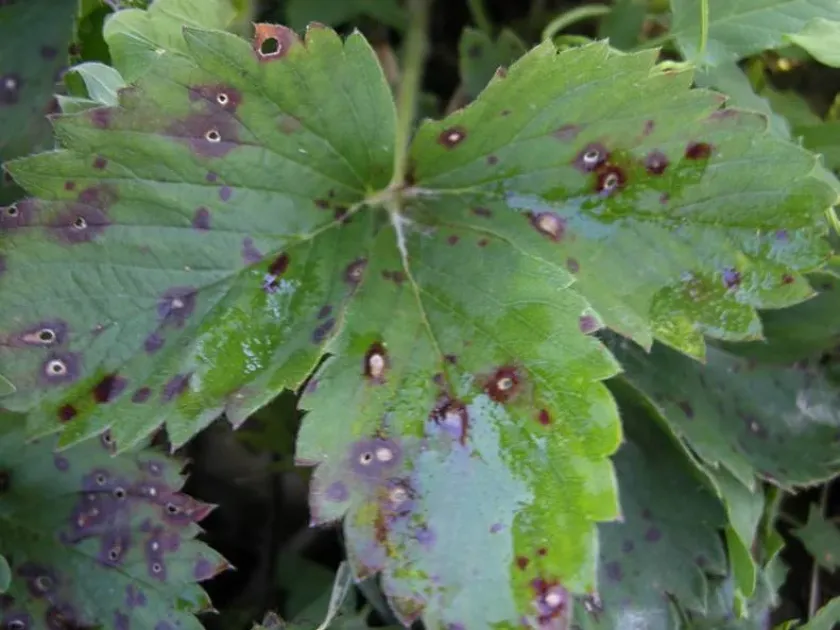
Initial symptoms are characterized by small, reddish-brown spots that appear on the upper surface of the leaves during the early stages of the disease.
As the infection progresses, the centers of these spots turn white or light gray, contrasting sharply with the surrounding dark reddish-purple border.
Close inspection of these light-colored centers often reveals tiny black speckles, which are the fungal pycnidia embedded in the necrotic plant tissue.
In cases of severe infestation, the spots coalesce, causing large areas of the leaf to wither and eventually resulting in the complete death of the leaf blade.
In addition to foliage, the fungus may also attack leaf stalks and flower stems, leading to weakened plant structure and reduced overall vigor.
Pathogen
The causative agent of strawberry leaf spot is the imperfect fungus Septoria fragariae, which is a common pathogen affecting cultivated and wild strawberry species.
The fungus produces microscopic fruiting bodies called pycnidia, which serve as the primary source of conidia (spores) that spread the infection throughout the field.
Septoria fragariae is highly adaptable and can survive harsh winter conditions on dead strawberry leaves and other infected plant debris remaining on the soil surface.
The pathogen completes its life cycle by infecting fresh leaf tissue when the environment becomes conducive, often following periods of spring or summer rainfall.
This fungus is specifically adapted to the host, meaning that recurring infections are highly likely if the sanitation of the strawberry patch is neglected.
Conditions for development
The development of Strawberry leaf spot is heavily favored by cool to moderate temperatures and high humidity levels, such as those found in damp, cloudy weather.
Poor airflow, often caused by overcrowding or thick weed cover, traps moisture on the leaves, creating an ideal environment for spore germination.
Overhead irrigation systems can inadvertently spread spores from infected leaves to healthy plants if the watering is performed frequently and in the evening.
The risk of disease outbreaks is significantly higher in low-lying areas of the garden where water drainage is insufficient and soil moisture remains high.
Proper field management, including the removal of old crop debris, is critical because it eliminates the primary nursery for the fungus before the new growing season.
Why it matters
The primary damage caused by this pathogen is the drastic reduction in photosynthetic surface area, which slows down the plant's growth and berry production.
Significant leaf loss prevents the plant from effectively storing nutrients in the crown, which weakens the strawberry plant for the following season.
Reduced plant vigor results in smaller berries, decreased sweetness, and lower overall yields, significantly impacting the commercial value of the crop.
If the infection occurs early in the season, it can lead to stunted plant development and make the patch more susceptible to other secondary opportunistic pathogens.
In extreme instances, if left uncontrolled, the disease can wipe out the entire foliage of the planting, leading to poor plant survival during winter.
Protection
Successful management begins with planting healthy, disease-free runners and ensuring the site has excellent soil drainage to prevent excessive moisture buildup.
Sanitation is key; all infected foliage should be pruned and removed from the site to lower the inoculum load for the next year.
Maintaining proper spacing between plants ensures better air circulation, which helps foliage dry out faster and inhibits fungal growth.
- Regular inspection for early signs of leaf spot to allow for targeted intervention.
- Application of copper-based fungicides as a preventative measure.
- Balanced fertilization to prevent overly succulent growth that is prone to infection.
Integrated management combining cultural practices with appropriate chemical treatment remains the most effective strategy for preserving strawberry health.
Discussion
No discussions yet — be the first.