
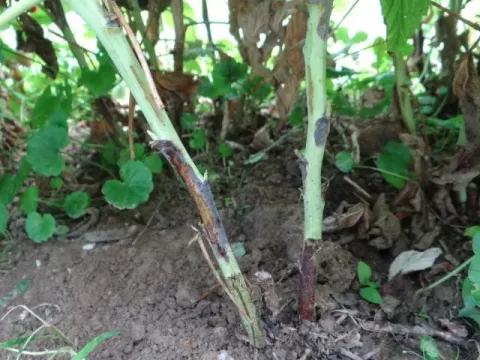
Strawberry Leaf Spot (Didymella)
Didymella anserina
The fungus Didymella anserina (also known in literature as Phoma fragariae) is the primary causal agent of this strawberry disease.
What the section contains
Strawberry Leaf Spot (Didymella)
This pathogen belongs to the Ascomycota division and is capable of surviving in dead strawberry leaves and soil debris for extended periods.
The fungus reproduces by forming pycnidia, small fruiting bodies that release spores which spread via rain splashes and wind currents across the strawberry patch.
Once the spores land on susceptible plant tissue, they germinate under appropriate moisture levels and penetrate the strawberry foliage to establish infection.
The pathogen is highly effective at adapting to fluctuating seasonal temperatures, maintaining its presence in fields throughout the growing cycle.
The disease first presents as small, circular, reddish-brown spots scattered across the upper surface of the strawberry leaves.
Over time, these spots expand, often developing a darker purple or maroon border that sharply contrasts with the surrounding healthy leaf tissue.
In later stages, the center of the lesions may turn gray or light brown, sometimes becoming brittle and falling out, creating a shot-hole appearance.
Tiny black specks, which are the fungal pycnidia, can be seen within the necrotic centers of the spots, serving as a diagnostic feature of this condition.
Severe infections may lead to extensive necrosis, causing entire leaves to yellow, wither, and collapse, significantly affecting the plant's health.
The development of Didymella is strictly dependent on high humidity and prolonged leaf wetness, often occurring during rainy seasons.
Optimal infection temperatures generally range from moderate to warm, allowing the fungus to colonize plant tissue rapidly once moisture is present.
Poor airflow caused by dense plant spacing or heavy canopy development traps humidity near the crown and leaves, creating a perfect environment for spore germination.
Shaded areas or fields with inadequate drainage are particularly prone to outbreaks, as these environments remain moist for longer periods.
Lack of proper sanitation allows the pathogen load to build up year after year, especially if old, infected foliage is left on the soil surface.
The disease causes significant foliage loss, which directly impairs the plant's ability to photosynthesize and generate energy for growth and fruit production.
Weakened plants show reduced vigor, leading to smaller fruit sizes and lower overall yields during the current and subsequent harvests.
Early defoliation makes the plants significantly more susceptible to winter injury, as they enter dormancy with depleted nutrient reserves.
In severe cases, the infection can spread to stems and peduncles, causing flower stalks to die back and potentially leading to total loss of fruit clusters.
Economic damage includes not only yield losses but also the increased necessity for labor-intensive cleaning and potential costs of fungicide applications.
Effective management begins with rigorous field sanitation, including the removal and destruction of all infested strawberry foliage at the end of the season.
Planting resistant cultivars and ensuring adequate spacing between rows helps improve air circulation and reduces the duration of leaf wetness.
Applying mulch, such as straw or synthetic landscape fabric, prevents the foliage from coming into direct contact with wet, pathogen-laden soil.
Chemical control should be applied preventatively, focusing on the early spring flush and post-harvest periods, adhering to local pesticide regulations.
- Choose certified disease-free strawberry runners.
- Implement a strict crop rotation schedule.
- Ensure excellent drainage within the strawberry planting site.
- Monitor for early symptoms to act before the infection becomes widespread.