
Ophiostomataceae
Ophiostomataceae
Ophiostomataceae is a family of fungi in the order Microascales, well-known for causing severe vascular diseases in trees, particularly the destructive Dutch elm disease.
What the section contains
Ophiostomataceae
These pathogens are predominantly transmitted by wood-boring beetles, primarily bark beetles, which transport fungal spores while feeding or breeding under the bark of host trees.
The fungus enters the tree's xylem, where it produces mycelium and toxins that block the vascular tissue, severely impairing the tree's ability to transport water.
Reproduction involves both asexual (conidia) and sexual (perithecia) stages, often occurring in the galleries created by the beetles, ensuring efficient spread to new hosts.
The dark pigmentation often found in the affected wood is a characteristic trait of these fungi, caused by the production of melanin in the fungal cell walls during colonization.
Symptoms typically begin with the flagging of individual branches, where leaves turn yellow, wilt, and curl before falling prematurely.
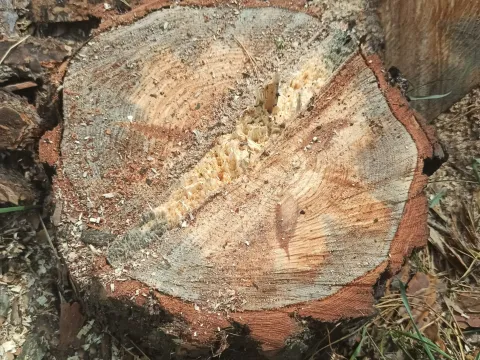
Cross-sections of affected branches or trunks reveal characteristic brown or black streaking in the outer growth rings, which is a key diagnostic marker for the disease.
As the infection progresses, the tree crown may show progressive dieback, leading to full-tree mortality within one or a few growing seasons.
Beetle activity is often visible, with entry and exit holes on the bark and characteristic feeding galleries found on the wood surface under the bark.
- Wilt and yellowing of foliage in mid-summer.
- Darkening of the sapwood (vascular staining).
- Presence of bark beetle galleries.
- Rapid crown decline and defoliation.
The spread of the disease is highly dependent on the lifecycle of the insect vector, which is most active during the warmer months of late spring and summer.
Host trees experiencing environmental stress, such as drought or root compaction, are significantly more susceptible to successful fungal colonization.
High tree density and close proximity between trees facilitate the spread of the fungus through root grafts, in addition to beetle transmission.
The presence of dead or stressed woody material in the forest provides an essential breeding ground for the beetles, sustaining the infection cycle in the area.
Warm and humid conditions favor the development of fungal spores, increasing the overall infection pressure on nearby healthy trees.
Ophiostomataceae fungi cause catastrophic losses to both urban forests and native tree populations, leading to the near-extinction of certain elm species in some regions.
The timber quality is severely degraded due to wood staining, rendering the wood unsuitable for high-value carpentry or construction purposes.
The ecosystem services provided by mature trees, including carbon sequestration and urban cooling, are lost, resulting in long-term environmental consequences.
Economic impacts include the high costs of removing hazardous dead trees and the long-term investment required for reforestation and landscape restoration.
The persistent nature of these pathogens makes them extremely difficult to eradicate once established in a region, requiring constant vigilance and management.
The most effective strategy involves the prompt removal and destruction of infected trees, including the removal of stumps to prevent root graft transmission.
Systemic fungicides, often applied via trunk injection, can be used to protect individual high-value trees in public parks and residential areas.
Managing the beetle population through pheromone traps and sanitation efforts is crucial to breaking the transmission cycle of the pathogen.
Proactive tree care, including regular watering and proper fertilization, boosts the tree's natural defenses against infection and pest attack.
Selecting and planting resistant or tolerant cultivars is a long-term solution to mitigate the impact of Ophiostomataceae in landscape planting programs.