
Ophiostomatales
Ophiostomatales
The Ophiostomatales order consists of ascomycete fungi known as serious plant pathogens. They primarily target the vascular tissue of hardwood and some softwood tree species.
What the section contains
Ophiostomatales
The disease is classified as a vascular wilt (tracheomycosis). The fungus colonizes the tree's xylem, inducing a host response that includes the production of tyloses and gums, which ultimately clog the vessels.
The most devastating member of this group causes Dutch Elm Disease (DED). Its complex life cycle often involves a symbiotic relationship with bark beetles, which act as primary vectors for spreading fungal spores.
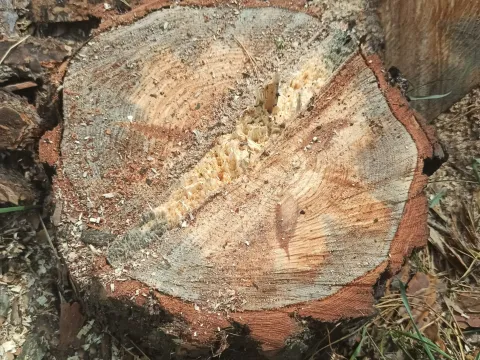
These fungi are well-adapted to surviving in deadwood, making old stumps and logging debris significant reservoirs for the pathogen. They can persist in the environment for several years.
Genetic diversity within the order allows some species to adapt rapidly to different hosts and climatic conditions, increasing the difficulty of implementing universal control strategies.
Initial symptoms are characterized by wilting, chlorosis, and curling of leaves on individual branches, often referred to as "flagging." This usually appears during the peak of the growing season.
Internal wood inspection reveals dark, brown, or black streaking in the outer sapwood rings. These discolorations represent the infected vessels that the tree has attempted to seal off.
Cross-sectional cuts of branches show a distinct pattern of browning in the sapwood, which is a definitive sign of an Ophiostomatales infection compared to other wilting diseases.
As the infection progresses, entire branches die back, leading to a thinning crown and eventual tree death. In advanced stages, the bark may show beetle emergence holes.
- Flagging of terminal leaves in summer.
- Dark streaking in xylem under the bark.
- Rapid defoliation of infected branches.
- Presence of bark beetle galleries.
Optimal development for Ophiostomatales fungi occurs under warm, humid conditions. Mild springs and summers facilitate both fungal growth and the activity of insect vectors.
The density of host trees plays a critical role in local spread. Root grafting between neighboring trees creates an underground pathway for the fungus, bypassing the need for insect dispersal.
Environmental stress, such as drought or mechanical injury, significantly increases a tree's susceptibility to colonization. Healthy, vigorous trees can sometimes compartmentalize the infection, but stressed ones succumb quickly.
The geographical spread is heavily influenced by human activity, particularly the movement of unprocessed timber or firewood containing galleries of infested beetles.
High moisture levels in the wood during the warmer months favor the production of conidia (spores) in insect galleries, which are then picked up by emerging beetles.
The primary economic impact is the rapid mortality of valuable timber and landscape trees. In urban settings, this requires costly removal of dead or dying trees to ensure public safety.
Ecological damage is severe, as the loss of keystone species like elm or oak disrupts forest composition and reduces biodiversity, affecting numerous other forest-dwelling species.
Infected wood is generally unsuitable for high-quality lumber production. Even if the tree is harvested, the presence of fungal staining decreases the market value of the timber significantly.
The loss of mature canopy trees alters the microclimate of forest understories and city streets, leading to increased temperature and decreased humidity in the surrounding environment.
Ophiostomatales represent a constant threat to reforestation efforts. The recurring cycles of infection can prevent the successful re-establishment of susceptible tree species in affected areas.
Sanitation is the most effective management tool. This includes the immediate removal and destruction of infected trees or symptomatic branches to eliminate the inoculum source before beetle emergence.
To prevent root-graft transmission, trenches can be dug between healthy and infected trees, or chemical soil barriers can be applied to stop the fungal spread through root systems.
Insecticide treatments targeting bark beetle vectors can protect high-value trees, though this requires precise timing and does not cure trees that are already systemically infected.
Selecting and breeding resistant tree cultivars is the long-term solution. Planting a diverse array of tree species is essential to prevent large-scale losses from a single pathogen.
Strict quarantine regulations regarding the movement of raw wood and nursery stock are necessary to prevent the accidental introduction of Ophiostomatales into disease-free regions.