
Orange knight
Tricholoma aurantium
Description
Symptoms
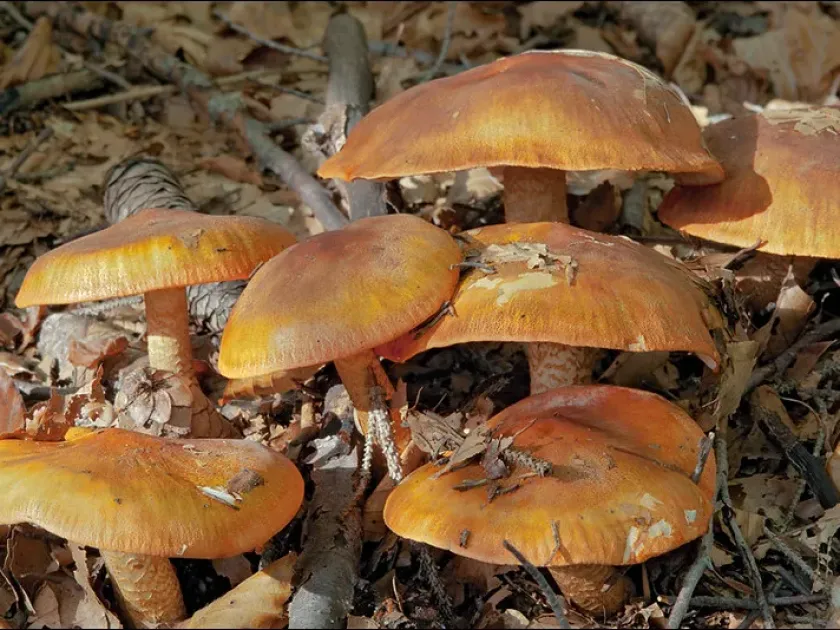
The orange knight, or Tricholoma aurantium, is identified by its vibrant orange cap adorned with fine, darker scales.
Fruit bodies grow in clusters or lines, which is a characteristic behavioral pattern for this specific fungal species.
The gills are initially pale or yellowish, but tend to develop brownish spots as the mushroom matures or is handled.
The stem features a firm texture and is often covered with orange scales similar to those found on the cap surface.
A distinctive feature is its strong, slightly floury scent, which serves as a reliable marker for identification purposes.
Pathogen
Tricholoma aurantium is a basidiomycete fungus that primarily inhabits woodland environments, especially coniferous forests.
It typically lives in a symbiotic mycorrhizal relationship with pine and spruce trees, assisting in nutrient exchange.
The organism reproduces through the production and release of spores, which are disseminated by wind and environmental factors.
The mycelium network thrives in the forest duff layer, actively decomposing organic material and interacting with tree root systems.
It is fundamentally a component of the forest ecosystem and is not classified as a pathogen of commercial agricultural crops.
Conditions for development
Development is heavily dependent on high moisture levels within the soil and the presence of a thick layer of pine needles.
These fungi thrive in acidic soil environments, which are typical characteristics of mature coniferous forest landscapes.
Cooler temperatures during the autumn months provide the optimal climate for the rapid growth of fruit bodies.
Persistent drought conditions are detrimental to the fungus, causing a sharp decline in reproductive activity and mycelium vigor.
The fungi prefer shady and stable microclimates, which protect them from extreme heat and excessive solar radiation.
Why it matters
Tricholoma aurantium poses no economic threat to agricultural or horticultural sectors as it is strictly a forest-dwelling species.
The primary concern is the public health risk associated with accidental ingestion, as the species is widely considered inedible or suspect.
In forestry, it does not act as a tree pathogen, meaning no remedial action is required for its presence in wooded areas.
Bioaccumulation of soil heavy metals is a potential risk, making mushrooms from contaminated sites unsafe for collection.
The species serves as an ecological indicator of soil quality rather than a direct threat to forest health.
Protection
Since the species causes no agricultural damage, there are no established chemical or biological control protocols for it.
Mechanical removal of fruit bodies can be used to limit spore dispersal in residential or park areas where presence is undesirable.
Modifying soil moisture and drainage can indirectly limit the proliferation of the fungal colony in managed landscapes.
Public education regarding the identification and inedibility of this species is the most effective preventative measure.
Overall, management focuses on promoting a balanced ecosystem rather than the eradication of specific fungal species.
Discussion
No discussions yet — be the first.