
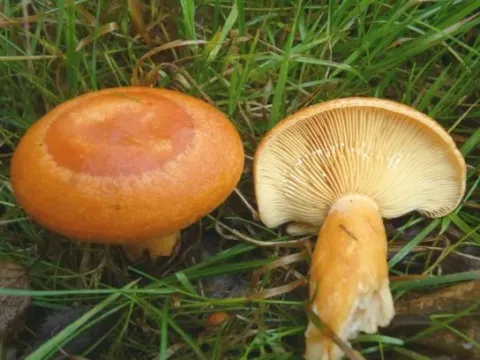
Orange milkcap
Lactarius aurantiacus
The orange milkcap (Lactarius aurantiacus) is primarily known as a mycorrhizal fungus that interacts with trees, but in specific agro-environments, it can affect young plants.
What the section contains
Orange milkcap
The fungus acts as a symbiotic organism that, under suboptimal conditions or high density, can compete with the root system of nursery seedlings.
The pathogen utilizes a complex mycelial network that spreads through the topsoil, absorbing nutrients and interfering with plant root absorption capabilities.
Spore production occurs in the fruiting bodies, allowing the fungus to disseminate efficiently across cultivation fields during moist periods.
While often beneficial in forests, its presence in managed plantations or nurseries is considered a factor that requires monitoring and management.
The most visible sign is the emergence of orange-colored fruiting bodies around the root zone of susceptible young plants.
Visible symptoms in seedlings include reduced shoot growth and a general decline in the overall vigor of the plant throughout the growing season.
Leaves or needles may show signs of yellowing or chlorosis, which occurs when the root system is unable to extract sufficient nutrients due to fungal competition.
Careful inspection of the root system often reveals dense fungal sheaths that physically wrap around fine roots and impede their development.
- Presence of orange mushrooms near stems.
- Stunted growth of nursery seedlings.
- Leaf discoloration or chlorosis.
- Fungal mycelial mats on the roots.
Development is heavily favored by acidic soil conditions with a pH level typically ranging between 4.5 and 5.5.
High moisture levels in the soil, often resulting from poor drainage or excessive rainfall, are critical for the formation of the mycelium and fruiting bodies.
An abundance of leaf litter and organic matter in the topsoil layer provides a continuous energy source for the fungus to thrive.
Mild temperatures ranging from 15 to 22 degrees Celsius are optimal for the metabolic and reproductive activities of this fungal species.
Poor soil aeration caused by compaction can further exacerbate the problem by creating an environment where the fungus outcompetes other root flora.
The main harm caused by this fungus is the competition for essential minerals and water, leading to the depletion of resources in the root zone.
Physical damage to delicate root hairs reduces the plant's nutrient uptake efficiency, weakening the plant's natural resistance to other diseases.
Nursery operations often face significant economic impact when seedlings are stunted, rendering them unsuitable for sale or field planting.
Prolonged fungal influence can lead to a systemic weakening of young trees, making them susceptible to secondary pests and environmental stressors.
The cost of mitigation, including soil treatment and replanting, represents a considerable burden for intensive cultivation systems.
Cultural management starts with regulating soil pH through liming to create an environment less favorable for the growth of acidic-loving fungi.
Manual removal of fruiting bodies before they release spores is a simple yet effective way to curb the spread of the fungus in confined areas.
Improved drainage management prevents the accumulation of water, which is essential to disrupting the fungus's lifecycle and inhibiting mycelial growth.
Biological fungicides based on beneficial Trichoderma species can be used to treat the soil and promote a healthier microflora around the roots.
Regular inspection and sanitation of the nursery environment are vital to preventing the establishment of the fungus in newly planted batches.