
Orange birch bolete
Leccinum albostipitatum
Description
Symptoms
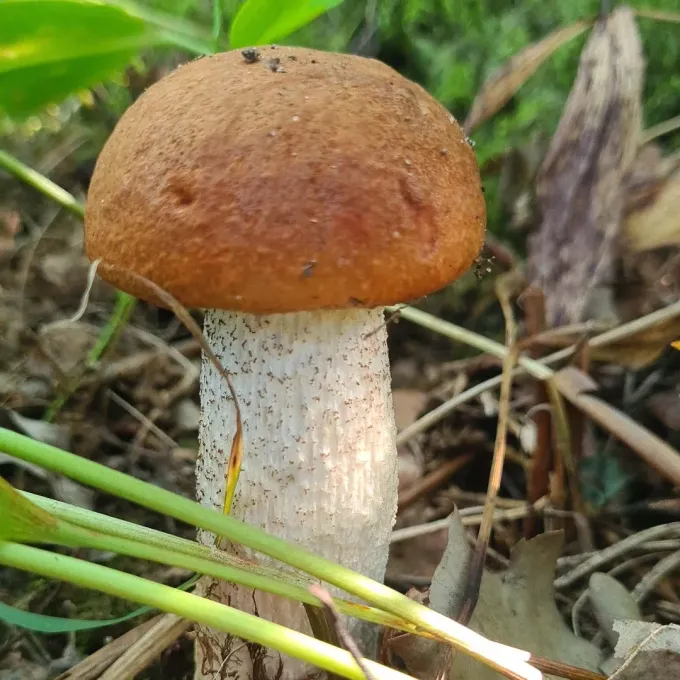
The fruiting body is characterized by a bright orange-brown cap. In the early stages, it appears hemispherical, later expanding into a broader cushion shape as it matures.
The surface of the cap is typically dry and matte. The hymenophore consists of tubes that are initially white or cream, eventually darkening to a brownish-gray shade with age.
The stipe is robust and adorned with small, dark scales that may darken further as the mushroom ages. Upon cutting or bruising, the flesh exhibits a quick color change to purple or blackish-grey.
Spores are typically brownish or ochre-colored. The overall size of the mushroom depends on the maturity of the fungal network and the availability of environmental moisture.
Identification is most successful when observing the immediate vicinity of poplar trees, as the fungal growth is closely tied to the host's root zone.
Pathogen
The orange birch bolete (lat. Leccinum albostipitatum) belongs to the Boletaceae family. It is strictly a mycorrhizal fungus and should not be classified as a plant pathogen, as it lives in a symbiotic relationship with trees.
The mycelium of the fungus attaches to the roots of host trees, primarily poplars, facilitating nutrient and water uptake for the tree. This mutualistic association is essential for the health of many forest ecosystems.
Unlike pathogenic fungi that cause decay or disease, Leccinum albostipitatum contributes to the resilience and growth of the forest floor vegetation. It plays a significant role in mineral cycling.
Biological classification of this fungus is based on its specific anatomical features and its host specificity. It is part of the Leccinum genus, known for its distinct scaling on the stipe.
As an eukaryotic organism, it depends on its host plant to receive carbon sources, while providing the tree with soil-derived nutrients in return, maintaining a balanced subterranean biological economy.
Conditions for development
The growth of this fungus is strictly dependent on the presence of mature poplar trees. It thrives in temperate forest environments with moderate rainfall and nutrient-rich, well-drained soils.
Adequate humidity levels are critical for the formation of fruiting bodies. Excessive drought or soil compaction can inhibit the mycelium's ability to produce mushrooms during the peak season.
Fruiting typically occurs during the summer and autumn months. Consistent climatic conditions are required to sustain the mycorrhizal activity that supports the development of the fungus.
Healthy leaf litter and undisturbed forest soil promote the survival of the mycelium. Any significant disruption to the topsoil layer can have a detrimental effect on the fungal colony.
The ecological niche of Leccinum albostipitatum is stable in forest plantations and parks where the host species (poplars) have reached maturity and established stable mycorrhizal connections.
Discussion
No discussions yet — be the first.