
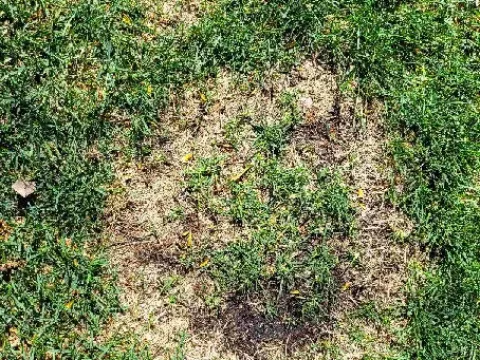
Necrotic ring spot
Ophiosphaerella korrae
The disease is caused by the soil-borne fungus Ophiosphaerella korrae, which belongs to the class Ascomycetes. This pathogen primarily attacks the roots, stolons, and rhizomes of turfgrass.
What the section contains
Necrotic ring spot
The fungus exists primarily as a mycelium within the soil and root zone, making it highly persistent and capable of surviving in the environment for several years.
It predominantly infects species of bluegrass, especially Kentucky bluegrass, as well as fescues and bentgrasses. It is a chronic problem that often appears on established residential and commercial lawns.
Dispersal of Ophiosphaerella korrae occurs through the movement of infested soil or plant material via mowing equipment, foot traffic, or water runoff during heavy rainfall.
The biology of the pathogen is centered on infecting the root system, where it disrupts nutrient and water uptake, eventually leading to the death of the crown and foliage.
The first symptoms typically appear in the spring or autumn as small, chlorotic spots that develop into circular patches, rings, or semi-circular arcs.
As the disease progresses, the center of the patches turns straw-colored or brown. In many cases, healthy grass may regrow in the center of the ring, creating a "frog-eye" appearance.
When examining the affected turf, the root system will show visible signs of dark necrosis and decay, with roots appearing black and brittle instead of white and healthy.
In high-humidity environments, light mycelial growth might be observed on the grass blades, although the diagnostic characteristic is the ring-shaped pattern of dead turf.
The symptoms often recur in the same location year after year, as the fungus remains active in the soil, slowly expanding its area of infection during favorable seasons.
Cool, moist weather conditions, particularly in the spring and fall when soil temperatures are between 10°C and 20°C, provide an ideal environment for infection.
The buildup of thatch is a significant contributor to the severity of the disease, as it retains moisture and provides a protective niche for the fungus to thrive.
Inconsistent irrigation practices, specifically light and frequent watering, encourage surface root growth and make the plant more susceptible to fungal attack.
Excessive nitrogen fertilization can exacerbate the disease by forcing rapid top growth while compromising the development of a deep, healthy root system.
Poor soil aeration and compaction create an anaerobic environment, which weakens the grass's natural defenses and allows Ophiosphaerella korrae to colonize more effectively.
Necrotic ring spot significantly degrades the aesthetic appeal of a lawn, leaving persistent, unsightly patches and rings that are difficult to cover with routine maintenance.
In severe cases, the complete death of turf in the patches can lead to soil erosion and the necessity for extensive lawn renovation and reseeding.
Plants weakened by the disease lack the root depth required to withstand heat and drought stress, leading to further thinning and collapse of the turfgrass stand during summer.
The dead patches created by the fungus often become colonizing sites for invasive weeds, which outcompete the desired grass species and permanently alter the lawn's composition.
Without management, the patches tend to enlarge annually, eventually merging together and resulting in the total loss of the decorative grass coverage on the affected area.
Cultural management is the cornerstone of control, focusing on regular aeration and dethatching to improve soil drainage and reduce the moisture-rich environment favored by the fungus.
Implement a deep and infrequent irrigation schedule to encourage deep rooting, which helps the plants withstand the impact of the infection.
- Apply systemic fungicides (e.g., azoxystrobin or pyraclostrobin) as a preventative measure during high-risk windows.
- Maintain balanced fertility, favoring potassium and phosphorus, to strengthen the overall health and stress resistance of the turf.
- Clean and disinfect lawn mowing equipment to prevent the mechanical transfer of the pathogen to healthy areas of the lawn.
Adjusting soil pH to a range slightly more acidic can sometimes create conditions less favorable for the fungus, depending on the specific grass variety present.
For persistent or severe infections, consider overseeding with more resistant cultivars or, in extreme cases, removing and replacing the affected soil and sod.