
Nectria canker
Nectria pseudotrichia
The disease is caused by the ascomycete fungus Nectria pseudotrichia. While primarily a saprophyte found on decaying wood, it can act as an opportunistic pathogen when trees are stressed or wounded.
What the section contains
Nectria canker
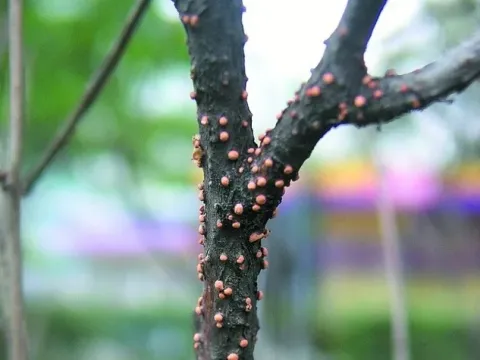
The fungus produces small, bright orange to red fruit bodies, known as perithecia, on the surface of infected bark. These fruiting bodies often exhibit a distinct hair-like texture, which is a key diagnostic feature.
The pathogen survives within infected plant debris, dead wood, and deep cracks in the bark. Spores are disseminated primarily by wind, splashing rain, and through the movement of insects.
The mycelium penetrates the bark and colonizes the cambium and xylem tissues. By invading the vascular system, the fungus disrupts the transport of nutrients and water throughout the plant.
It is generally considered less aggressive than other Nectria species, yet it can cause severe damage when it gains entry into the woody tissue of orchard trees.
Initial symptoms appear as localized discoloration of the bark. These areas may become sunken or depressed as the underlying tissue begins to die and necrotic lesions form.
The presence of vibrant orange or red clusters of perithecia on the bark is a definitive sign of the infection. These can occur on both dead branches and margins of living wood.
As the infection progresses and girdles the branch, the foliage above the necrotic site begins to wilt, turn yellow, and eventually drop prematurely, leading to branch dieback.
When the bark is peeled away from a lesion, the underlying wood exhibits a dark brown or black discoloration. The demarcation line between healthy and diseased tissue is often quite sharp.
In advanced stages, the fungus can create deep, open cankers on the main trunk or scaffold branches, which may lead to the total collapse of the affected limb.
High humidity and mild temperatures are the primary drivers for the development and spread of Nectria pseudotrichia. Rainy, overcast periods significantly favor spore germination.
Mechanical injuries serve as the most common entry points. Sunscald, frost cracks, pruning wounds, and insect-damaged bark provide ideal conditions for the fungus to establish itself.
Orchards with high planting density and poor air circulation maintain moisture on the bark surface for longer periods, which greatly increases the risk of infection.
Trees weakened by environmental stress, such as severe drought or waterlogging, have compromised natural defense mechanisms, making them more susceptible to fungal colonization.
Neglected orchards containing excessive amounts of dead wood, prunings, and unmanaged debris act as a persistent reservoir for the pathogen to thrive throughout the year.
The economic impact of the disease is significant, as it leads to the gradual decline and death of productive branches, ultimately reducing the tree's overall yield.
If the pathogen infects the main scaffold branches or the trunk, it can lead to the death of the entire tree, necessitating early removal and replacement of the crop.
Fruit quality is negatively affected by the tree's impaired physiological state. Fruits on infected trees often remain undersized, have poor shelf life, and are visually unappealing.
The disease reduces the cold hardiness of trees, making them more susceptible to winter damage. Necrotic tissue freezes more easily, which can exacerbate the lesion sizes over winter.
Ongoing costs associated with increased labor for pruning, sanitation, and chemical disease management represent a recurring financial burden for orchard managers.
Sanitation is the most critical control measure. All infected branches must be pruned well below the visible lesion into healthy tissue to ensure complete removal of the mycelium.
Sterilizing pruning tools with alcohol or a bleach solution between cuts is essential to prevent the mechanical transmission of fungal spores from diseased to healthy trees.
All pruning wounds should be treated with protective paints or wound dressings to prevent new infections. Keeping the tree surface dry and protected is a top priority.
Apply copper-based fungicides during the dormant season (late autumn after leaf fall and early spring before bud break) to reduce the surface spore load.
Maintain tree vigor through balanced fertilization and proper water management. Healthy trees have better internal defenses against opportunistic infections like Nectria.