
Nephroma
Nephroma
Nephroma (genus Nephroma) is not a plant pathogen or a disease agent in any agricultural sense; it is a genus of leafy lichens belonging to the Peltigeraceae family.
What the section contains
Nephroma
This organism is a symbiotic life form consisting of a fungal partner (mycobiont) and a photosynthetic partner (photobiont), typically cyanobacteria of the genus Nostoc.
As an epiphyte, Nephroma uses the bark of trees simply as a physical substrate for attachment rather than as a source of nutrition.
It derives all its nutrients from the atmosphere, capturing moisture, minerals, and gases directly from the air and rain.
Classifying Nephroma as a plant disease is a biological error, as it does not invade or damage the living tissues of its host plant.
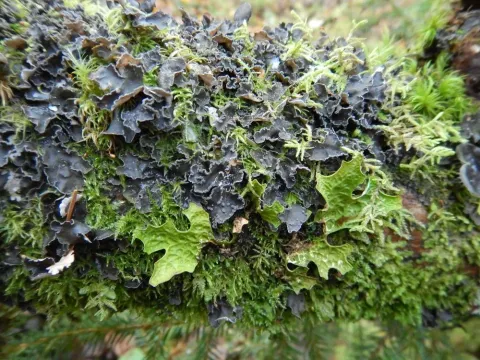
The thallus of Nephroma presents as large, flattened, lobe-like structures that are closely appressed to the bark or slightly undulating.
The coloration of the lichen typically ranges from light grey-brown to a rich, dark brown depending on the light levels and humidity conditions.
A distinctive feature of this genus is the presence of apothecia (fruiting bodies) located on the underside of the lobes, a key diagnostic characteristic.
Presence is noted as a clean patch of lichen growth that does not cause wood decay, bark cracking, or signs of chlorosis in the host.
The texture is leathery and firm, becoming softer and more pliable when wet, which allows for identification even in different weather conditions.
Nephroma requires specific environmental conditions to thrive, most notably high humidity and clean, unpolluted air.
It is highly sensitive to atmospheric pollutants, particularly sulfur dioxide, making it a reliable bioindicator of pristine environmental quality.
It prefers shaded environments where the bark remains consistently cool and moist, protected from direct, intense solar radiation.
These lichens are commonly found in old-growth forest ecosystems or mature orchard environments that maintain stable microclimates.
The retention of moisture on tree bark is the primary factor allowing for the colonization and continued growth of this species.
Nephroma does not cause any direct harm to trees; it does not extract water or nutrients from the tree's internal vascular system.
While some growers worry that lichens block the "breathing" of bark, scientific evidence confirms that they do not inhibit gas exchange on mature bark.
The presence of lichens often suggests that a tree has been stable in its environment for a long time, indicating a mature ecosystem.
It does not cause rot, canker, or necrosis; if a tree is dying, the presence of lichen is merely incidental rather than causal.
Therefore, there is no economic or physiological loss associated with the natural colonization of Nephroma on tree trunks.
No active control measures are required because Nephroma is ecologically beneficial and biologically harmless to the host plant.
- Prune branches to improve air circulation and sunlight penetration if desired for aesthetic reasons.
- Maintain tree vigor through proper fertilization and irrigation to ensure the plant remains resilient.
- Mechanical removal with a soft-bristled brush is sufficient if you prefer a 'cleaner' look for decorative trees.
- Apply lime-based whitewash to trunks if you wish to temporarily create an alkaline surface that discourages lichen attachment.
- Avoid using fungicides, as they are largely ineffective against lichens and may disrupt the beneficial bark microbiome.
The best approach is to accept the presence of these lichens as a sign of environmental health rather than attempting to eliminate them.