
Net blotch of fescue
Pyrenophora dictyoides
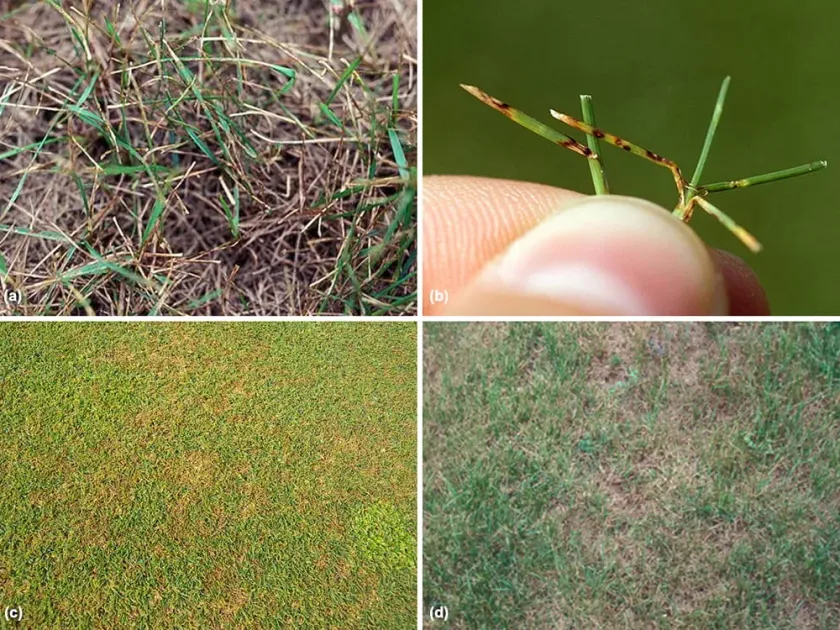
Description
Symptoms
Initial symptoms consist of small, dark brown dots that gradually elongate along the leaf veins. A distinct net-like pattern, formed by dark longitudinal and transverse lines, becomes visible inside the spots.
As the disease advances, these lesions merge, leading to widespread chlorosis and necrosis. The leaf tips typically die first, followed by the progressive drying of the entire leaf blade.
In high humidity, a velvety olive-green to black fungal growth may appear on the necrotic areas, representing the spore production phase of the fungus. When held against the light, the characteristic net pattern is clearly visible.
The infection often starts on lower leaves, moving upwards in the canopy. Severely affected plants show reduced vigor, stunted growth, and a significant decrease in leaf density.
In turfgrass settings, the disease causes unsightly patches that interrupt the uniformity of the lawn. If left unmanaged, the cumulative damage can lead to large areas of turf death.
Pathogen
The causative agent of net blotch in fescue is the fungus Pyrenophora dictyoides (anamorph Drechslera dictyoides). This pathogen specifically infects grasses within the Festuca genus, affecting both forage fields and lawns.
The life cycle of the pathogen involves the production of conidia during the growing season, which serve as the primary source of spread via wind and water splashes. The fungus survives unfavorable periods as mycelium or pseudothecia in debris.
Upon landing on host leaves, the spores germinate and penetrate the epidermal layer. The fungal hyphae grow intercellularly, secreting toxins that break down plant tissue cells, causing the characteristic necrotic lesions.
As the infection progresses, the pathogen develops new sporulation on the surface of the lesions, allowing for secondary cycles of infection to occur throughout the season under favorable conditions.
This fungus exhibits high ecological adaptability, remaining viable for extended periods in dead plant tissue. This persistence makes it a significant challenge for long-term grassland management.
Conditions for development
The disease thrives in environments with prolonged leaf wetness and moderate temperatures ranging from +15°C to +22°C. These conditions provide the perfect stimulus for conidial germination.
Rainy weather, heavy dews, and frequent morning fogs are highly conducive to the spread of the pathogen. Under these conditions, the disease can transition from localized spots to a landscape-wide epidemic.
Dense, poorly ventilated canopy structures trap humidity, creating a microclimate that favors infection. Reduced airflow prevents the leaves from drying quickly, extending the infection window.
Over-application of nitrogen fertilizers promotes lush, succulent growth that is more susceptible to fungal penetration. Conversely, soil compaction and lack of drainage weaken plant roots, increasing overall susceptibility.
Improper mowing practices, such as leaving large amounts of clippings in shaded areas, can harbor the fungus. These residues serve as a localized inoculum source, initiating new cycles of infection in the following seasons.
Why it matters
Net blotch causes a severe reduction in photosynthetic surface area, which hinders the growth and productivity of the fescue. This impact is significant in forage production, leading to decreased biomass yields.
The nutritional quality of infected grass is compromised, as the fungus breaks down proteins and soluble carbohydrates. This makes the forage less digestible and lowers its overall economic value.
For decorative turf, the aesthetic value is drastically reduced due to the appearance of necrotic lesions and yellowing foliage. This forces property managers to invest in additional remediation steps.
Plants weakened by the disease exhibit reduced root development, which makes them less resistant to other abiotic stressors such as drought or frost. This often leads to stand thinning over time.
Significant infestations can lead to the displacement of fescue by invasive weeds, as the stressed grass is unable to maintain its competitive advantage in the ecosystem.
Protection
The primary control strategy involves the use of resistant grass varieties and strict adherence to good cultural practices. Crop rotation, where applicable, helps in breaking the pathogen's life cycle.
Regular mowing and the removal of clipping debris prevent the buildup of the fungus. Maintaining a balanced fertilization schedule—specifically ensuring sufficient potassium and phosphorus—strengthens plant resistance.
In severe cases, systemic fungicides from the triazole or strobilurin families are effective. Early application at the first signs of the disease is crucial to prevent widespread sporulation and infection.
Improving soil drainage and aeration reduces surface moisture, making the environment less hospitable to the fungus. Controlling surrounding weeds that may act as alternative hosts is also recommended.
- Selecting certified, disease-resistant seed varieties.
- Promoting good airflow through proper plant spacing.
- Applying balanced fertilizers to avoid excessive succulent growth.
- Monitoring the field early in the season for signs of spotting.
Discussion
No discussions yet — be the first.