
Netted stinkhorn
Dictyophora duplicata
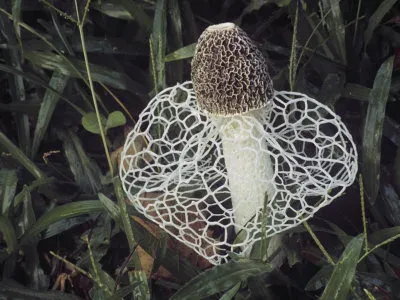
Description
Pathogen
The Netted Stinkhorn (Dictyophora duplicata) is a basidiomycete fungus belonging to the Phallaceae family. It is a saprotrophic organism and is not classified as a plant pathogen.
The fungus feeds on decaying organic matter, such as wood debris and forest leaf litter, breaking down complex carbon compounds in the soil environment.
Its biological cycle features a rapid growth phase where the fruiting body emerges from a subterranean mycelial network. This growth is entirely non-parasitic.
Unlike true phytopathogens, Dictyophora duplicata does not possess the capability to invade or infect the tissues of living plants, trees, or vegetable crops.
Therefore, its presence in an agricultural or horticultural environment should be interpreted as a sign of organic-rich soil rather than a disease outbreak.
Conditions for development
The development of Dictyophora duplicata is highly dependent on humidity levels and the availability of decaying organic substrates in the soil.
The fungus thrives in shaded, moist environments where the temperature remains between 18 and 25 degrees Celsius, ideal for its mycelial activity.
Frequent rainfall or consistent irrigation encourages the rapid formation of fruiting bodies, which are the visible reproductive structures of the fungus.
It is commonly found in woodland areas, mulch beds, and gardens with high levels of decomposing plant material, such as wood chips or leaf mold.
The fungus acts as a natural decomposer, and its presence is frequently correlated with areas of soil that have been enriched with organic amendments.
Why it matters
There is no evidence of direct harm to agricultural crops caused by the Netted Stinkhorn. It does not attack the roots, stems, or foliage of cultivated plants.
Any concerns regarding its presence are typically aesthetic or related to the strong, pungent odor the fungus produces to attract insects for spore dispersal.
The fungus does not release toxins that inhibit plant growth, nor does it compete with crops for critical nutrients in any detrimental way.
Excessive fungal growth can occasionally indicate poor soil aeration or water stagnation, which are independent cultural factors that might affect plant health.
Ultimately, Dictyophora duplicata is considered a beneficial organism in the ecosystem because it contributes to nutrient cycling and soil structure improvement.
Protection
Since the Netted Stinkhorn is not a plant pathogen, no chemical control measures or fungicides are required or recommended for this species.
If the appearance of the fungus is undesirable, gardeners can improve soil drainage to reduce the humidity levels that favor mycelial development.
Managing the thickness of organic mulch layers near the base of plants can help limit the food source available for the fungus within the garden beds.
Physical removal of the fruiting bodies is an easy and effective solution if the smell or presence of the fungus causes inconvenience for the gardener.
Standard agronomic practices such as maintaining good soil aeration and balanced moisture levels are sufficient to manage the environment without targeting the fungus directly.
Discussion
No discussions yet — be the first.