
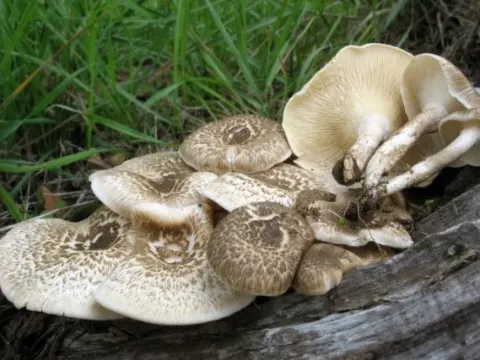
Scaly Lentinus
Neolentinus lepideus
Scaly Lentinus (scientific name Neolentinus lepideus) is a basidiomycete fungus from the Gloeophyllaceae family, known as a primary wood-decaying pathogen.
What the section contains
Scaly Lentinus
This organism is the causative agent of brown cubical rot, which systematically breaks down the structural components of wood, specifically targeting cellulose.
As the fungus consumes the cellulose, the remaining lignin gives the affected wood a distinct brown, brittle appearance, eventually reducing it to dust.
The fungus is biologically remarkable for its high tolerance to various environmental conditions and its ability to thrive even in treated timber, which is often resistant to other fungi.
In agricultural settings, it is a dangerous threat to orchard trees, often attacking through bark fissures or deep mechanical wounds.
Initial signs of infection are often internal, making the disease difficult to detect until the structural integrity of the wood has already been compromised.
The most visible symptom is the development of fleshy, scaly fruiting bodies on the surface of the trunk or wooden structures, featuring brown scales on a lighter background.
The underside of the cap, known as the hymenophore, contains gills with a characteristic serrated or jagged edge, a key identification feature for this species.
Severely decayed wood typically cracks into cubes or blocks, which is the hallmark of the brown rot process caused by this specific fungus.
Mycelium mats may be found deep within the cracks of the wood, appearing as white to yellowish threads that aggressively penetrate the fiber.
The fungus thrives in environments with moderate temperatures and sufficient moisture, though it is famously resistant to desiccation compared to other species.
Spores are dispersed primarily by wind, allowing the fungus to spread rapidly across orchards and storage facilities for wood materials.
The presence of old tree stumps or decaying wooden poles provides a perfect breeding ground, serving as a reservoir for infection in the vicinity.
Mechanical damage to tree bark, such as frost cracks, pruning wounds, or pest-induced openings, acts as a primary entry point for the pathogen.
High humidity and poor air circulation in wooden structures significantly accelerate the vegetative growth of the fungal mycelium.
The primary damage caused by Neolentinus lepideus is the rapid loss of mechanical strength in wooden structures and living tree trunks.
In fruit trees, the fungus impairs the vascular system, leading to decreased vigor, reduced harvest, and eventually the death of the tree.
The economic impact includes the destruction of wooden garden assets, including trellises, supports, and fence posts, requiring costly replacements.
It poses a hidden risk, as timber may appear externally sound while being completely hollowed out or weakened from the inside.
The aggressive nature of this fungus allows it to bypass standard chemical protections that might deter less specialized decay agents.
Effective management begins with strict sanitation: removing and destroying all infected tree parts and stumps that harbor the fungus.
Proper wound care is essential; all pruning cuts must be sealed with professional-grade wound paint to prevent fungal colonization.
For structural timber, regular inspection and the application of deep-penetrating wood preservatives are necessary to inhibit spore germination.
Maintaining the overall health of the garden through balanced fertilization and pest control helps boost the tree's natural defense mechanisms.
- Remove and burn infected wooden materials.
- Sanitize tools after pruning damaged trees.
- Seal all bark wounds and pruning cuts.
- Improve ventilation in outdoor wooden storage.